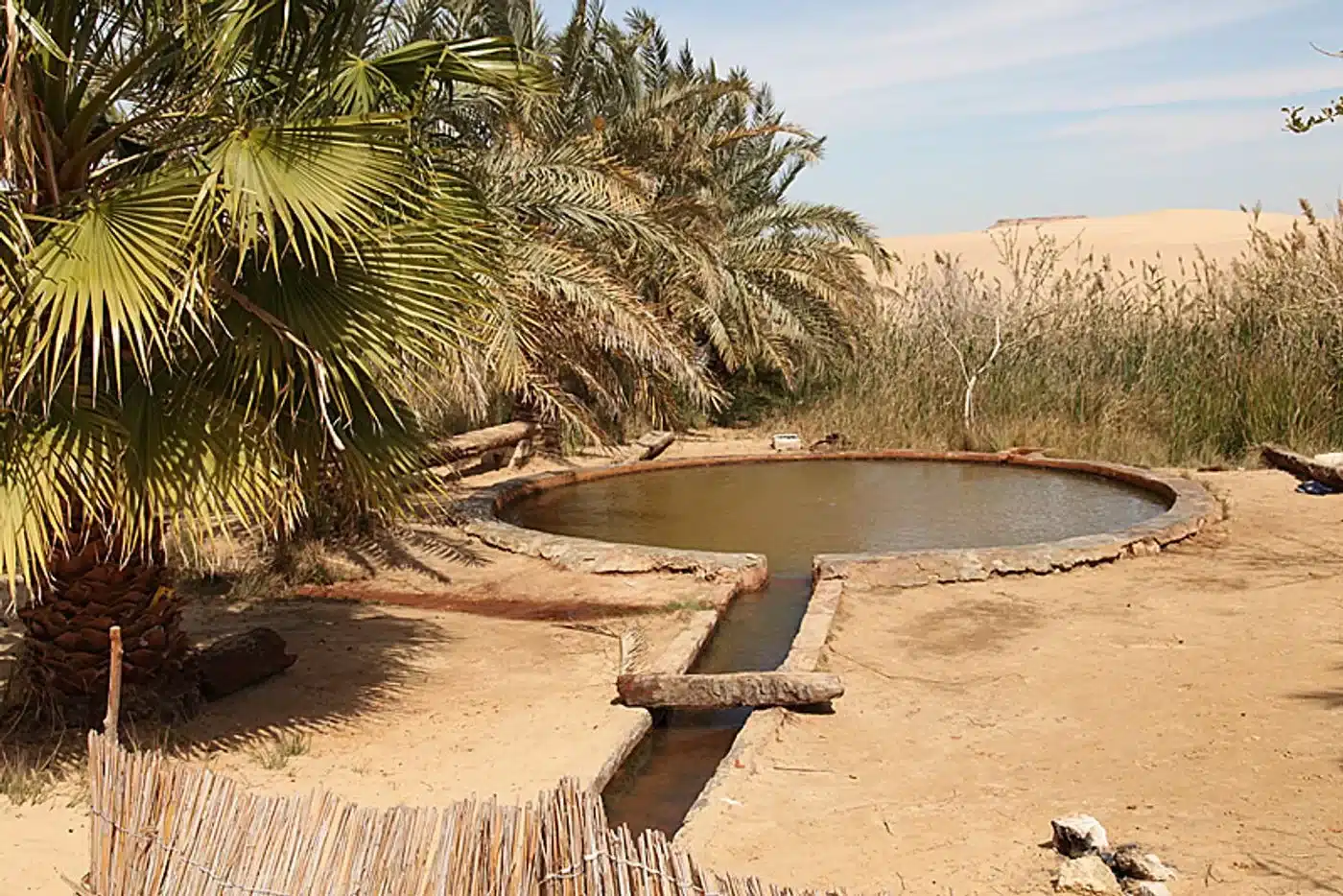
Siwa hot springs are not one single attraction. They are part of a wider network of natural water sources spread between Siwa town, palm gardens and the edge of the Great Sand Sea. Some pools feel warm, some are cool, some are built for bathing, and others feed lakes or irrigation channels rather than functioning as visitor swimming spots.
The most memorable spring experience for many travellers is Bir Wahed, where a warm pool and a freshwater lake sit in a miniature oasis among the dunes. Reaching it normally forms part of a permitted 4×4 desert safari, not a casual taxi ride from town. Cleopatra’s Spring, by contrast, is close to the inhabited oasis and works well with the Temple of the Oracle and traditional villages.
Quick planning answer: choose Cleopatra’s Spring for an easy cultural stop and Bir Wahed for a full desert-safari experience. Do not assume that every pool is hot, open for swimming or reached without permission. Conditions, access rules and water quality can change, so confirm the route with a licensed local guide on the day.
If you are still planning the wider journey, start with our complete Siwa Oasis travel guide. For a ready-made route, compare the private 3-day Siwa tour from Cairo and the slower 4-day Siwa Oasis tour.
Why does Siwa have so many natural springs?
Siwa lies in a depression below sea level in Egypt’s Western Desert. Underground water rises through natural springs and wells, supporting the date palms, olive groves, gardens and settlements that make life possible in this otherwise arid landscape. The contrast is striking: high dunes and pale desert rock can stand only a short distance from reeds, pools and cultivated land.
Travellers often use “hot spring” as a convenient label for almost any pool in Siwa, but the water sources are not identical. Temperature, mineral character, depth, construction and purpose differ from one site to another. A stone-lined bathing pool beside a café is a different experience from an open freshwater lake among reeds, and both are different from Siwa’s highly saline pools.
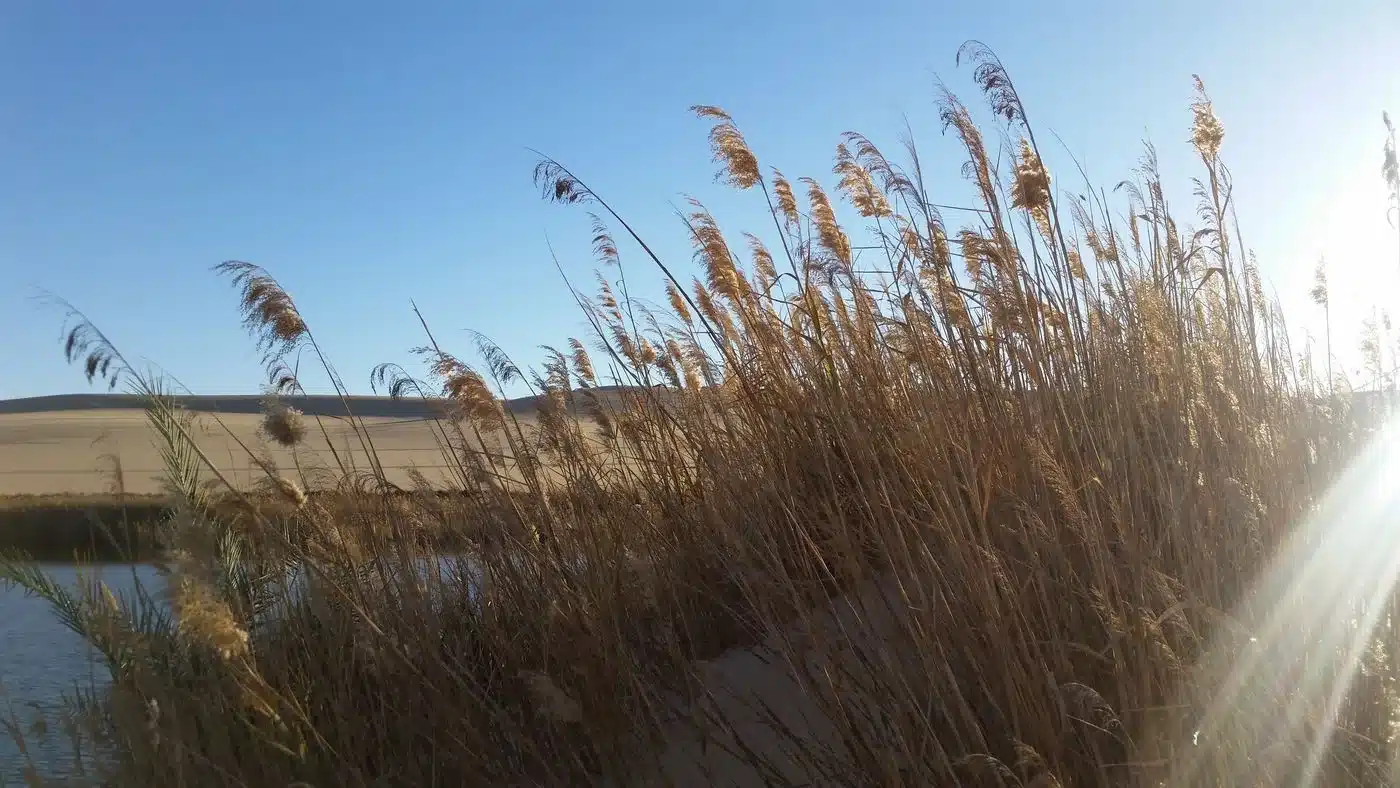
This distinction matters when planning. If your priority is to float, read our separate Siwa salt lakes guide. If you want a spring beside town, choose Cleopatra’s Spring or another locally recommended bathing pool. If you want dunes, a warm soak and a wilderness setting in one outing, the Bir Wahed safari is the strongest option.
Bir Wahed: the desert spring experience
Bir Wahed, also written Bir Wahid, lies beyond the inhabited oasis near the Great Sand Sea. Egypt’s official desert-and-oases tourism material describes it as a miniature oasis and hot spring south of Siwa. The precise driving route is not a fixed tourist road: sand conditions, protected-area rules, permissions and operational considerations determine how a licensed driver approaches the site.
The journey is part of the appeal. Leaving the palm belt behind, the landscape opens into large dune systems and long sand corridors. A suitable 4×4 and an experienced local desert driver are essential. Normal cars, improvised routes and independent off-road attempts are unsafe and may violate access restrictions.
What is the Bir Wahed hot spring like?
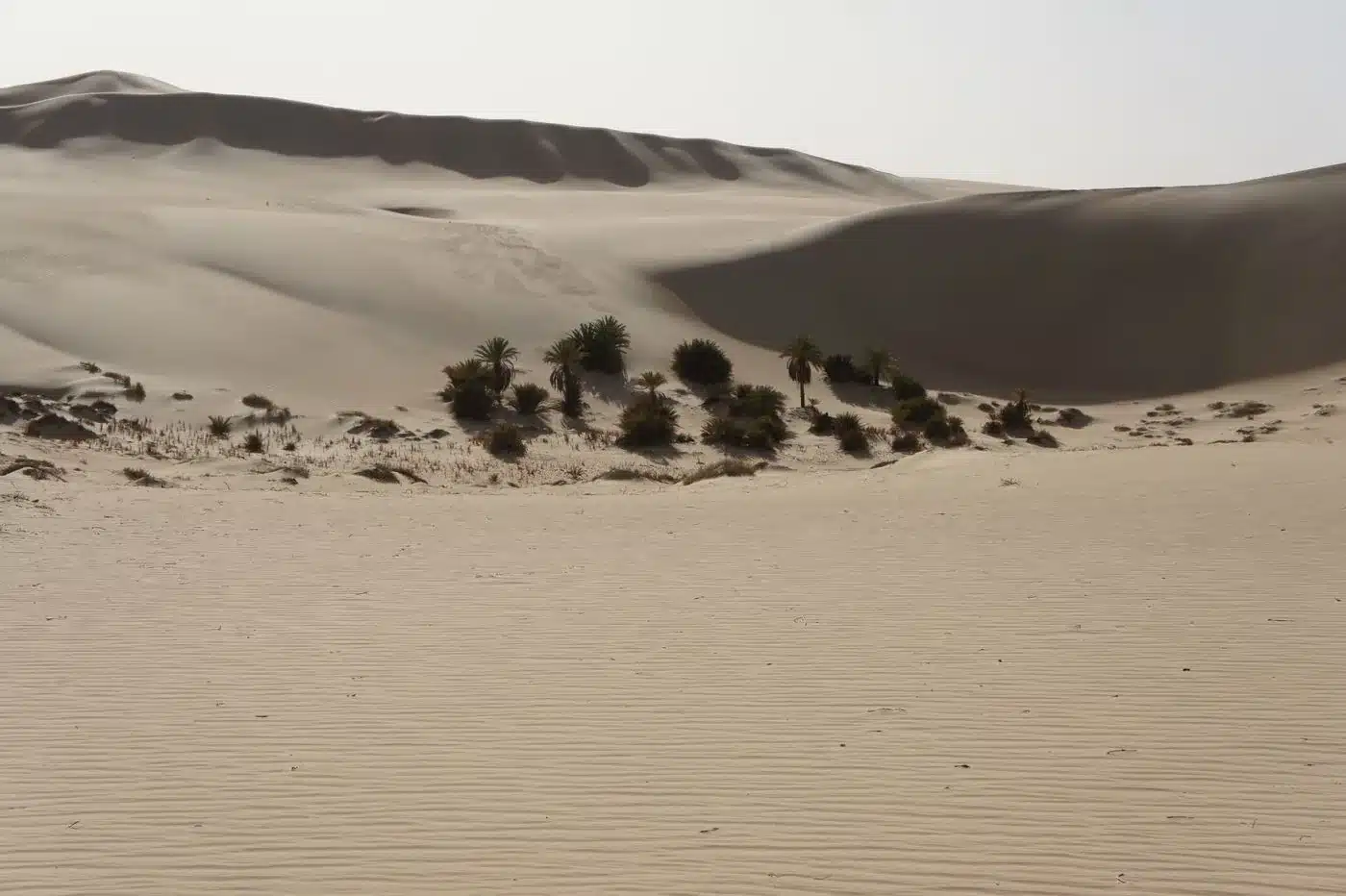
The warm pool is simple rather than luxurious. It is valued because of its desert setting, not spa facilities. Palms and reeds soften the edge of the pool while dunes rise beyond the vegetation. Depending on recent maintenance and local arrangements, changing areas and refreshments may be basic or unavailable. Bring what you need, but avoid leaving plastic, soap or food waste behind.
Water temperature can feel different by season, time of day and the exact point where water enters or circulates. Online temperature figures are often copied without a current measurement. Treat the spring as a natural site, ask your guide about conditions, and test the water gradually before entering.
The cold spring and freshwater lake
Bir Wahed is also associated with a cool freshwater lake fringed by reeds. This creates a memorable contrast: warm water, cooler water and dry sand within the same desert stop. The lake is not a manicured swimming pool. Visibility, depth, reeds and the condition of the bank vary, so enter only if your guide confirms that the chosen place is suitable that day.
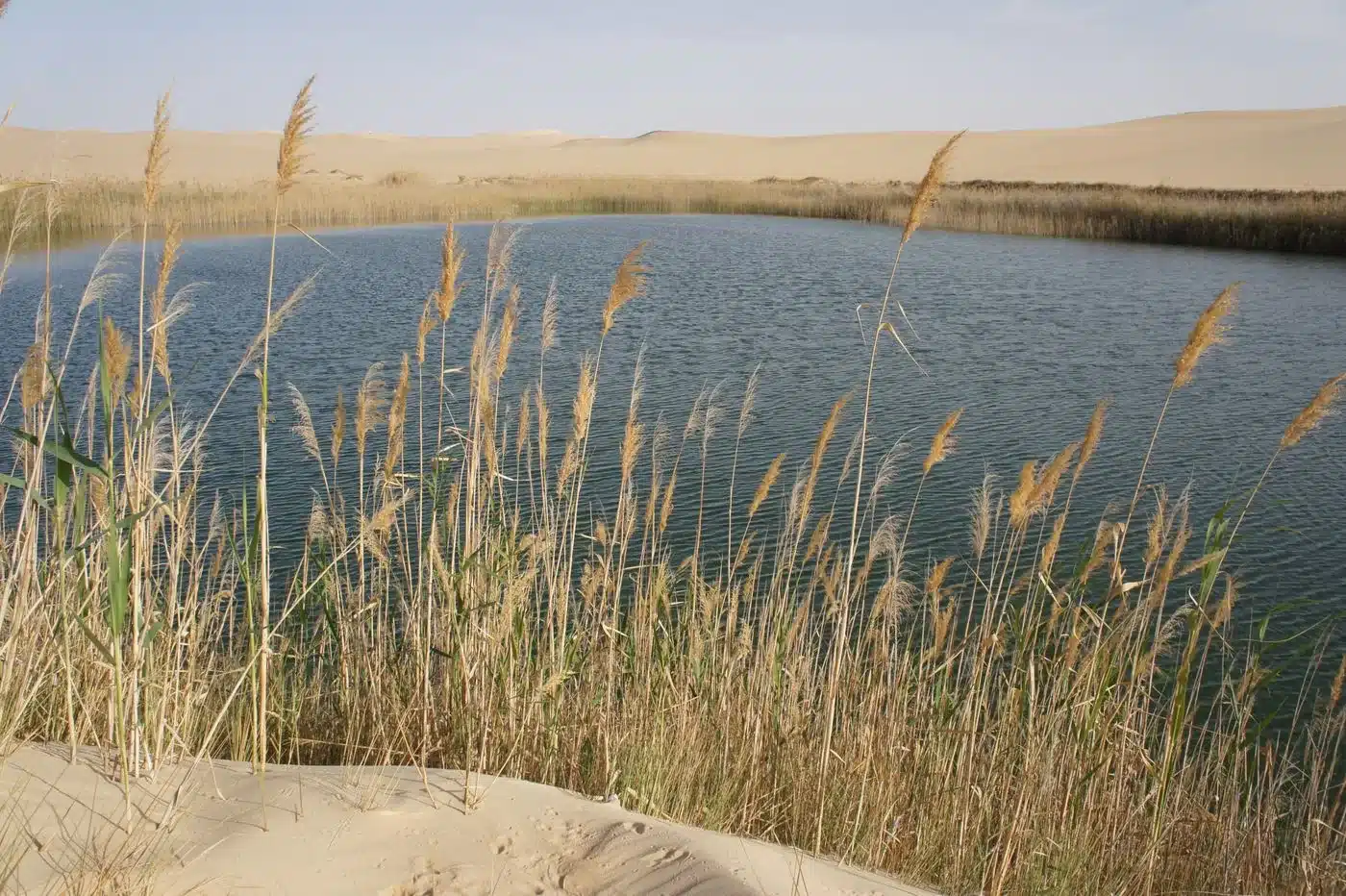
Swimming is never obligatory. The landscape alone makes the visit worthwhile, especially when combined with dune viewpoints, sandboarding and a sunset stop. If you have limited mobility, sensitive skin or a medical condition affected by heat, tell the operator before departure so the itinerary can be adapted.
Cleopatra’s Spring: the easiest spring to visit
Cleopatra’s Spring, also known as Cleopatra’s Bath or Ain Cleopatra, sits within the cultivated oasis rather than deep in the desert. A circular stone pool receives flowing spring water, while cafés, palms and local stalls create a more social atmosphere. It is commonly combined with Aghurmi, the Temple of the Oracle and nearby villages.
The name is part of local tradition; there is no firm evidence that Cleopatra VII bathed here. That does not reduce the site’s value. The spring shows how water, agriculture and social life meet in Siwa, and it offers an accessible pause between archaeological stops. Our dedicated Cleopatra Spring visitor guide covers clothing, swimming etiquette, timing and the historical claim in detail.
Can you swim at Cleopatra’s Spring?
Visitors sometimes enter the pool, but the situation is not identical every day. Local customs, water condition, crowd levels and operational decisions should guide you. Wear modest swimwear, use a towel or cover-up when walking around the cafés, and never use soap, shampoo or sunscreen immediately before entering a natural spring.
For a quieter visit, go in the morning rather than arriving with the main afternoon circuit. If you only want photographs and tea, you can enjoy the stop without swimming.
Fatnas Spring and the difference between spring and lake
Fatnas Island is best known for sunset over the lake, but Egypt’s official tourism platform also notes a freshwater spring among its palms. Visitors frequently confuse this smaller spring environment with the surrounding saline lake. The two bodies of water should not be treated as interchangeable.
Fatnas works best as a relaxed evening stop: arrive 60–90 minutes before sunset, walk through the palms and choose a lake-facing seat. Read our full Fatnas Island Siwa guide for current planning advice. If your main goal is a proper soak, ask a local operator whether Fatnas or another spring is suitable on the day rather than building the entire itinerary around an assumed swimming stop.
Other springs around Siwa
You may hear names such as Bir Setta, Ain Qurayshat, Ain Tamusi, Abu Shrouf and other local wells or springs. Spellings vary because Arabic and Siwi names are transliterated differently. Some sites are used for agriculture or by local communities, some have simple bathing pools, and some appear on old maps or blog posts without reliable visitor information.
A long online list is less useful than current local knowledge. Access roads change, pools are maintained at different times, and a site that suited swimming during one visit may not be recommended later. Ask three practical questions before adding a lesser-known spring:
- Is the site open and appropriate for visitors today?
- Is the water suitable for bathing, or is it primarily an irrigation source?
- Can it be reached on the planned route without crossing restricted or unstable terrain?
A private itinerary has an advantage here. Your guide can choose a spring that fits the day’s conditions instead of forcing a fixed stop because it appeared on an old checklist.
Hot springs, cold springs and salt lakes: what is the difference?
| Experience | Typical setting | Best for | Main caution |
|---|---|---|---|
| Warm spring pool | Stone or earth-lined pool fed by groundwater | A short soak and desert atmosphere | Temperature and cleanliness vary |
| Cold freshwater spring | Lake or pool with reeds and vegetation | Cooling down and landscape photography | Depth, visibility and entry points are natural |
| Salt pool | Highly saline excavation or pool | Effortless floating | Stings cuts and should never be dived into |
| Siwa lake shoreline | Broad saline lake landscape | Sunset and birdlife views | Not every shore is accessible or suitable for swimming |
This is why “take me to a Siwa hot spring” needs clarification. Tell the operator whether you want a warm soak, a salt float, a photogenic lake or a full desert safari. The correct route depends on the experience, not merely the word “water.”
How to visit Bir Wahed safely
Use a licensed local operator and appropriate 4×4
Deep-desert navigation is a specialist job. Dune faces shift, tracks disappear and mobile coverage cannot be assumed. A responsible operator considers permissions, vehicle condition, recovery equipment, water supply, weather and the experience of the driver. Price should not be the only deciding factor.
Our Siwa desert safari guide explains route formats, sandboarding, private versus shared trips and questions to ask before booking. The private 4-day Siwa itinerary gives more room for Bir Wahed without compressing the historical sites into a rushed morning.
Do not rely on a fixed route description
A map pin is not a substitute for permission or desert experience. Protected-area and security arrangements can change. Your final route may omit, replace or reorder stops while still delivering an excellent safari. A trustworthy guide explains the change rather than pretending that every location is always accessible.
Protect the water source
Natural desert water is ecologically and socially important. Do not use shampoo, soap or detergent in the pool. Avoid glass bottles, keep food away from the edge, and take all rubbish back to town. Do not remove reeds, fossils, stones or plants as souvenirs.
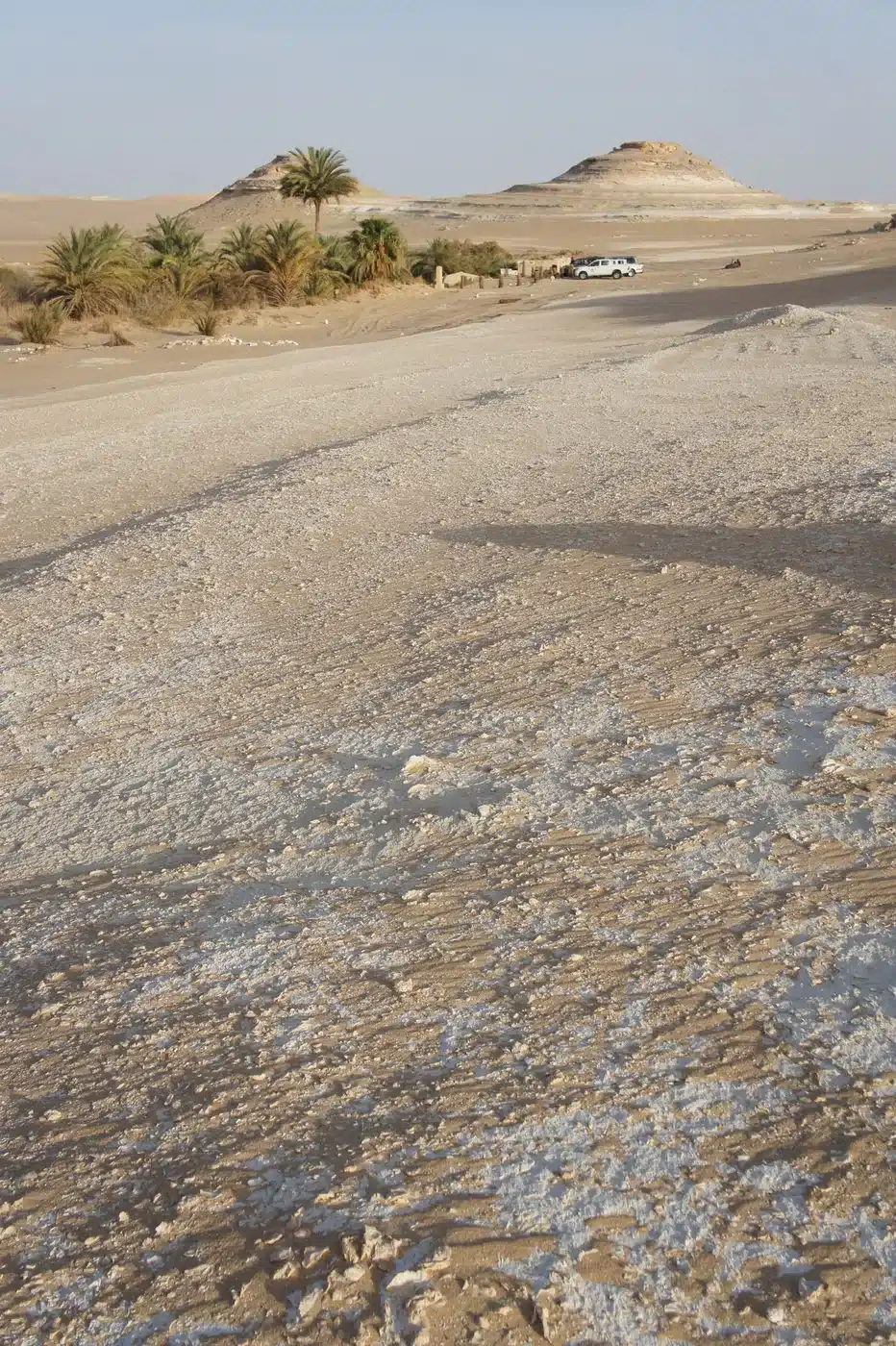
If you notice shells or fossil-like textures in the rock, photograph them in place. Removing geological material damages the landscape and can conflict with protected-area rules.
Best time to visit Siwa’s springs
October through April is generally the most comfortable season for combining spring visits with archaeological sites and desert driving. Daytime conditions are milder than in summer, though winter evenings in the desert can be cold. March and April may bring wind or dust, while exact conditions vary from year to year.
Summer travel is possible, but the heat changes the rhythm of the day. Early mornings and late afternoons become more important, and a hot pool may be less appealing at midday. Do not assume that being near water removes the risk of dehydration or sun exposure.
For month-by-month temperature patterns, packing and seasonal trade-offs, use our best time to visit Siwa Oasis guide.
Best time of day
- Morning: quieter for springs close to town and better for combining Cleopatra’s Spring with the Oracle.
- Midday: workable in the cooler months, but shade and hydration remain important.
- Late afternoon: good for desert light, though the safari schedule must leave enough time before sunset and return.
- After dark: only when specifically organised by a professional operator; desert temperatures drop quickly.
What to pack for a spring and desert day
- Swimwear that feels appropriate in a conservative oasis community.
- A light cover-up or quick-drying shirt for cafés and village areas.
- Two towels: one for the spring and a clean one for later.
- Fresh water for drinking and gently rinsing skin.
- Closed shoes for sand and rough ground, plus sandals for the pool edge.
- A hat, sunglasses and high-protection sunscreen applied well before entering water.
- A waterproof pouch for your phone and a dry bag for clothes.
- Personal medication, including anything needed for allergies or heat sensitivity.
Avoid expensive jewellery and do not take unnecessary electronics to the water’s edge. Fine sand enters camera mechanisms easily; keep lenses covered during dune driving and change lenses inside the vehicle if possible.
Can children visit the springs?
Families can enjoy spring visits, but natural water requires closer supervision than a hotel pool. There may be no lifeguard, depth markers, handrails or non-slip paving. An adult should remain within reach of young children, and flotation equipment should not create false confidence.
The 4×4 journey to Bir Wahed also involves dunes, heat and a longer period away from town. Tell the operator the children’s ages before booking. A shorter private safari, more shade breaks and a flexible departure time may be better than joining a fixed group programme.
Health and bathing precautions
Natural springs are not medically controlled spa pools. Do not drink the water. Avoid entering with open wounds, fresh shaving cuts or a skin infection. People who are pregnant or who have heart, blood-pressure or heat-related conditions should ask a qualified medical professional for personal advice before using a warm pool.
Enter slowly, keep the first soak brief and leave if you feel dizzy, overheated or unwell. Hydrate before and after. These precautions are sensible even when the water feels comfortable because sun, dehydration and travel fatigue can combine.
A realistic one-day springs and safari plan
A good itinerary does not try to visit every named spring. It combines one easy oasis spring with one high-value desert experience:
- Morning: visit the Temple of the Oracle, Aghurmi and Cleopatra’s Spring.
- Lunch: return to town or eat at a locally arranged stop, then rest during the strongest sun.
- Afternoon: meet the licensed desert driver, confirm the permitted route and enter the Great Sand Sea.
- Safari: include dune viewpoints, optional Siwa sandboarding and Bir Wahed when access is permitted.
- Sunset: stop at a safe desert viewpoint or return toward the oasis according to the day’s route.
Trying to add the salt lakes, Mountain of the Dead, Shali Fortress and Fatnas to the same day produces a checklist rather than a meaningful visit. Spread these sights across a 3-, 4- or 5-day Siwa itinerary.
Photography tips for Bir Wahed
The strongest photographs show the relationship between water and desert. Use reeds, palms or the edge of the pool as foreground, then leave space for the dunes behind. Midday light can flatten the landscape, while late-afternoon side light reveals ripples and dune texture.
- Keep the horizon level when photographing the lake.
- Use a polarising filter carefully; maximum polarisation can make the water look unnaturally dark.
- Ask permission before photographing local people or other swimmers.
- Do not walk onto fragile banks only to obtain a cleaner angle.
- Wipe fine dust from the camera body before touching the lens.
Frequently asked questions
Are all Siwa hot springs actually hot?
No. Siwa has warm pools, cool freshwater sources, saline lakes and irrigation springs. Ask which exact site is included and what the current water conditions are.
Can I visit Bir Wahed without a tour?
Bir Wahed lies in desert terrain where permissions, a suitable 4×4 and local navigation matter. Arrange it through a licensed, experienced local operator rather than attempting an independent drive.
Is Bir Wahed the same as Cleopatra’s Spring?
No. Bir Wahed is a desert mini-oasis reached during a safari. Cleopatra’s Spring is within the inhabited oasis and is easily combined with nearby cultural sights.
Are Siwa hot springs free?
Charges and arrangements differ. A spring may have a local entry or service charge, while Bir Wahed is normally included within the price of a 4×4 safari. Confirm inclusions before departure rather than relying on an old online price.
Can I swim in the springs?
Sometimes, but not automatically. Ask your guide about access, depth, water condition and local etiquette. Never use soap or shampoo in a natural spring.
How long should I allow?
A spring near town may need 45–90 minutes. Bir Wahed is part of a half-day or longer desert safari because travel through the dunes, safety and permissions determine the schedule.
Plan a private Siwa springs and safari tour
The best spring itinerary is flexible. It should account for your dates, swimming preferences, mobility, children, weather and the routes permitted during your visit. A local private guide can combine cultural sites with a desert spring without making the day feel like a race.
Review our Siwa tour cost guide, then choose the 3-day Siwa tour for the essentials or the 4-day private Siwa tour for more breathing room. Tell us whether Bir Wahed, salt floating, archaeology or photography is your priority, and we will shape the route around the experience you actually want.
Useful official references: Egypt’s Deserts and Oases guide, the official Siwa Oasis destination page, and the Wikimedia Commons Siwa collection used for licensed visual documentation.