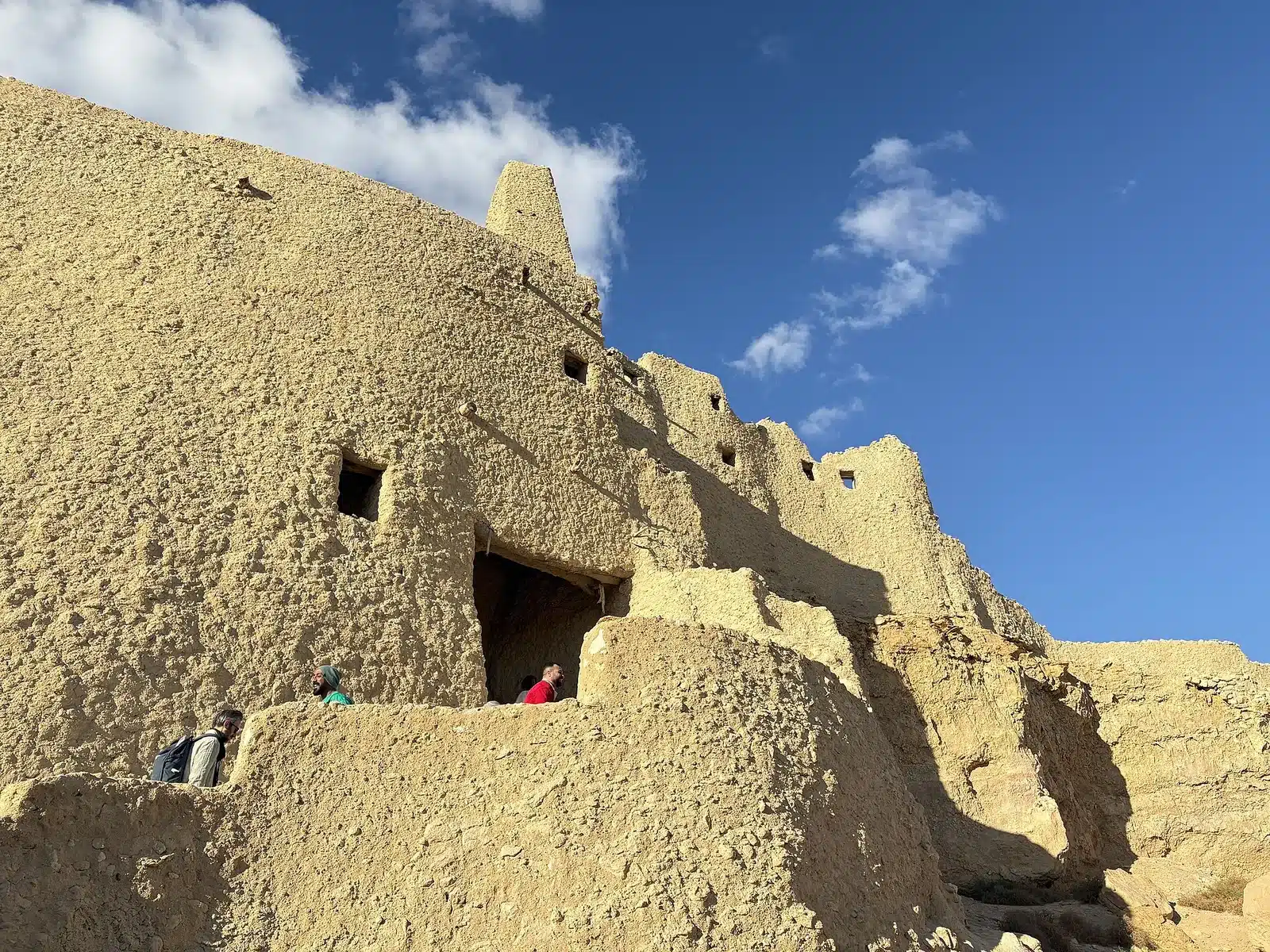
The Oracle of Siwa is the ancient sanctuary that made this remote Egyptian oasis famous across the Mediterranean world. Standing on Aghurmi hill, the surviving Temple of Amun is closely associated with Alexander the Great, who crossed the Western Desert to consult its oracle in 331 BC. Today, the climb is short, the ruins are atmospheric, and the view over Siwa’s palm groves helps explain why this isolated place felt sacred. This guide separates history from legend and shows you how to plan a rewarding visit.
Oracle of Siwa quick facts
- Where: Aghurmi village, a short drive east of Siwa town.
- Main site: The Oracle Temple, a sanctuary of Amun on Aghurmi hill.
- Famous visitor: Alexander the Great in 331 BC.
- Allow: About 45–75 minutes, longer with a knowledgeable local guide.
- Best light: Morning or late afternoon; midday can be hot and harsh.
- Combine with: Umm Ubaydah Temple, Cleopatra’s Spring and other eastern-oasis sights.
What is the Oracle of Siwa?
The Oracle of Siwa was a place where rulers, military leaders and other petitioners sought divine guidance from Amun. The sanctuary occupied an extraordinary position: far from the Nile Valley, yet respected well beyond Egypt. Greek visitors identified the Egyptian god Amun with Zeus, creating the name Zeus-Ammon or Zeus-Amun in classical accounts.
The oracle’s seat was the temple at Aghurmi, built on a natural limestone outcrop above the oasis. Its elevated setting still matters. From the top, cultivated gardens and date palms spread beneath desert escarpments. The landscape gives the site a sense of separation from ordinary life, even before its historical story is explained.
Scholars generally place the surviving temple in Egypt’s Late Period, commonly connecting it with the reign of Pharaoh Amasis II in the sixth century BC. The sanctuary was therefore already established before Alexander arrived. Its reputation had travelled through the Mediterranean for generations.
Which Temple of Amun should you visit in Siwa?
This is the point that confuses many online guides. Siwa has two related ancient sanctuaries, and their names are often mixed together:
- The Oracle Temple at Aghurmi: the hilltop sanctuary traditionally identified with the oracle consulted by Alexander.
- The Temple of Amun at Umm Ubaydah: a second temple a short distance away. Much of it was destroyed in the nineteenth century, but one decorated wall survives.
They are not two names for exactly the same ruin. A good Siwa sightseeing route includes both because they tell one larger story: Aghurmi provides the oracle, surviving chambers and panoramic setting; Umm Ubaydah shows another part of Amun’s religious landscape. When you arrange a private 4-day Siwa tour from Cairo, ask for enough time to visit both rather than making a rushed photo stop.
Alexander the Great and the Oracle of Amun
Alexander entered Egypt in 332 BC after defeating Persian forces in the eastern Mediterranean. He founded Alexandria, then made the difficult journey west to Siwa in early 331 BC. That detour was not an ordinary sightseeing trip. Consulting a prestigious oracle could carry religious and political weight for a new ruler of Egypt.
Ancient authors describe dramatic desert episodes on the route, including lost tracks, scarce water and divine signs that guided the expedition. These accounts were written after Alexander’s lifetime and differ in their details. They are part history, part royal storytelling. The central event—the visit to Amun’s oracle at Siwa—is widely accepted, but the exact words exchanged inside the sanctuary are not known with certainty.
A famous tradition says the oracle greeted Alexander as the son of Zeus-Ammon and confirmed his divine parentage. Other versions suggest a linguistic misunderstanding or a more conventional royal greeting. Alexander did not publish a transcript, and the consultation may have been private. It is safest to say that the answer was favorable and that later writers connected the visit with Alexander’s divine status. That distinction makes the story more interesting, not less: the mystery is one reason people still debate the Oracle of Siwa today.
Why did Alexander travel so far to Siwa?
Historians propose overlapping motives. Alexander may have wanted religious confirmation of his rule, an answer about his destiny, or association with a sanctuary respected by Egyptians and Greeks. He also understood symbolism. Reaching a remote oracle that earlier Mediterranean rulers knew by reputation presented him as a leader favored by the gods.
The journey also connected Alexander to Egyptian kingship. Pharaohs were understood to rule through divine legitimacy, while the Greeks recognized Amun as a form of Zeus. Siwa offered a bridge between those cultural worlds. No single motive needs to exclude the others.
What survives at the Oracle Temple today?
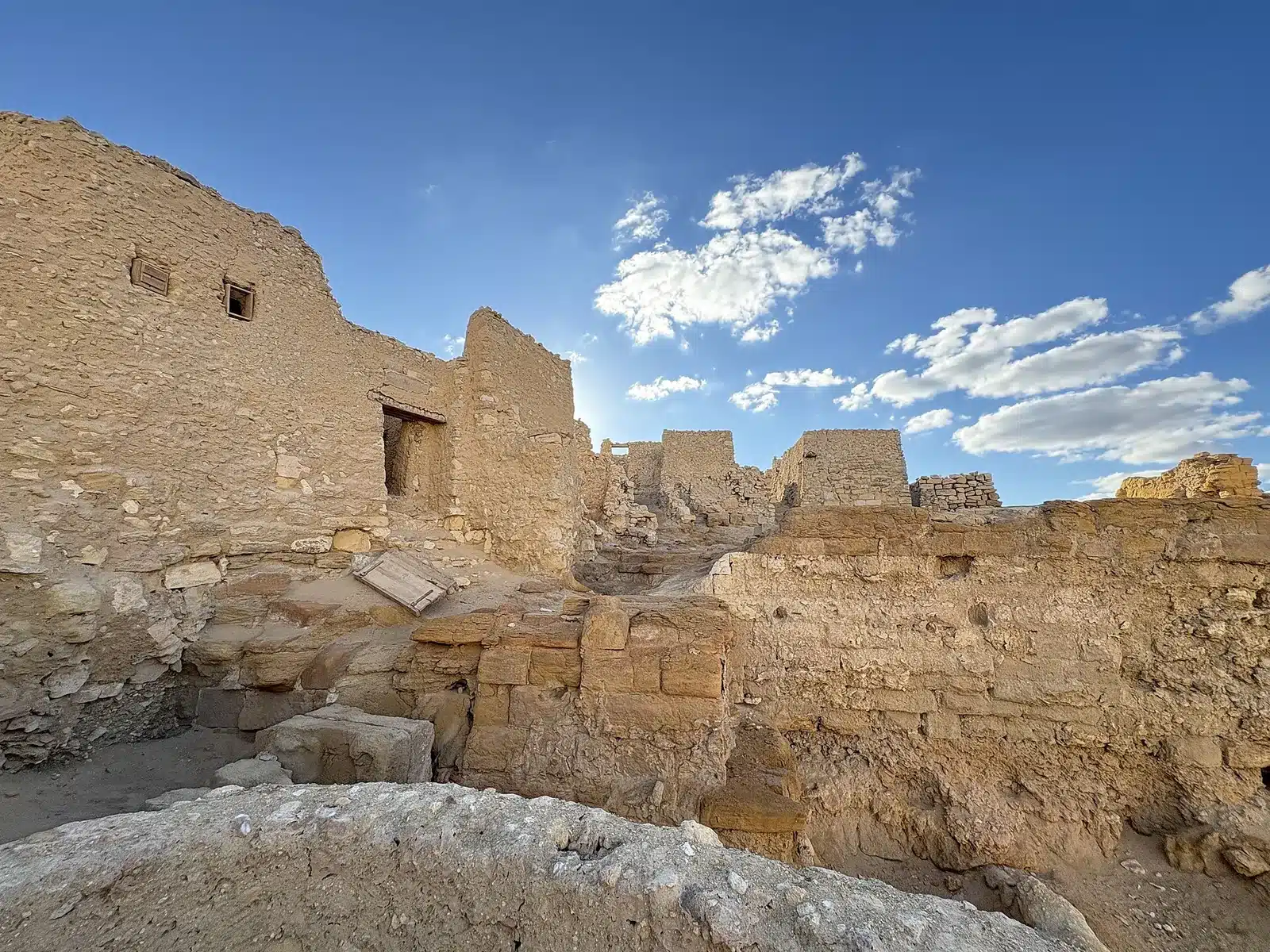
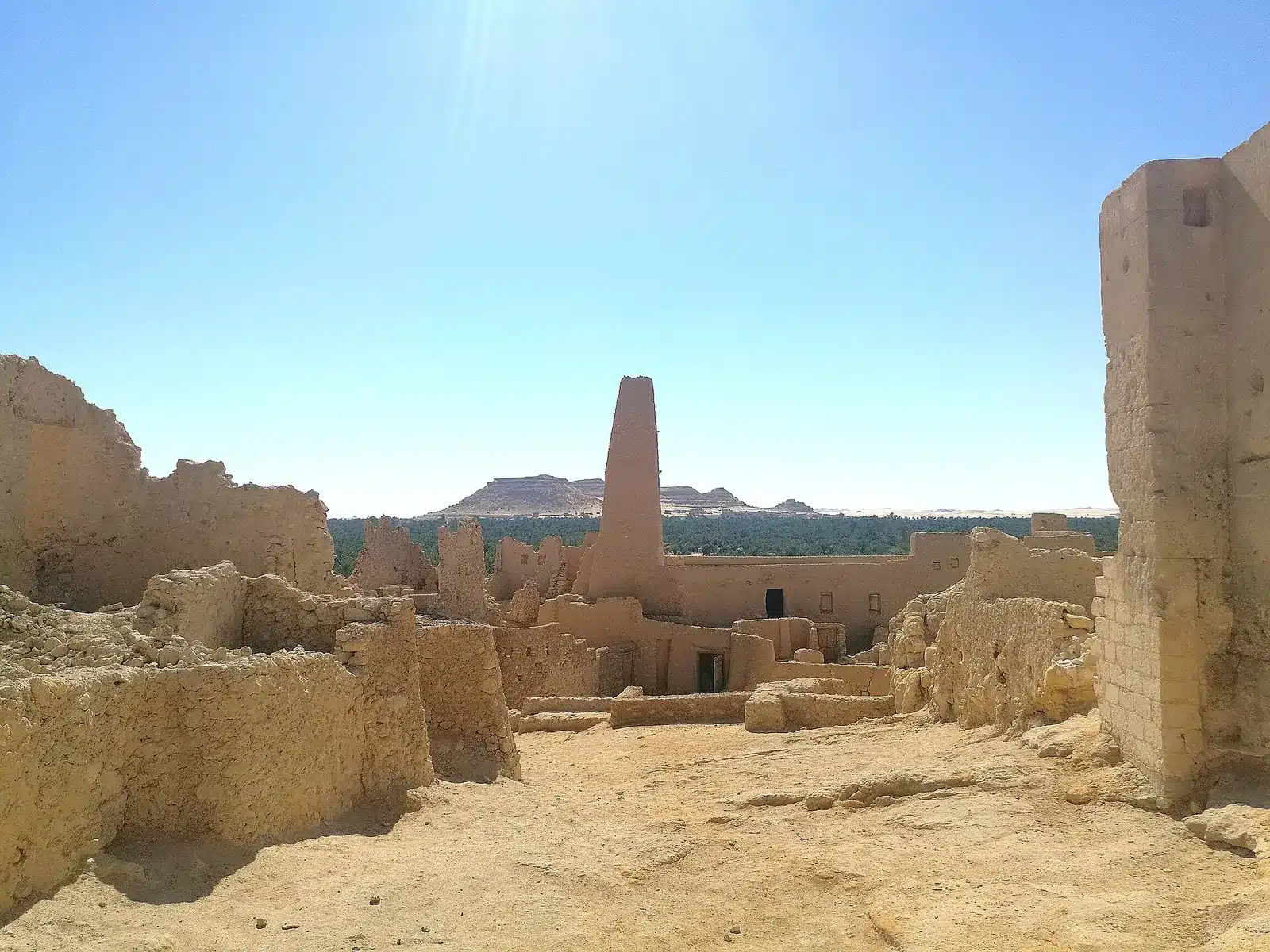
Visitors should expect an archaeological ruin, not a complete pharaonic temple. Aghurmi hill has been occupied and rebuilt over many centuries, so ancient stonework stands among later mud-brick remains. The core sanctuary preserves chambers, doorways and carved architectural elements. Look slowly rather than treating the site as a single viewpoint.
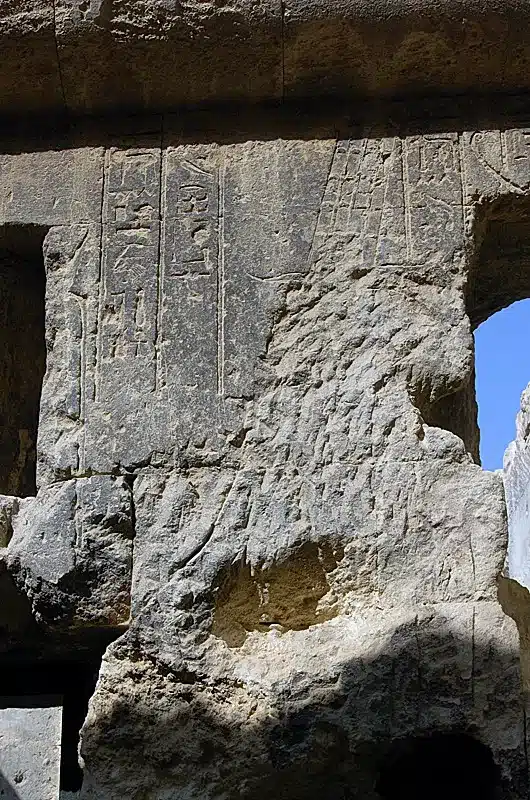
The most important surviving details include traces of relief and inscription in the sanctuary area. Weathering has made some scenes difficult to read, and conservation barriers should always be respected. A guide can point out the original temple fabric, later additions and sightlines that are easy to miss without context.
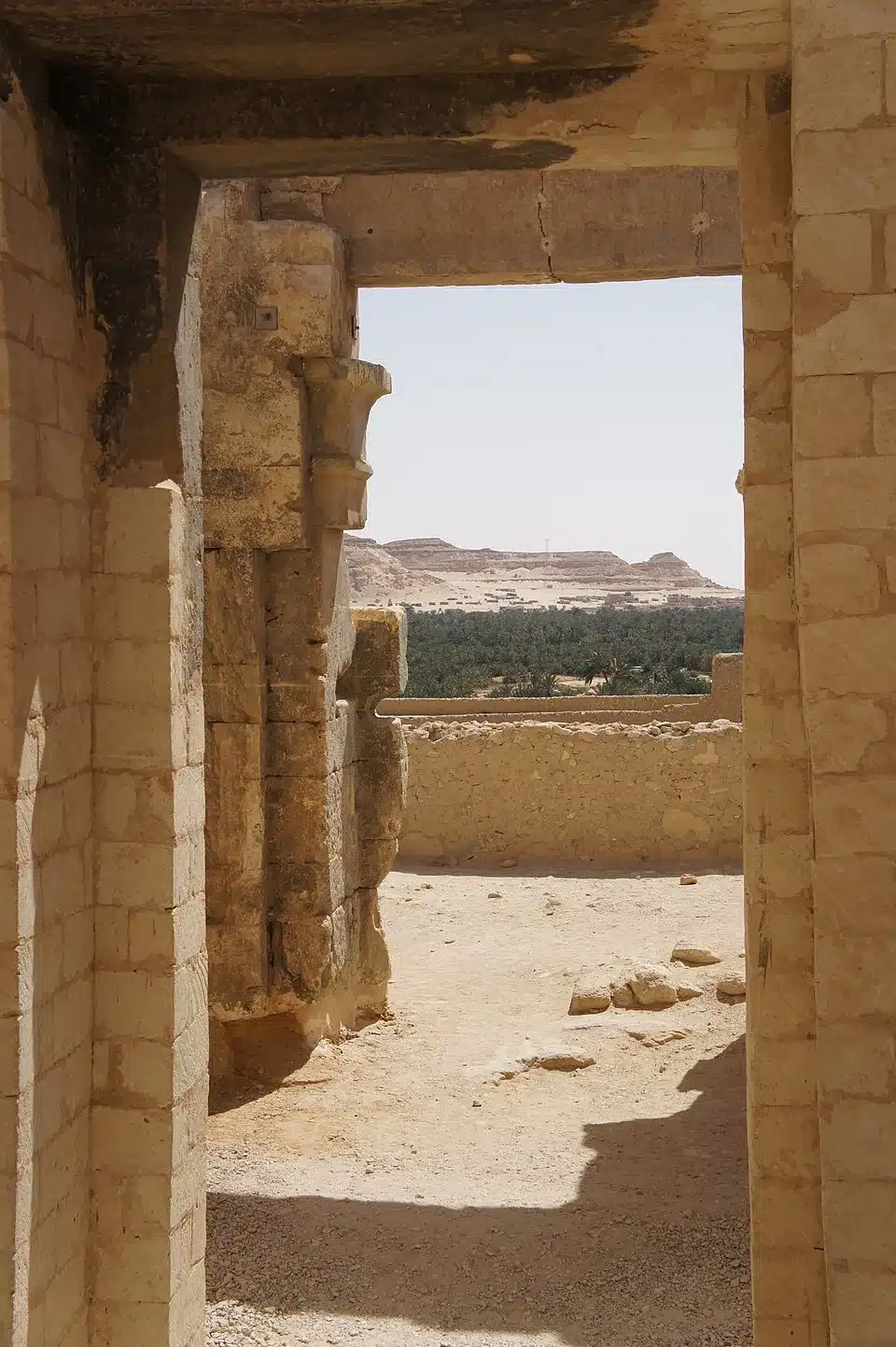
The hilltop view is part of the experience. The oasis appears as a green island surrounded by pale desert, salt lakes and rocky tablelands. That contrast is particularly clear in soft light. It also makes the site’s ancient isolation tangible: Alexander’s party did not arrive on a paved highway but crossed a demanding desert frontier.
How did the Oracle of Amun work?
No reliable step-by-step manual for a consultation at Siwa survives. Ancient descriptions of Egyptian and Mediterranean oracles suggest that priests mediated communication with the deity. A sacred image, ceremonial movement, interpreted signs, formal questions or spoken responses may have played a role. However, it would be misleading to describe one exact ritual as proven for every Siwa consultation.
The architecture itself tells us that access was controlled. Moving from open exterior space into restricted chambers created a sequence of increasing sacredness. Important visitors may have entered areas unavailable to ordinary petitioners. Alexander’s meeting was remembered as exceptional, and later stories amplified that exclusivity.
This is where a historically responsible visit differs from a mythology-only tour. The legends deserve to be told, but they should be identified as legends. The surviving stone, known chronology and ancient texts provide the evidence; uncertainty should remain visible where the sources disagree.
Is the Oracle of Siwa a UNESCO World Heritage Site?
Not at present. The wider archaeological area of Siwa is included on Egypt’s UNESCO Tentative List, which identifies places a country may consider for future nomination. A tentative listing is not the same as inscription on the World Heritage List. The distinction matters because many travel pages incorrectly call the temple a UNESCO World Heritage Site.
The tentative-list entry recognizes a landscape containing the Oracle Temple, the second Temple of Amun at Umm Ubaydah, Gebel al-Mawta and other monuments. That wider context is useful when planning: the oracle should not be isolated from the oasis’s tombs, settlements, springs and living Siwan culture.
How to visit the Oracle of Siwa
Location and transport
Aghurmi lies east of central Siwa. The drive is short, but coordinating transport between archaeological sites is easier with a local driver or guide. Most visitors reach the oasis overland from Cairo or Alexandria. For realistic journey times and route choices, read our guide to travelling from Cairo to Siwa Oasis.
Opening arrangements and admission prices can change. Check locally on the day of your visit instead of relying on an old screenshot or blog price. A locally organized itinerary can adapt if conservation work, seasonal schedules or official closures affect access.
How long do you need?
Allow roughly 45 to 75 minutes at Aghurmi. A quick climb and photograph can be shorter, but it misses the story. Add time for Umm Ubaydah and nearby stops. A comfortable eastern-Siwa circuit usually works better as a half-day than as a list of rushed ten-minute visits.
Best time of day
Morning and late afternoon usually offer kinder temperatures and better light. In warmer months, exposed stone and limited shade can make midday tiring. Season matters too: our detailed best time to visit Siwa guide compares winter, spring, summer and autumn conditions.
What to wear and carry
- Closed or secure shoes with grip for uneven stone and dusty steps.
- Water, a hat and sun protection; shade can be limited.
- Modest, breathable clothing suitable for a conservative oasis community.
- A light layer in winter, when mornings and evenings can feel cool.
- A camera or phone, while observing any signs that restrict photography.
Accessibility and families
The site involves an ascent, steps, irregular surfaces and areas without modern handrails. It may be difficult for visitors with limited mobility. Families can enjoy it, but young children need close supervision around edges and fragile remains. Tell your tour operator about mobility needs before booking so the route and timing can be adjusted honestly.
Best Siwa itinerary for the Oracle Temple
The oracle is essential, but Siwa deserves more than one overloaded day. A balanced trip combines archaeological visits with living culture, desert scenery and unhurried time in the oasis.
On a 3-day Siwa trip
Use one full day for Aghurmi, Umm Ubaydah, a spring, Shali and a sunset viewpoint. Reserve another major block for the Great Sand Sea. The schedule is possible but road travel from Cairo makes it relatively intense.
On a 4-day Siwa trip
Four days create better balance. You can explore the archaeological circuit without sacrificing a proper Siwa desert safari, sand dunes and time in town. This is the duration we recommend for many first-time visitors. Compare the day-by-day options in our Siwa Oasis itinerary.
On a 5-day Siwa trip
An extra day suits photographers, history lovers and travelers who dislike rushing. It creates room for Fatnas Island, salt lakes, village crafts, a longer desert experience or relaxed café time. Your accommodation also becomes part of the experience; our Siwa hotel guide explains the trade-offs between central stays, ecolodges and remote desert properties.
What to combine with the Temple of Amun
- Umm Ubaydah: the second sanctuary of Amun and the most important companion stop.
- Cleopatra’s Spring: a historic spring and practical refreshment stop nearby; the popular name does not prove Cleopatra visited it.
- Gebel al-Mawta: the Mountain of the Dead, with rock-cut tombs from different periods.
- Shali Fortress: the old settlement at the heart of modern Siwa.
- Great Sand Sea: dunes, desert viewpoints and optional sandboarding in Siwa.
- Salt lakes: striking mineral-rich pools whose accessibility varies with conditions and local management.
If you are deciding how much time and budget to allow, see our transparent breakdown of Siwa tour costs from Cairo. It explains what changes a private-tour price, including vehicle type, hotel standard, desert permits, group size and inclusions.
How to visit responsibly
The Oracle Temple is irreplaceable heritage, not a film set. Do not climb ancient walls, touch reliefs, remove stones or cross barriers for a photograph. Even apparently solid mud-brick and limestone can be fragile. Follow site staff, keep food and litter away from the ruins, and use established paths.
Responsible travel also includes the community around the monument. Ask before photographing local people, dress respectfully and buy directly from Siwan craftspeople when possible. A local guide keeps more tourism value in the oasis and adds context that a generic checklist cannot provide.
Is the Oracle of Siwa worth visiting?
Yes—especially if you value history, landscape or the story of Alexander the Great. The ruins are not as monumental as Karnak or Abu Simbel, but size is not their main appeal. Few places combine a globally famous ancient story with such a remote, readable setting. From the hill, you can see the oasis that sustained the sanctuary and the desert that protected its mystique.
The visit becomes much stronger when Aghurmi and Umm Ubaydah are explained together. Without that context, travelers may leave with only a photograph and a confused temple name. With it, the oracle becomes a key chapter in the meeting of Egyptian, Libyan and Greek worlds.
Frequently asked questions
Where is the Oracle of Siwa?
It is on Aghurmi hill, east of Siwa town in Egypt’s Western Desert. It is normally visited by car, tuk-tuk or as part of a guided oasis circuit.
Did Alexander the Great visit the Oracle of Siwa?
Yes. Ancient sources agree that Alexander visited the oracle in 331 BC. The exact private question and answer remain uncertain, and later accounts differ in their wording.
Was Alexander declared a god at Siwa?
Later traditions connect the oracle’s favorable greeting with Alexander being recognized as the son of Zeus-Ammon. Historians treat the precise exchange cautiously because no contemporary transcript survives.
Is the Oracle Temple the same as Umm Ubaydah?
No. The oracle sanctuary stands at Aghurmi. Umm Ubaydah is a second Temple of Amun nearby. Both belong in a complete historical tour of eastern Siwa.
How old is the Oracle Temple?
The surviving sanctuary is generally associated with Egypt’s Late Period and often dated to the sixth century BC, before Alexander’s visit.
How much time should I spend there?
Plan around 45–75 minutes for the hilltop temple, then extra time for Umm Ubaydah and nearby attractions. Travelers interested in archaeology or photography may want longer.
Can I visit the Oracle of Siwa without a guide?
You can reach the site independently when it is open, but a knowledgeable local guide makes the separate temples, chronology and surviving details much easier to understand.
Can the Oracle Temple fit into a private Siwa tour?
Yes. It is a core stop on our private Siwa Oasis tour from Cairo, and the schedule can be adapted to your interests and pace.
Plan your private Oracle of Siwa visit
Egypt Safari Travel is led by local desert specialists who plan private journeys around real travel times, current conditions and the interests of each group. We can combine the Oracle Temple and Umm Ubaydah with Siwa’s old town, springs, salt lakes and a Great Sand Sea safari—without turning the oasis into a race between photo stops.
Start with our complete Siwa Oasis travel guide, then contact us for a private Siwa itinerary tailored to your dates, hotel style and group size.
Research note: Historical details were checked against the UNESCO Tentative List entry for Siwa, the Metropolitan Museum of Art and the Oxford Classical Dictionary. Opening conditions and local admission arrangements can change, so practical details should be reconfirmed close to travel.