Siwa sandboarding is one of the easiest ways to turn a Great Sand Sea safari into a memory you can physically feel: a short climb, a quiet pause on the ridge, then a fast glide down soft golden sand. You do not need snowboarding experience, and a careful local driver can choose a gentle practice slope before anyone attempts a longer descent. In Siwa, sandboarding is normally booked as part of a private 4×4 desert safari rather than as a stand-alone town activity.
This guide explains what the experience is really like, how beginners can learn safely, what to wear, what a sensible safari should include, and how to fit sandboarding into a wider Siwa itinerary. It also separates the fun of boarding from the risks of driving into the deep desert without a capable local team.
Siwa Sandboarding at a Glance
- Where: On suitable dunes in the Great Sand Sea outside Siwa Oasis.
- How: Usually as one stop within a guided 4×4 safari.
- Difficulty: Beginner-friendly when the guide selects a modest slope and demonstrates the board.
- Best season: Generally October through April for more comfortable desert temperatures; see our month-by-month Siwa weather guide.
- What matters most: A suitable board, wax, a safe slope, closed shoes, water and an experienced Siwan desert driver.
- Best trip format: A private afternoon safari that combines boarding with dune scenery and sunset, or a longer private Siwa tour from Cairo.
If sandboarding is one of your priorities, mention it before booking. Not every vehicle automatically carries boards, and weather or sand conditions can change the best place to stop. A good operator plans around the group instead of promising the same fixed dune every day.
Where Do You Go Sandboarding in Siwa?
Sandboarding takes place beyond the cultivated edge of the oasis, among the dune fields of the Great Sand Sea. This is not a marked theme park with a ticket gate and one permanent slope. Drivers select an appropriate area according to recent tracks, wind, sand firmness, visibility and the confidence of the guests.
That flexibility is part of the experience. One day a lower dune close to the main safari route may offer the smoothest surface; on another, the windward face may be too firm or the leeward face too loose. The safest choice is not necessarily the tallest dune. For a first attempt, a clean run-out area, a moderate gradient and enough space between people matter far more than height.
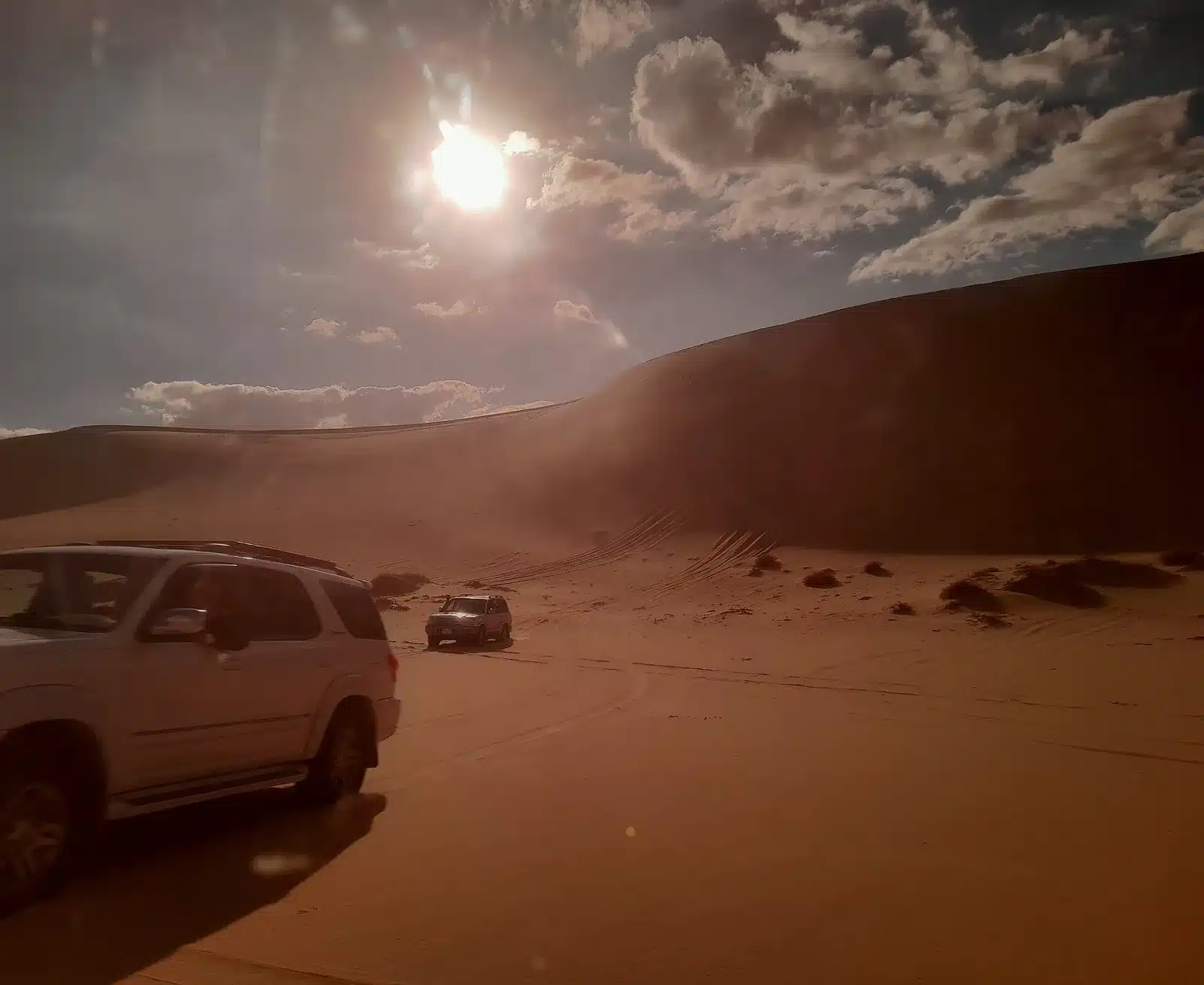
Reaching these landscapes requires off-road knowledge. Mobile reception is unreliable in parts of the desert, tracks move, and soft sand can immobilize an unsuitable vehicle. This is why we do not recommend renting a normal car and trying to follow map pins. Read the wider Siwa Desert Safari and Great Sand Sea guide for the route, vehicle and safety questions that sit around the boarding stop.
What Sandboarding in Siwa Actually Feels Like
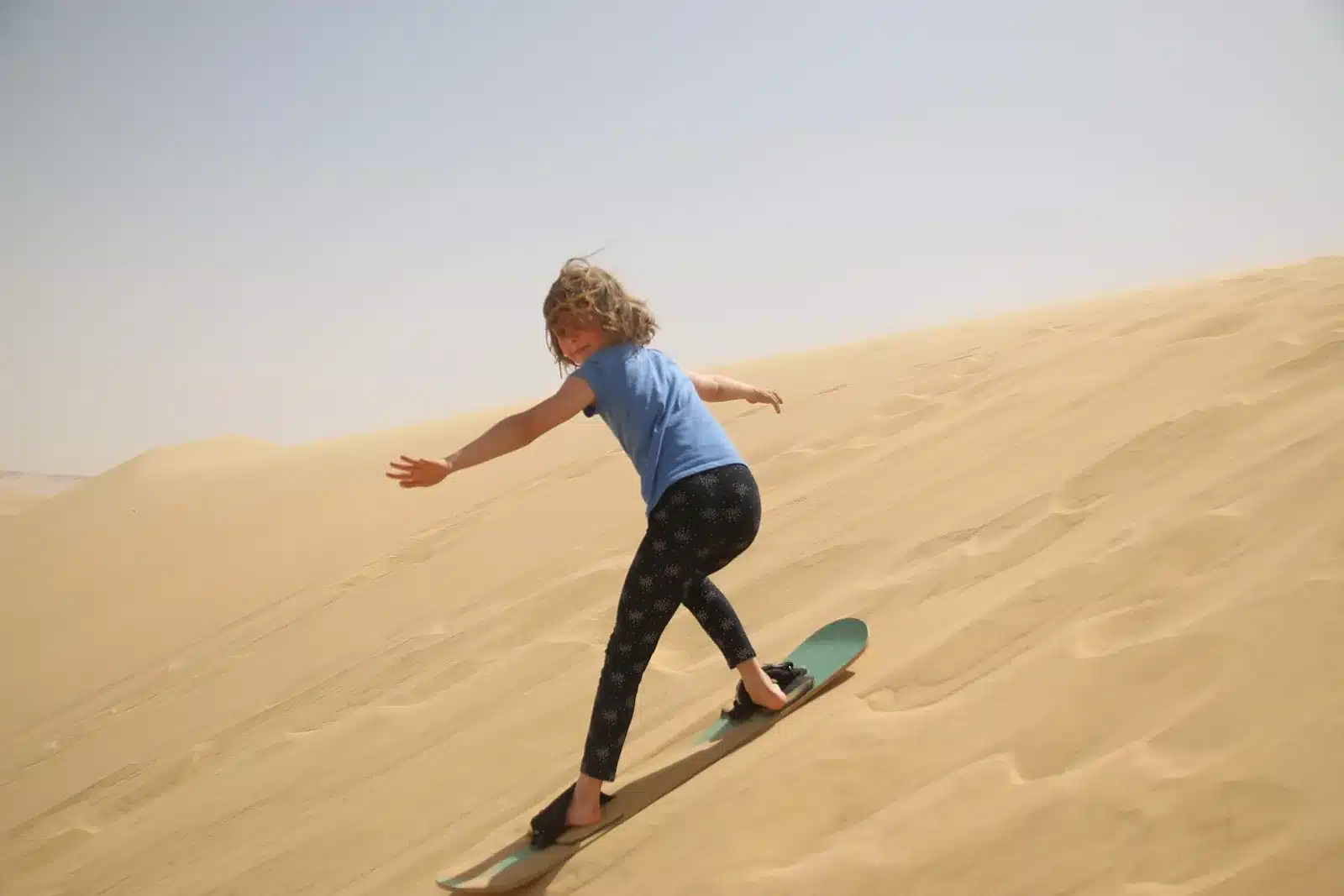
The first surprise is how quiet it is. Unlike a ski resort, there are no lifts, engines beside the slope or crowds queuing at a gate. You carry the board up under your arm, follow the footprints to a stable starting point, check that the path below is clear and then push off.
Dry sand creates more resistance than snow. A well-waxed board can accelerate quickly, but a dry base may slow suddenly. Standing gives the classic surfing feeling and makes a strong photograph, while sitting or kneeling lowers the center of gravity and is often the more enjoyable first run. Falling usually means a soft landing, but sand can still scrape skin, enter eyes or twist an ankle if a rider turns sideways at speed.
The physical challenge is often the walk back up. A descent that lasts seconds can require several minutes of climbing in loose sand. Most visitors take a few runs, rest, drink water and enjoy the view rather than treating the dune like a competitive sports session. That pace fits naturally into a relaxed private safari.
How Beginners Learn: A Sensible First-Run Sequence
- Watch the guide prepare the board. Sandboard wax is rubbed onto the base to reduce friction. The board should be checked for damaged bindings or rough edges.
- Start low. Walk only partway up a gentle face for the first run. A short successful glide teaches more than a nervous attempt from the ridge.
- Clear the landing zone. Only one rider should enter the line at a time. Other guests and vehicles must remain outside the run-out.
- Use a stable stance. Keep knees slightly bent, shoulders relaxed and weight centered. Avoid locking the knees or leaning dramatically backward.
- Begin seated if unsure. Sitting is not a lesser version of the activity. It lets children and cautious adults understand speed before considering a standing run.
- Step off early if conditions feel wrong. There is no prize for continuing on a board that is pulling sideways or a slope that feels too steep.
- Rest between climbs. Heat and effort accumulate quickly, even when the air feels cool.
A guide can demonstrate the process, but sandboarding remains an adventure activity. Listen to your body and choose the format that suits you. Guests with recent surgery, serious back or knee problems, poor balance, pregnancy or a medical condition affected by exertion should discuss the activity with a clinician and tell the operator before the trip.
Standing, Sitting or Kneeling: Which Style Is Best?
Sitting is the most accessible option. It reduces the chance of an awkward sideways fall and works well for a first run. Keep hands away from the front edge and do not place fingers under the board.
Standing offers better control once the rider understands the slope and board. Bindings and board design vary, so copy the local demonstration rather than assuming the setup works like your snowboard at home. Sand does not behave exactly like snow, and sharp carving is rarely the goal on a simple tourist run.
Kneeling can feel stable, but it exposes the knees if the rider falls forward and may be uncomfortable on boards without padding. It is not automatically safer. The best style is the one the guide approves for the available equipment and the rider’s mobility.
Board, Wax and Slope: The Three Details That Change the Ride
A sandboard is not simply any piece of wood. The base needs to slide smoothly, the edges should not be dangerously sharp, and any foot straps must match the intended stance. Wax is then applied to the underside. Without enough wax, a board can stick; with the right preparation, it glides more consistently.
The slope also changes during the day. Wind creates ripples and can erase old tracks. A face that looks beautifully steep in a photograph may end in rough ground or vegetation. An experienced driver looks at the complete line, including the place where the board slows, not only the dramatic starting point.

When comparing safari offers, ask a practical question: “Will you carry a sandboard and wax, and is boarding included in the quoted price?” That is more useful than asking only whether the tour “visits the dunes.”
What to Wear for Sandboarding in Siwa
- Closed shoes with good grip: They make climbing easier and protect feet from hot sand and board hardware.
- Light, flexible trousers: They protect knees and shins better than shorts when kneeling or falling.
- A breathable long-sleeve layer: Useful for sun protection and for the cooler air after sunset.
- Sunglasses: Choose a secure pair; wind-driven sand can be uncomfortable.
- A scarf or buff: Helpful when the wind rises, but keep loose fabric away from bindings.
- Sun protection: Hat and sunscreen are essential even on a mild winter afternoon.
Carry water in a bottle that seals properly. Put phones and cameras in a zipped pouch when you are not using them; fine sand enters lenses, charging ports and moving parts. A microfiber cloth and a small resealable bag are more useful than an oversized daypack on the slope.
Best Time of Day and Best Months
For most travelers, late afternoon is the most comfortable window. The light softens, dune shadows become more visible and the safari can continue toward sunset. However, the driver may adjust the order of stops because of wind, temperature or local access conditions.
October to April usually offers better desert comfort than the hottest part of summer. December and January can feel cool after sunset, especially in an open or windy area, so bring a warm layer. In warmer months, avoiding the strongest midday heat becomes critical. There is no month that guarantees perfectly smooth sand or zero wind; conditions are checked on the day.
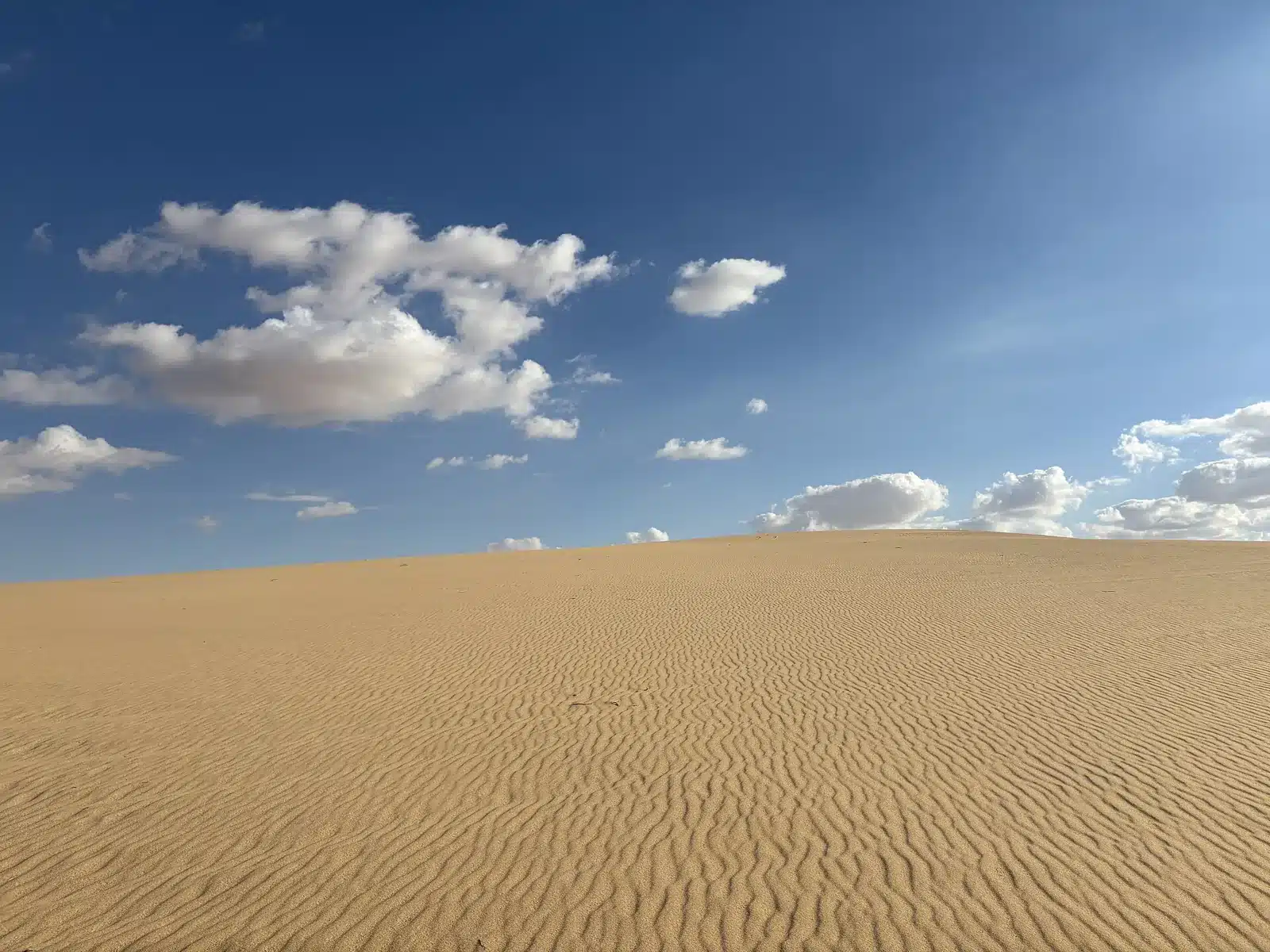
If you are still deciding when to travel, compare temperatures, crowds, events and packing needs in our best time to visit Siwa Oasis article instead of choosing a month only for one activity.
Is Siwa Sandboarding Suitable for Children and Families?
Many children enjoy a seated glide on a gentle slope, but suitability depends on age, balance, ability to follow instructions, weather and the equipment available that day. Parents should never assume a promotional photo means every child can ride independently. Ask the operator to plan a family-friendly stop, keep one adult at the bottom of the line and make sure the next rider waits until the route is clear.
A private safari is valuable for families because the group controls the pace. There is time for a child to watch, try a short seated run or skip boarding entirely without pressure from a large convoy. The desert scenery, picnic and sunset can still make the outing worthwhile for non-riders.
What a Good Siwa Sandboarding Safari Should Include
The exact route and inclusions vary, but a well-organized private outing should clearly state:
- Pickup and return arrangements in Siwa.
- A suitable 4×4 and an experienced local desert driver.
- Sandboard use and wax, if boarding is promised.
- The maximum private group size and vehicle allocation.
- Water and any meals or drinks included.
- Which permits, access charges or local fees are included.
- The policy for wind, unusual weather, vehicle problems or route changes.
- Whether sunset, hot springs or other named stops are planned rather than guaranteed regardless of conditions.
Do not choose purely by the lowest headline price. A quote can look cheap because the board, desert vehicle, meals or transfer is excluded. Our Siwa tour cost guide explains how transport, accommodation and private group size affect the complete trip budget.
How Sandboarding Fits into a Siwa Safari Afternoon
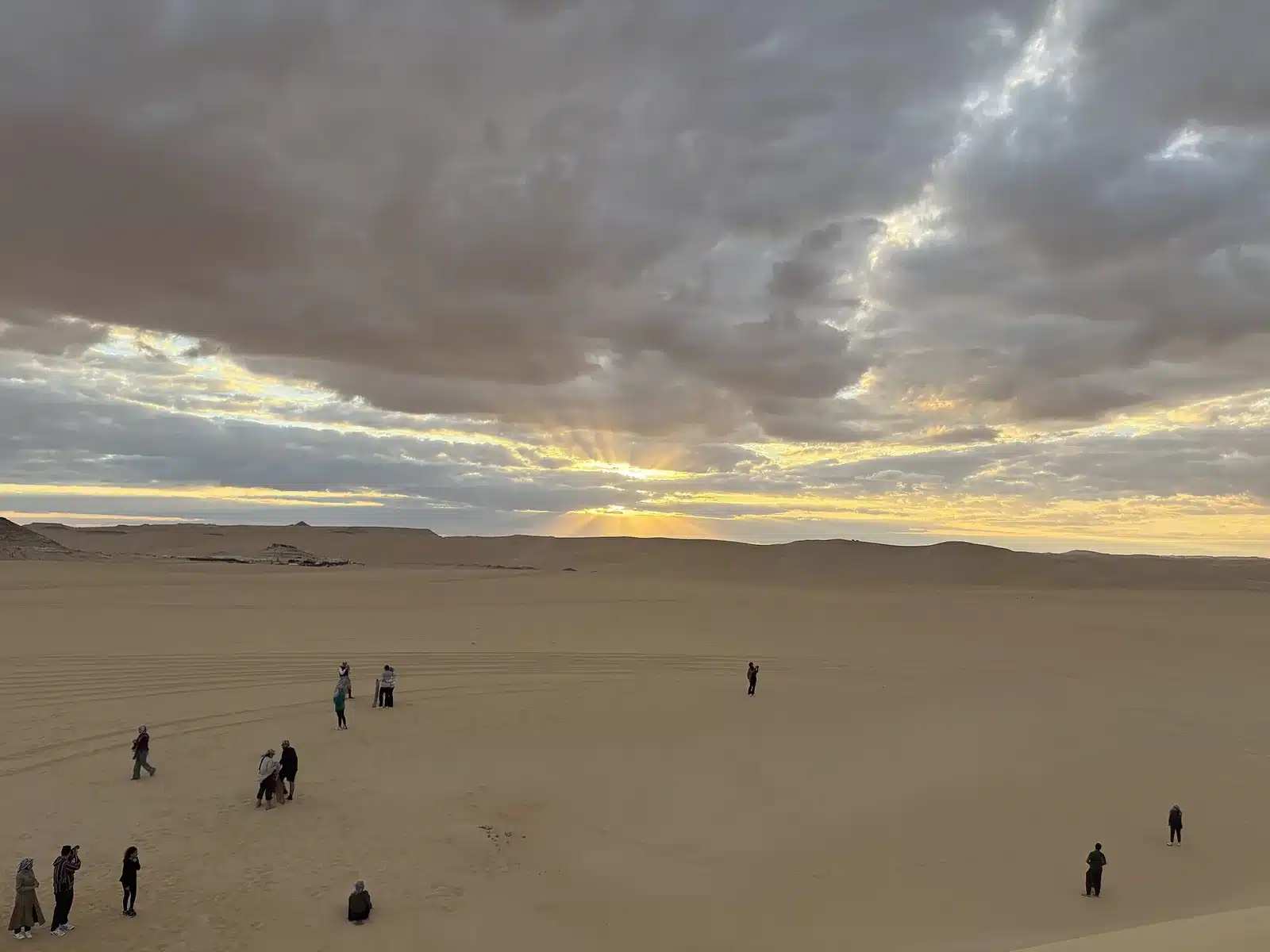
A balanced afternoon often begins after lunch, when the group leaves the oasis in a 4×4 and the landscape opens into dune country. The driver may include a viewpoint, a short dune drive and a sandboarding stop, then continue toward tea or sunset. The order is flexible; comfort and conditions matter more than reproducing a rigid checklist.
Sandboarding is usually one chapter, not the whole story. Allow time to stop, climb, practice and rest. Trying to combine too many distant points can turn the afternoon into continuous driving. If you have only three days in the oasis, use our 3-, 4- and 5-day Siwa itinerary to balance the Great Sand Sea with Shali, the salt lakes, springs and quieter town time.
Sandboarding vs Dune Driving
These are different experiences. Sandboarding is human-powered, simple and personal: climb, balance and slide. Dune driving relies on the vehicle and driver, with changes in speed and angle that can feel more intense. A traveler may love one and prefer to skip the other.
Tell the driver if anyone experiences motion sickness, has a back problem or wants a gentle route. “Private” should mean the pace can be adjusted, not that guests must accept aggressive driving. Seat belts should be worn whenever available, and boarding should take place only after the vehicle is parked safely away from the run.
Responsible Sandboarding in the Great Sand Sea
Desert landscapes look empty, but they are not disposable. Use established stops where practical, carry every bottle and wrapper back to Siwa, and do not leave broken boards or wax packaging. Avoid driving or walking over vegetation. Do not collect rocks, fossils or archaeological material, and never carve names into surfaces.
Local knowledge also has economic value. Booking a Siwan driver and locally operated service keeps more of the trip income in the oasis and supports people who understand the landscape. Respect instructions around sensitive areas and accept that the best route may change to protect guests or the desert.
Planning Sandboarding from Cairo
Siwa is far enough from Cairo that a same-day return is not realistic. Most visitors build the desert safari into a multi-day trip, allowing at least one full day in the oasis after the long road journey. For transfer choices and realistic timings, start with our Cairo to Siwa transport guide.
For a ready-made private plan, compare our 4-day Siwa Oasis tour from Cairo. If you want a different duration or a slower pace, view the Siwa Oasis tour from Cairo and ask us to confirm the current sandboarding setup before departure. Your accommodation also affects pickup and early-morning planning; our independent Siwa hotels guide explains the main areas and trade-offs.
Frequently Asked Questions
Do I need previous snowboarding experience?
No. A beginner can start seated on a gentle slope and progress only if comfortable. Snowboarding experience may help with balance, but sand and board behavior are different.
Is sandboarding automatically included in every Siwa safari?
No. Some itineraries mention dunes without carrying a board. Ask whether the board, wax and boarding stop are included in writing.
Can I rent a board in Siwa and go alone?
We do not recommend entering the Great Sand Sea alone. Access requires a suitable vehicle, route knowledge and current local guidance. Arrange the activity with an experienced local operator.
Does sandboarding hurt if I fall?
Sand is softer than rock, but falls can still cause scrapes, sand in the eyes or a joint injury. Start low, wear suitable clothing and follow the guide’s spacing and slope instructions.
Can non-riders join the safari?
Yes. They can enjoy the dune scenery, photography and sunset while others take a few runs. A private tour makes it easier to balance both preferences.
What shoes should I wear?
Closed, secure shoes with grip are the practical choice. Avoid loose sandals on the climb and near board straps.
How long does the sandboarding stop take?
It varies with the group, heat, wind and route. It is normally one flexible stop within a larger desert outing, not a fixed-duration attraction.
What happens if it is windy?
The driver may choose another face, shorten the stop or skip boarding if visibility and comfort are poor. A safe route change is better than forcing an advertised photograph.
Book a Private Siwa Safari with Sandboarding
The best Siwa sandboarding experience is not the steepest possible descent. It is a well-paced private safari with a prepared board, a slope matched to the guests, a capable local driver and enough time to appreciate the Great Sand Sea after the final run.
Ready to plan it? View the 4-day private Siwa tour or contact Egypt Safari Travel. Tell us the number of travelers, travel dates, ages of any children and whether you prefer gentle seated boarding or want to try standing. We will confirm the current equipment and build the desert afternoon around your group.
Image credits: Sandboarding action: Collinsalex2 / Wikimedia Commons, CC BY-SA 4.0 (photographed near Fayoum and used here to illustrate technique). Great Sand Sea ridge: Amr F. Nagy / Wikimedia Commons. Remaining Siwa desert images: ولاء / Wikimedia Commons, ولاء / Wikimedia Commons and ولاء / Wikimedia Commons. All Siwa images are reused under the license shown on their source pages.