Planning to visit Siwa Oasis in Egypt in 2026? Siwa is worth the long journey for its salt lakes, Shali Fortress, ancient temples, palm gardens and Great Sand Sea safari. From Cairo, allow roughly 9–11 hours by private road transfer and plan at least three days; four days is the better choice if you want the desert safari without rushing the oasis.
This Siwa Oasis Egypt travel guide answers the questions travellers search most: where Siwa is, how to reach it from Cairo, when to visit, what to do, what a private tour costs and whether three or four days is right for you. Start with our Cairo to Siwa transport guide, then use the sections below to build a realistic itinerary.
Choose your private Siwa tour from Cairo
3-Day Siwa Oasis Tour — from $349: best when time is limited and you want Shali, the Oracle, Cleopatra Spring and selected salt lakes. View the 3-day itinerary.
4-Day Siwa Oasis Tour — from $599: the better-paced choice with a dedicated Great Sand Sea safari, sandboarding and more time in the oasis. View the 4-day itinerary.
Prices are starting benchmarks and depend on party size, season, hotel and final inclusions. Both options are private, with a maximum of 20 guests.
Siwa Oasis at a glance
- Location: Egypt’s Western Desert, around 300 km southwest of Marsa Matruh and close to the Libyan border.
- Road distance from Cairo: approximately 740–760 km, depending on your starting point and route.
- Time needed: three days for the essentials; four days for a better-paced oasis and Great Sand Sea experience.
- Best time: October to April for comfortable sightseeing and cooler desert nights.
- Best for: desert landscapes, archaeology, photography, local culture, private safaris and slow travel.
- Main experiences: Shali Fortress, the Oracle of Siwa and Temple of Amun, Mountain of the Dead, Cleopatra’s Spring, salt lakes, Fatnas Island and a 4×4 desert safari.
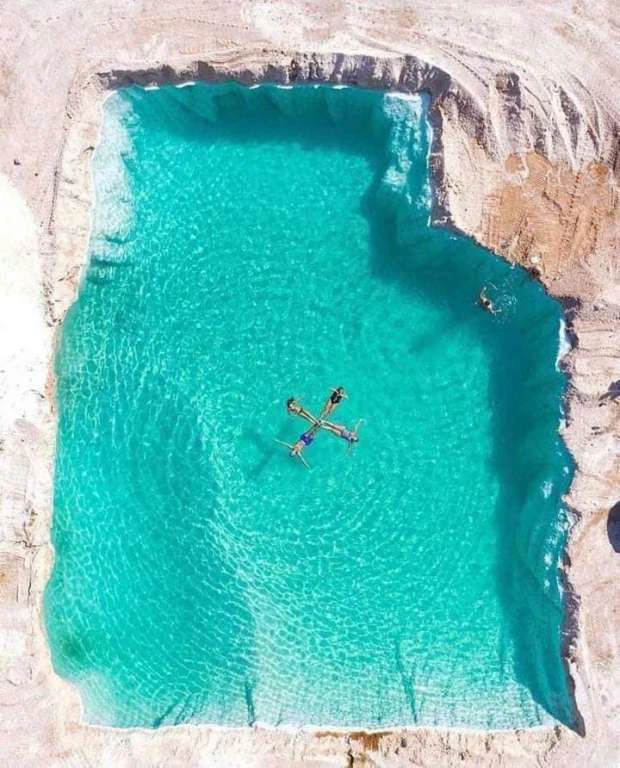
Where is Siwa Oasis?
Siwa lies in a desert depression in northwestern Egypt. It is far from the Nile Valley and reached by road through Marsa Matruh, which is why a trip from Cairo takes most of a day. The distance is not a reason to skip Siwa; it is the reason Siwa feels different from Egypt’s busier destinations. The wider Siwa Protected Area covers roughly 7,800 square kilometres and protects desert, lakes, springs, wildlife and cultural heritage. The oasis is also home to a distinct Amazigh community with its own Siwi language and customs. Egypt’s official tourism portal highlights the palm groves, salt lakes, Great Sand Sea and archaeological sites as the core of the destination. You can read the official overview on Experience Egypt and the protected-area description from the Egyptian Environmental Affairs Agency.
Is Siwa Oasis worth visiting?
Yes—provided you give it enough time. Siwa is especially rewarding for travellers who want landscapes and local life rather than a checklist of famous monuments. In one trip you can walk through a historic fortified settlement, stand at a temple linked to Alexander the Great, float in intensely salty water, eat dates and olives grown in the oasis, and watch sunset from a dune with almost no city noise. Siwa may not suit a traveller with only one spare day in Cairo. The outward and return drives are long, and squeezing the oasis into two days makes the journey dominate the experience. If your Egypt itinerary is very short, a Fayoum safari day trip is a more realistic desert option. Choose Siwa when you can protect at least three days.
How many days do you need in Siwa?
Three days is the practical minimum from Cairo; four days is our recommendation for most international visitors. Compare the complete day-by-day plans in our Siwa Oasis itinerary for 3, 4 or 5 days. The extra day is not filler. It separates the long road transfer from the desert-safari experience and gives you time to enjoy Siwa at its natural pace.
| Trip length | Best for | What to expect |
|---|---|---|
| 2 days | Travellers already near Marsa Matruh | Possible, but too rushed from Cairo and leaves little margin for the desert. |
| 3 days | First visit with limited time | Main oasis sights, salt lakes and a focused desert experience. |
| 4 days | Most international travellers | Better pacing, a fuller Great Sand Sea safari and more time for sunsets, springs and local stops. |
| 5+ days | Slow travel, photography and relaxation | Room for eco-lodge time, cycling, extra springs and flexible desert activities. |
For the shorter option, see the detailed 3-day Siwa itinerary. If the Great Sand Sea is a priority, the 4-day Siwa itinerary is the stronger choice.
How to get from Cairo to Siwa Oasis
The road journey usually follows the Cairo–Alexandria Desert Road or the Cairo–El Alamein route toward Egypt’s north coast, then continues west through Marsa Matruh before turning south to Siwa. Exact driving time changes with your Cairo pickup point, rest stops, traffic and road conditions. Compare the direct coach, private transfer and self-drive options in our detailed Cairo to Siwa Oasis transport guide.
Private transfer or organised Siwa tour
This is the simplest option for a short Egypt itinerary. A private vehicle collects you from your Cairo or Giza hotel, luggage stays with you, and rest stops can be planned around the group. An organised tour also joins the road transfer to accommodation, local sightseeing and the required desert vehicle, which removes several separate bookings.
Public bus
Public buses can be cheaper, but timetables, departure points and journey lengths can change. Confirm the service directly with the operator shortly before travel rather than building an international flight connection around an old online schedule. Allow extra time, keep your passport accessible and bring water, snacks and a warm layer for air-conditioned transport.
From Alexandria or Marsa Matruh
Siwa is closer to Alexandria than Cairo and much closer to Marsa Matruh. Combining Siwa with the Mediterranean coast can reduce backtracking. However, direct transport options vary by season, so confirm the actual operating service for your date.
Best time to visit Siwa Oasis
October through April is the best general season. Daytime conditions are more comfortable for ruins, village walks and dune activities, while evenings can become surprisingly cool. December and January bring the coldest nights; a fleece or light insulated jacket is useful after sunset.
- October–November: warm days, pleasant evenings and excellent conditions for swimming and safari activities.
- December–February: comfortable sightseeing weather with cold nights; pack layers for the desert.
- March–April: warm and generally pleasant, though spring winds can occasionally bring dust.
- May–September: intense daytime heat. Activities need earlier starts, longer midday breaks and careful hydration.
The best month depends on your priorities. Choose autumn for warmer swimming, mid-winter for walking and archaeology, or early spring for a balance. Weather and wind can change desert plans, so a good itinerary keeps some flexibility.
Top things to do in Siwa Oasis
1. Walk through Shali Fortress
Shali is the historic heart of Siwa. Its older structures were built from kershef, a local mixture of salt, mud and clay that suits a dry climate but is vulnerable to prolonged rain. Walk slowly through the restored passages, look for the old mosque and climb to a viewpoint near sunset. The value of Shali is not just a photograph: it explains how the community once lived within a fortified settlement surrounded by desert.
2. Visit the Temple of the Oracle
The Temple of the Oracle at Aghurmi is linked to Alexander the Great’s journey to Siwa in 331 BCE. The surviving structure is modest compared with Luxor’s monumental temples, but its location and history make it one of the oasis’s most important archaeological stops. A guide adds context about the Oracle of Amun, Alexander’s visit and the ancient routes that connected Siwa with the wider Mediterranean world.
3. Explore the Mountain of the Dead
Gebel al-Mawta, or the Mountain of the Dead, contains rock-cut tombs from ancient Egyptian, Ptolemaic and Roman periods. Some interiors preserve painted decoration. Access can change for conservation or restoration, so treat any named-tomb list online as provisional and follow the instructions on site. Avoid touching painted surfaces and do not use flash where photography is restricted.
4. Swim at Cleopatra’s Spring
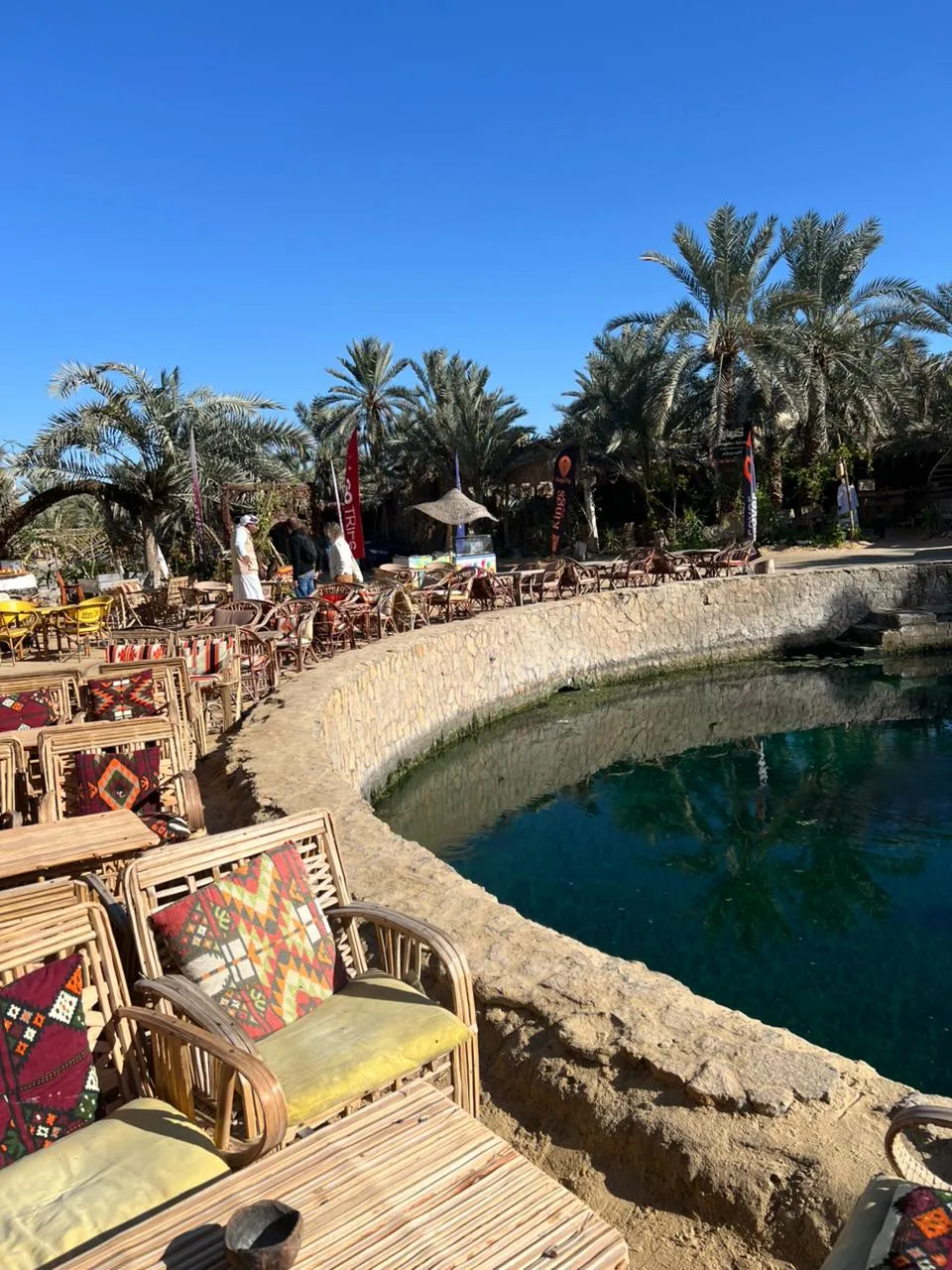
Cleopatra’s Spring is a circular stone pool fed by natural spring water. The name is romantic tradition rather than proof that Cleopatra personally bathed here. It is a popular social stop with cafés and changing areas nearby. Wear modest swimwear, use water shoes on slippery edges and keep valuables with a companion.
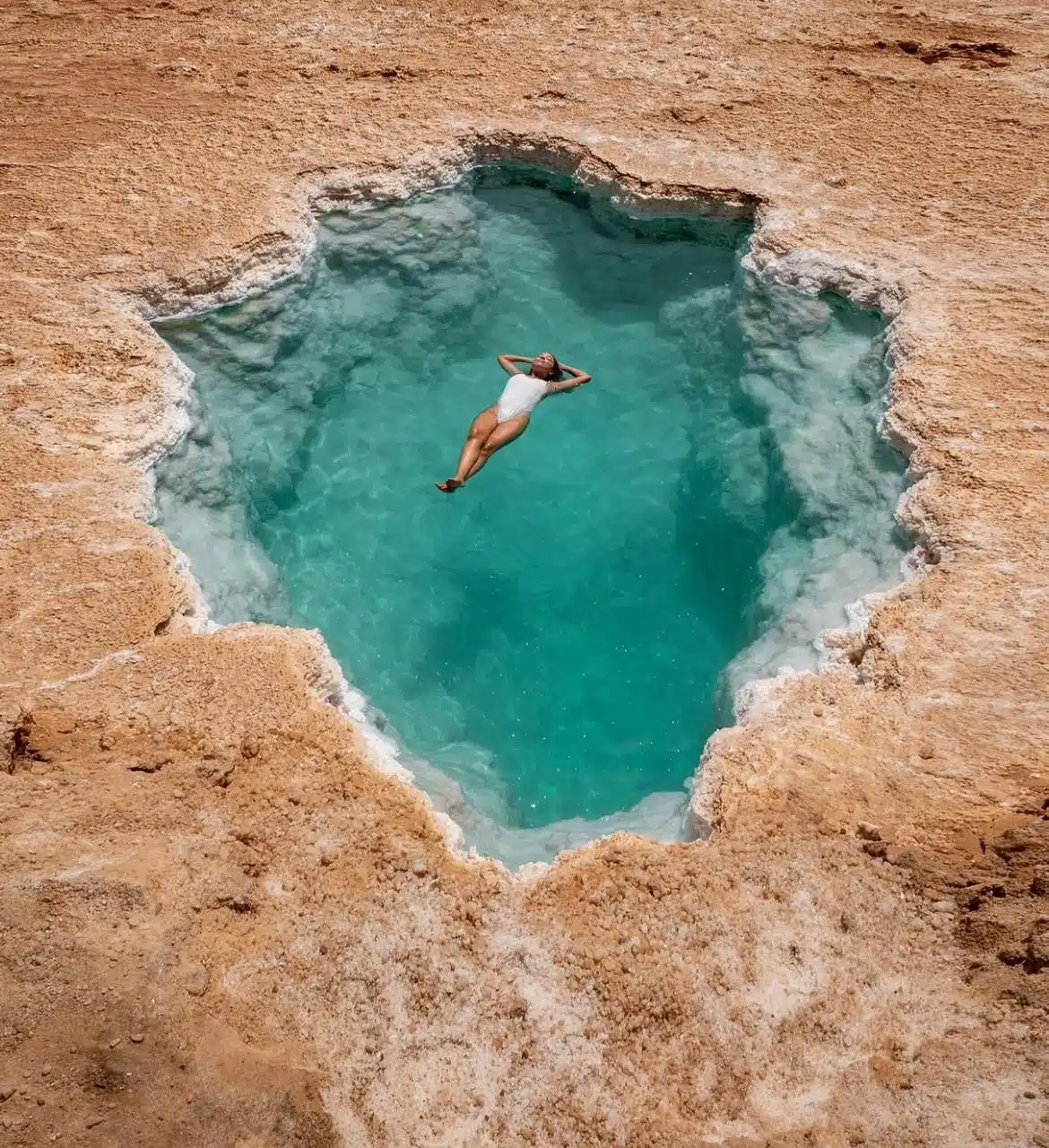
5. Float in the Siwa salt lakes
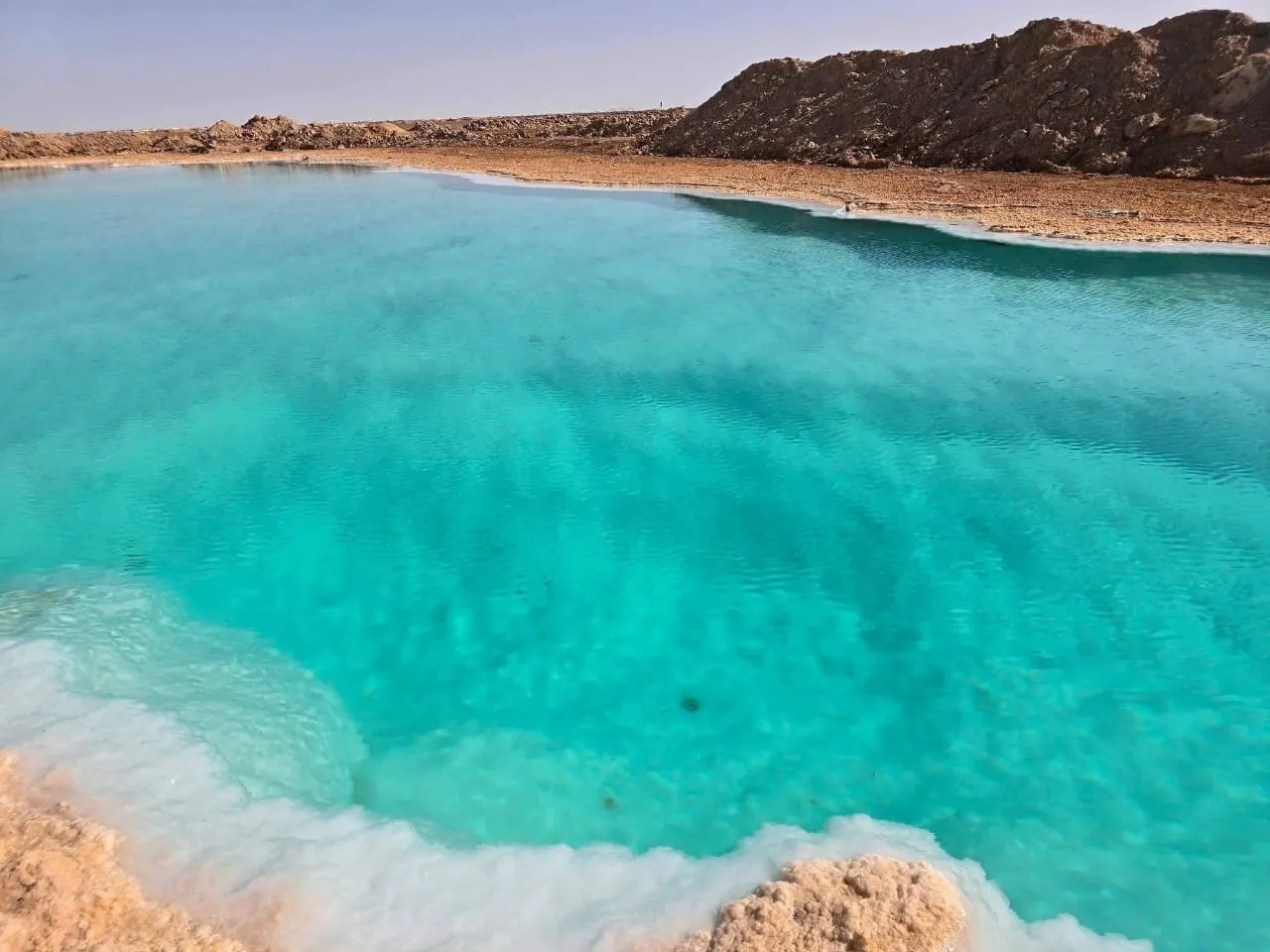
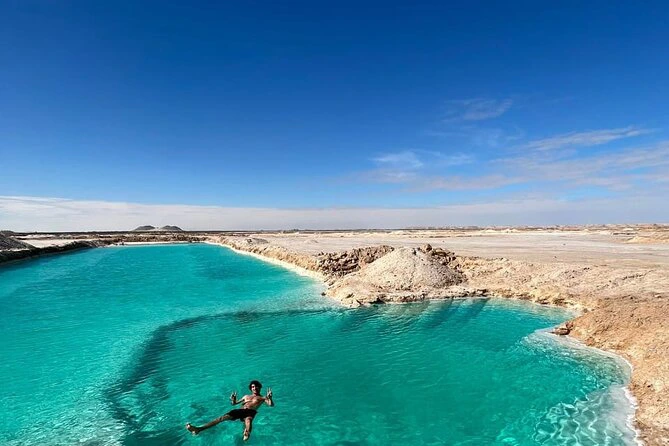
The brilliant blue salt pools are among the most searched-for Siwa experiences. Our complete Siwa Salt Lakes Egypt visitor guide explains floating, safety, the best time to go and what to bring. Their high salinity creates strong buoyancy, but they are working salt-extraction areas rather than a managed beach resort. Conditions, access tracks and the safest pool can change.
- Do not enter with fresh cuts, irritated skin or immediately after shaving.
- Keep the water away from your eyes and mouth.
- Wear water shoes because salt crystals can be sharp.
- Float gently instead of diving; many pools are shallow.
- Bring fresh water to rinse salt from your skin and swimsuit.
- Follow a local guide and never drive independently across salt-working tracks.
6. Watch sunset at Fatnas Island
Fatnas is a popular sunset stop west of town, with palms and views across the lake. Arrive before the sun reaches the horizon so you can choose a quiet position, order a drink and watch the colours change. In peak periods it can be busy, so your guide may suggest another viewpoint if you prefer more solitude.
7. Take a 4×4 safari into the Great Sand Sea
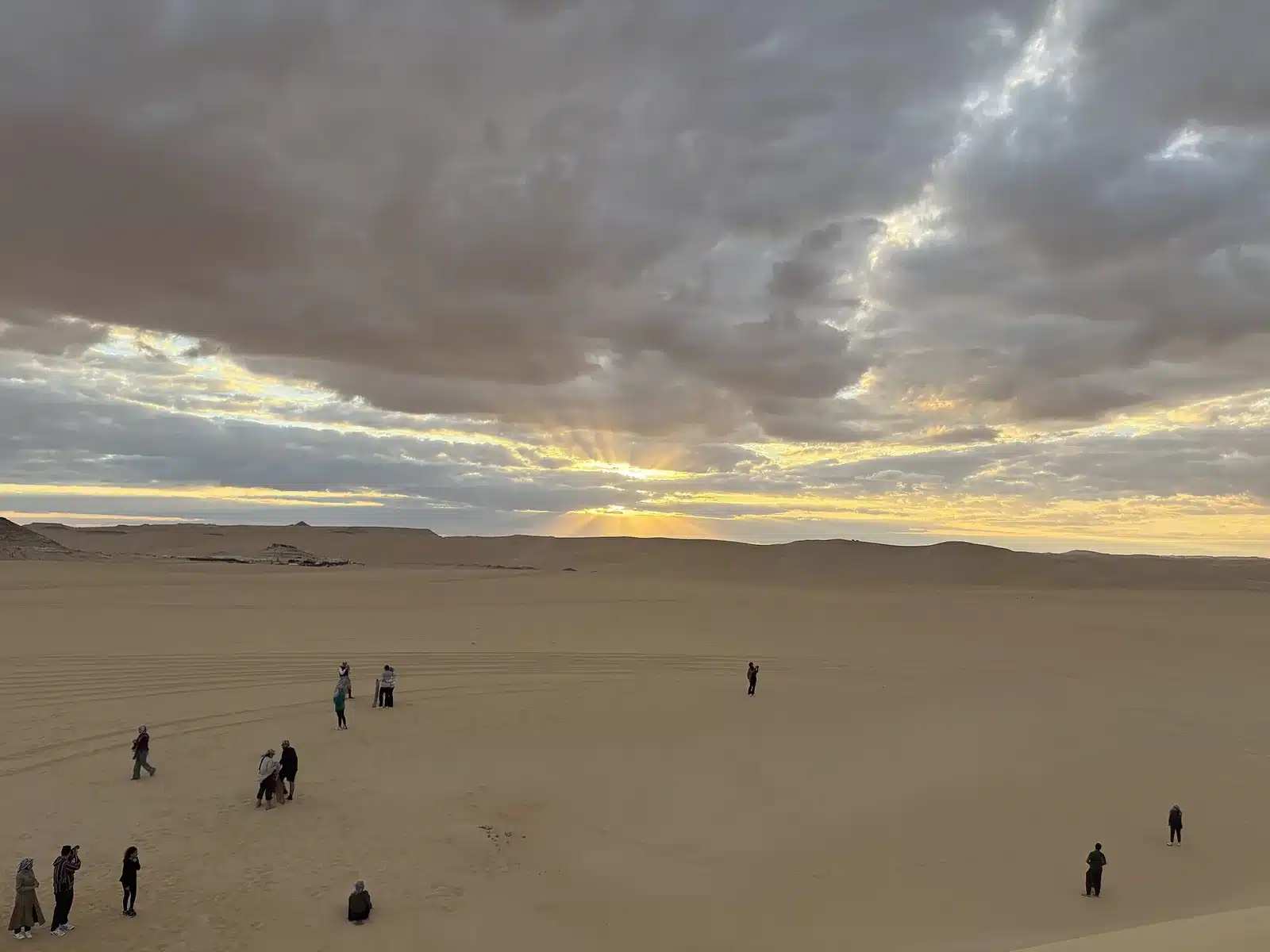
The Great Sand Sea changes a Siwa visit from an oasis break into a real desert journey. A typical excursion uses a suitable 4×4 and an experienced local driver for high dunes, wide sand corridors, sandboarding and stops around Bir Wahed and Siwa hot springs when access permits. Exact routes depend on sand, weather, protected-area rules and current security permissions. Do not attempt deep-desert driving in a normal vehicle or alone. Egypt’s official tourism guidance recommends arranging desert excursions with an experienced licensed guide and checking permits and access. A responsible operator carries adequate water, recovery equipment, a working spare tyre and a plan for communication.
What a Siwa desert safari is really like
Dune driving is exciting, but it should not be treated as a race. Tell your driver before departure if you are pregnant, have back or neck problems, or are prone to motion sickness. Seat belts should be used where fitted. If you prefer a gentle trip, ask for scenic driving and longer stops rather than aggressive dune runs. Sandboarding is optional. The climb back up is harder than the slide, so carry water and avoid the hottest part of the day. Sunset is often the visual highlight, followed by tea or a simple meal. Stargazing quality depends on moon phase, clouds and the distance from town lights; a full moon gives beautiful illuminated dunes but fewer visible stars.
Where to stay in Siwa
Choose location and atmosphere before star rating. Siwa accommodation ranges from simple town guesthouses to palm-grove eco-lodges and desert camps. For a detailed comparison of central stays, palm-grove properties and remote retreats, read our guide to the best Siwa Oasis hotels and eco-lodges.
- Near Shali and the town centre: best for walking to cafés, shops and the old fortress.
- Palm-grove eco-lodge: quieter, more atmospheric and often built with local materials; transport into town may be needed.
- Spring-side lodge: ideal for relaxation, but check actual room facilities and winter heating.
- Desert camp: best as a specific experience, not automatically the most comfortable option. Ask about bathrooms, bedding, wind protection and permits.
Before booking, confirm whether the room has a private bathroom, reliable hot water, air conditioning or heating, Wi-Fi and card payment. Siwa’s most memorable stays may be deliberately simple, so read the facility list instead of assuming city-hotel standards.
Food, culture and respectful travel
Siwa is known for dates, olives, olive oil, herbal tea and traditional dishes including slow-cooked foods prepared for desert gatherings. The oasis is home to Amazigh Siwan families with a distinct language and social traditions. Tourism supports guides, drivers, restaurants, farms, craft makers and locally owned lodges, so spending locally has a direct effect. Dress modestly away from swimming areas, ask before photographing people, and avoid treating private homes or working farms as attractions. Alcohol is not part of local public life. During Ramadan, some opening hours and meal times change; show patience and avoid eating conspicuously in small public spaces during fasting hours.
What does a Siwa Oasis tour cost?
There is no useful single price because the biggest cost is transport across a long distance. A private Siwa tour price changes with group size, number of nights, hotel level, season, pickup location, 4×4 safari duration, meals and whether entrance tickets are included. See our Siwa Oasis tour cost from Cairo guide for current 3- and 4-day price benchmarks and inclusion comparisons. When comparing offers, ask for the total rather than the headline price. Check the vehicle type, maximum private group size, accommodation name or category, room basis, meals, entrance tickets, local guide, desert permits and cancellation terms. A cheaper quote can become more expensive if the 4×4 safari, tickets or hotel are added later. Our tours are private for up to 20 guests, but smaller groups generally provide the most flexible experience.
Suggested 3-day Siwa itinerary from Cairo
- Day 1: Early Cairo pickup, road journey via the north coast, rest stops, arrival in Siwa and a gentle evening around Shali depending on daylight.
- Day 2: Oracle Temple, Mountain of the Dead, Cleopatra’s Spring, selected salt lakes and sunset at Fatnas or another local viewpoint.
- Day 3: Short morning activity if time allows, breakfast and return to Cairo with planned stops.
This schedule covers the essentials but is sensitive to arrival time. If you want a substantial Great Sand Sea safari, confirm that it is explicitly included or choose four days.
Suggested 4-day Siwa itinerary from Cairo
- Day 1: Cairo to Siwa with comfort stops, hotel check-in and an easy sunset or Shali walk.
- Day 2: Archaeological and oasis circuit: Oracle Temple, Mountain of the Dead, springs, salt lakes and local villages or crafts.
- Day 3: Dedicated Great Sand Sea 4×4 safari, sandboarding, permitted spring stops, sunset and a desert meal or camp experience.
- Day 4: Relaxed breakfast, any final town stop and the drive back to Cairo.
The four-day version is easier on families, photographers and anyone who dislikes stacking a long transfer and vigorous activities together.
What to pack for Siwa
- Passport and a digital copy of your travel documents.
- Egyptian pounds in cash; do not rely on every business accepting cards.
- Modest, lightweight clothing plus a warm layer from October to April.
- Hat, sunglasses and high-SPF sunscreen.
- Swimsuit, quick-dry towel and water shoes for springs and salt pools.
- Refillable water bottle and personal medication.
- Power bank, charging cables and sealed protection for cameras in blowing sand.
- Lip balm and moisturiser; dry air and salt can irritate skin.
Common Siwa travel mistakes
- Trying to visit from Cairo in two days: most of the trip becomes road time.
- Assuming every blue pool is safe to enter: access and working conditions change; follow local guidance.
- Booking only by price: compare the vehicle, hotel, inclusions and actual safari time.
- Ignoring cold desert nights: winter evenings can feel much colder than the daytime forecast.
- Expecting constant connectivity: mobile coverage and Wi-Fi can be weaker outside town.
- Overplanning every hour: road, weather and permit conditions require flexibility.
Frequently asked questions about Siwa Oasis
How far is Siwa Oasis from Cairo?
Siwa is roughly 740–760 km by road from central Cairo, depending on the route and pickup point. A private transfer commonly takes around 9–11 hours including sensible rest stops; traffic and road conditions can add time.
Can you do a day trip from Cairo to Siwa?
No. The distance makes a same-day return impractical and unsafe. Plan at least two nights, with three or four days for the complete trip from Cairo.
Is Siwa Oasis safe for tourists?
Siwa receives international visitors, but it is remote and close to a border region. Travel conditions and access rules can change. Use established roads, carry identification, follow current official advice and arrange deep-desert activities with an experienced licensed guide who can confirm permits.
Can you swim in the Siwa salt lakes?
Visitors often float in selected salt pools, but they are not conventional beaches. Use a currently accessible pool recommended by a local guide, protect your eyes, avoid entering with cuts, wear water shoes and rinse with fresh water afterwards.
Is three days enough for Siwa Oasis?
Three days is enough for the main sights if the itinerary is well planned, but the arrival and departure drives make it busy. Four days gives the Great Sand Sea and the oasis proper time.
Do I need a guide for Siwa?
You can walk around central Siwa independently, but a knowledgeable local guide adds important context at archaeological sites and helps you navigate changing access at salt lakes. Use an experienced licensed guide and suitable 4×4 for the Great Sand Sea.
What is the best Siwa tour from Cairo?
Choose a three-day private tour if time is tight and you mainly want the oasis highlights. Choose four days if dunes, sandboarding, springs and a relaxed desert safari are priorities. Confirm every inclusion before paying.
What is the best time to visit Siwa Oasis?
October through April is the most comfortable general season. Autumn is warmer for swimming, winter is excellent for walking but has cold nights, and early spring balances daytime warmth with cooler evenings. Read the month-by-month Siwa weather guide.
Do I need a permit to visit Siwa Oasis?
Normal town and oasis sightseeing uses established roads, but access procedures for protected, deep-desert or border-adjacent routes can change. A licensed operator should confirm current permissions and the approved route before any Great Sand Sea trip.
Plan your private Siwa Oasis tour
Egypt Safari Travel organises private journeys with a local guide and a maximum group size of 20. Start with the 3-Day Siwa Oasis Tour from Cairo or the better-paced 4-Day Siwa Oasis Tour from Cairo. For a wider comparison, browse all Egypt desert safari tours or contact us with your dates, group size, hotel preference and pickup location.
Check Siwa availability for your dates
Send your travel dates, Cairo or Giza pickup point, party size and preferred hotel level. We will explain the current route, private vehicle, accommodation and Great Sand Sea arrangements before you book.
Ready to plan your safari? Compare all Siwa Oasis tours or view the 3-Day Siwa Oasis Tour from Cairo.