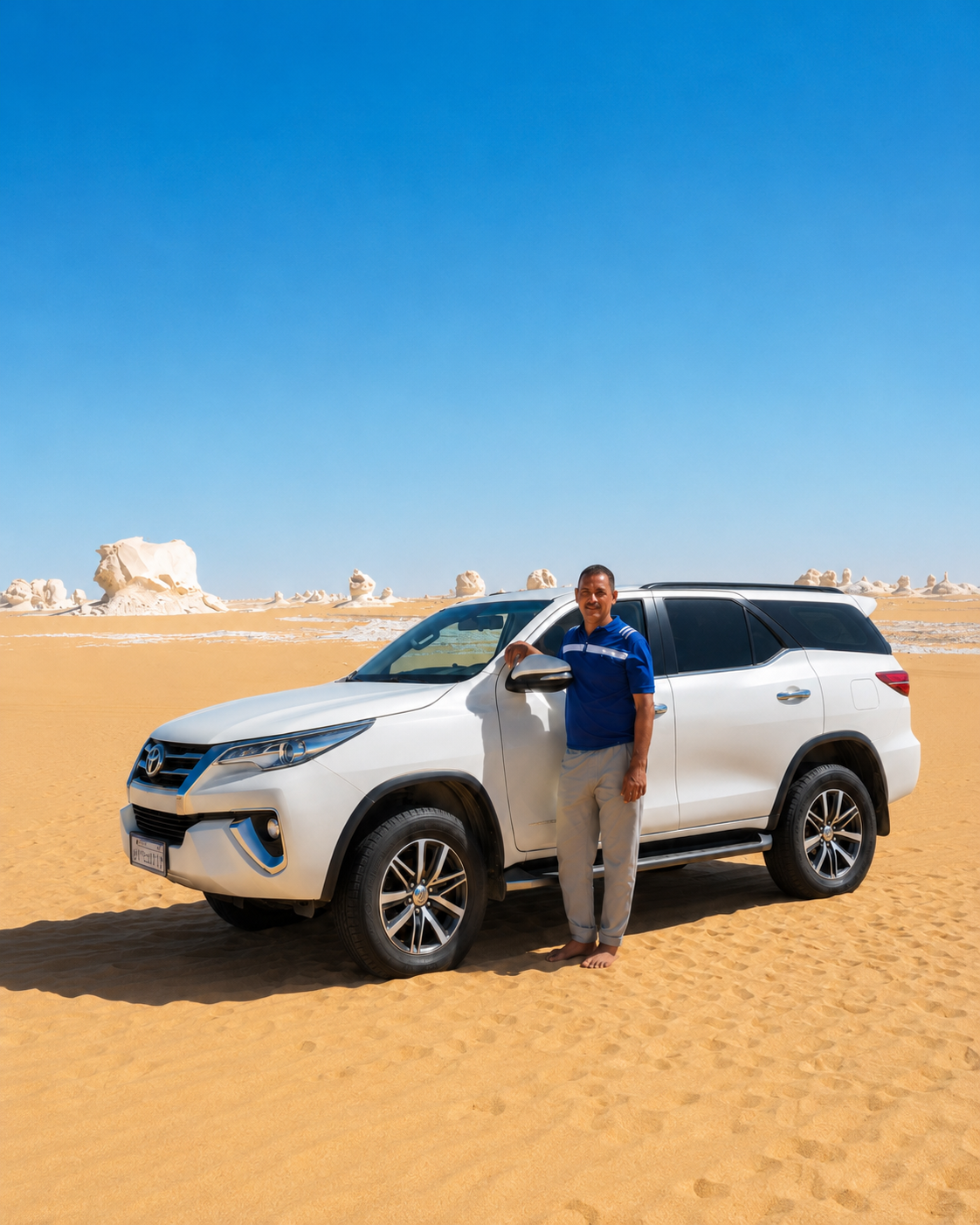
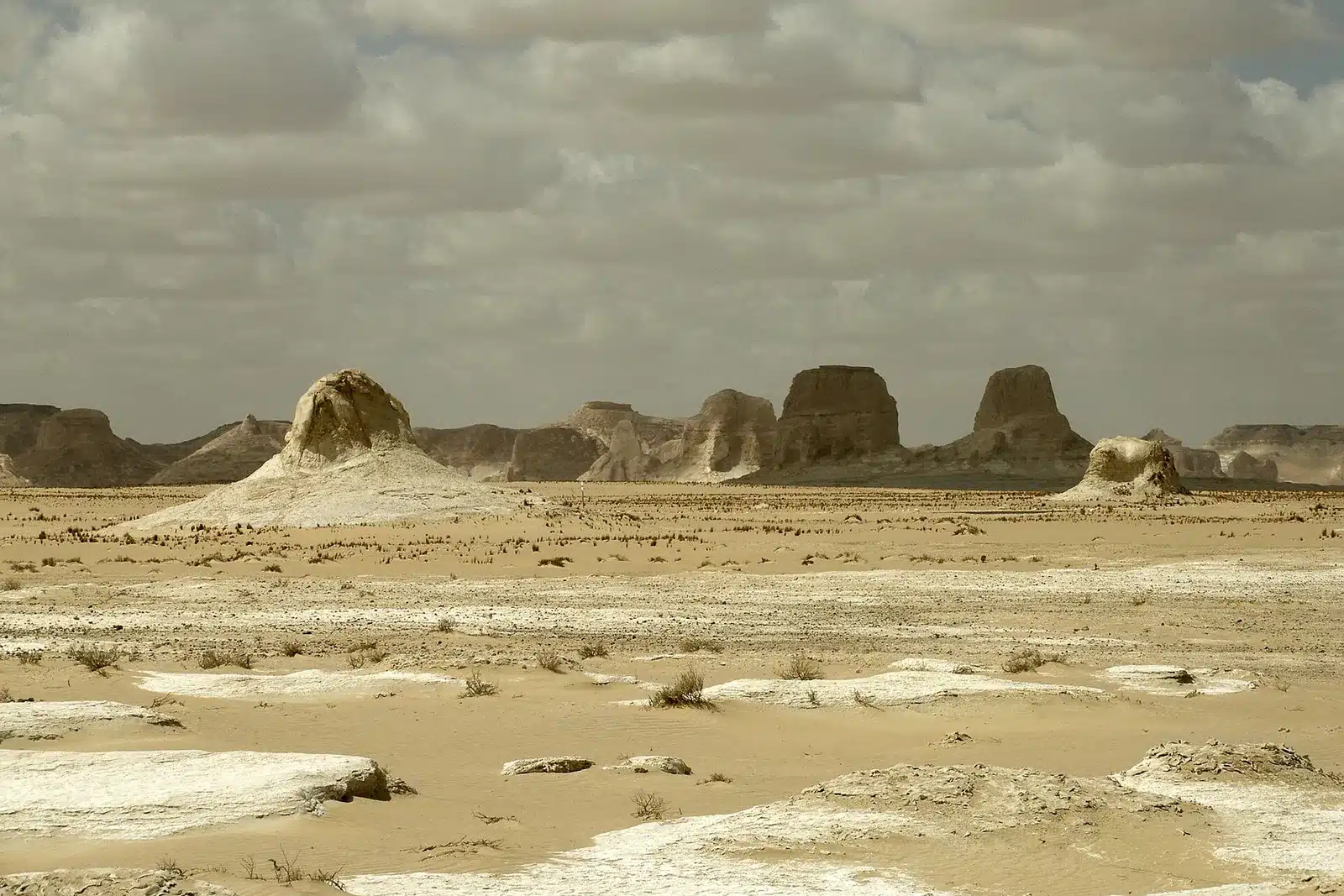
White Desert Egypt is one of the country’s most unusual landscapes: a protected expanse of pale chalk, wind-carved towers, mushroom-shaped rocks and open desert sky in the Western Desert. Our White Desert National Park Egypt guide explains the reserve boundaries, geology and responsible access rules. Most first-time trips follow our Cairo to White Desert route and begin in Cairo, continue to Bahariya Oasis, and use a local 4×4 team for the off-road section. Our 2-day vs 3-day White Desert tour comparison explains why two days gives you the classic overnight experience while three days gives you more unhurried exploration and can include deeper stops around Bahariya, the Black Desert, Crystal Mountain and Agabat Valley.
White Desert trip at a glance
- Best for: desert scenery, photography, White Desert camping, geology and quiet nights away from cities.
- Normal starting point: Cairo, with a road transfer to Bahariya Oasis before the 4×4 section.
- Recommended length: two days for the highlights; three days for a slower and more complete route.
- Best season: generally October to April, when daytime travel is more comfortable and nights are cooler.
- Important: use a properly equipped local operator, confirm current permits and protected-area fees, and never drive off-road independently.
Current route and camping permission update
Checked 29 August 2026: Australia’s Smartraveller reports restrictions on safaris and camping near Bahariya and says White Desert camping may also be banned. UK and US travel-advice wording differs, and permissions can change at short notice.
A published itinerary is not confirmation that a specific departure is permitted. Check your government advice and insurance, then ask us to verify the local route and camping status for your exact date before paying. Read our detailed White Desert safety guide and the current Australian advisory.
What is the White Desert in Egypt?
The White Desert is a landscape of chalk and limestone formations in Egypt’s New Valley Governorate. Its Arabic name, Al-Sahra Al-Beida, describes the pale ground and rock shapes that can appear almost white in strong sun. At sunrise and sunset, however, the same rocks can shift through cream, gold, pink and orange. This is why an overnight safari is more rewarding than a rushed daytime stop.
The area is officially protected. Egypt’s Environmental Affairs Agency lists the White Desert Protectorate as a landscape protected area declared in 2002, covering 3,133.5 square kilometres. The agency describes it as an open-air geological and fossil museum, with karst scenery and distinctive white chalk formations shaped over time. That protected status matters: the formations are not props, and visitors should not climb fragile structures, remove pieces of rock or leave waste behind.
The term “White Desert” is sometimes used loosely for a much larger touring circuit. A typical trip may include Bahariya Oasis, the Black Desert, Crystal Mountain and Agabat Valley before reaching the most famous white formations. These are separate landscapes on the same Western Desert route, not different names for one place.
Where is the White Desert, and how does Bahariya fit into the route?
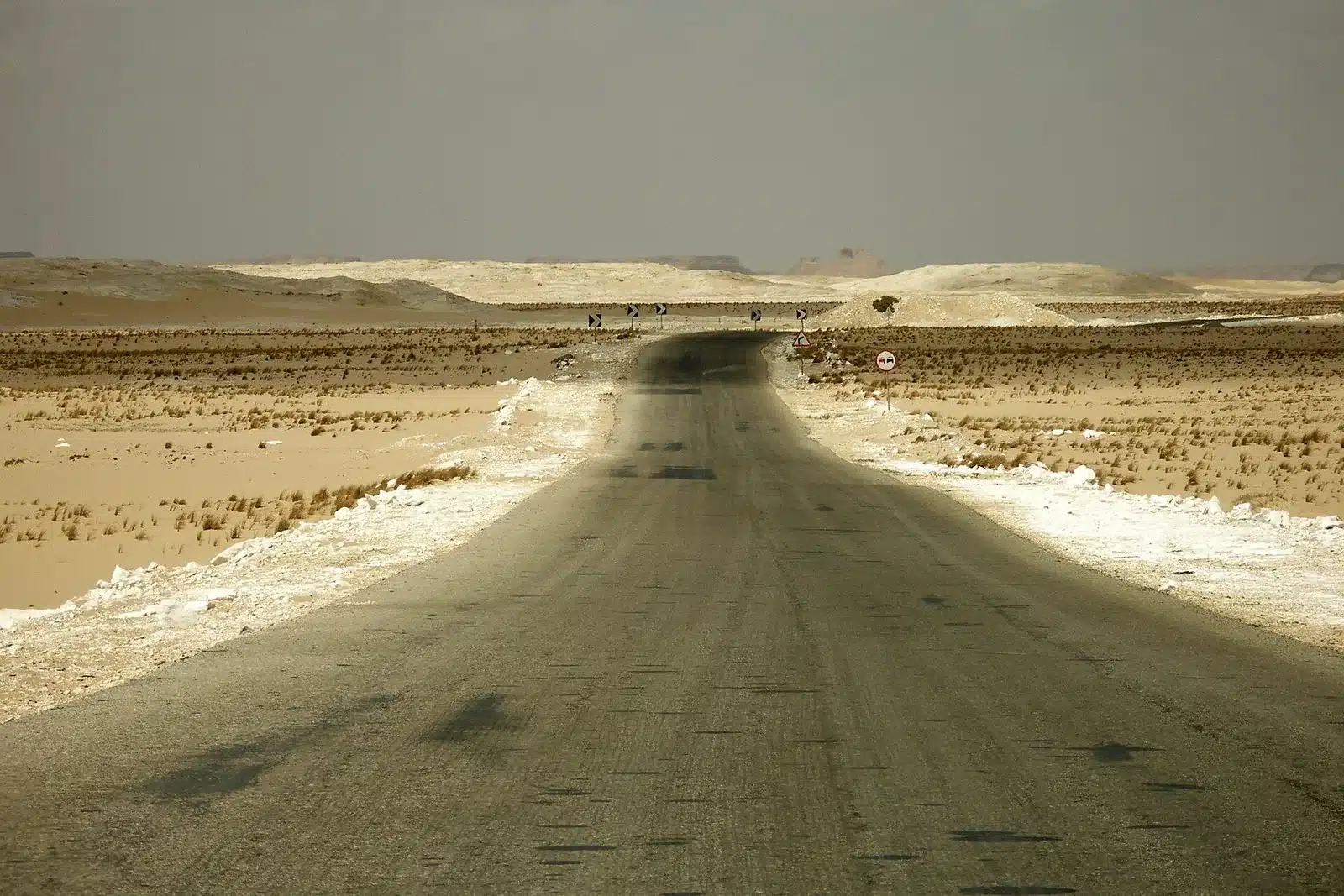
The protected area lies between Bahariya and Farafra, with the famous formations closer to Farafra. Official Egyptian tourism information places Bahariya about 370 kilometres southwest of Cairo and describes it as the closest Western Desert oasis to the capital. The same official source places the White Desert around 40 kilometres from Farafra. The protected area itself is farther from Cairo than Bahariya, which explains why the trip cannot be treated as a short excursion from the capital.
For most Cairo-based safaris, Bahariya is the practical gateway. Travellers arrive by road, meet the local desert crew, eat or prepare supplies, and change to a 4×4 vehicle for the desert circuit. Bahariya is not merely a transfer point: its date palms, hot springs, farms and archaeological history justify time of their own. Read our complete Bahariya Oasis guide if you want to add a village walk, spring or museum visit.
Why the desert is white: geology without the textbook language
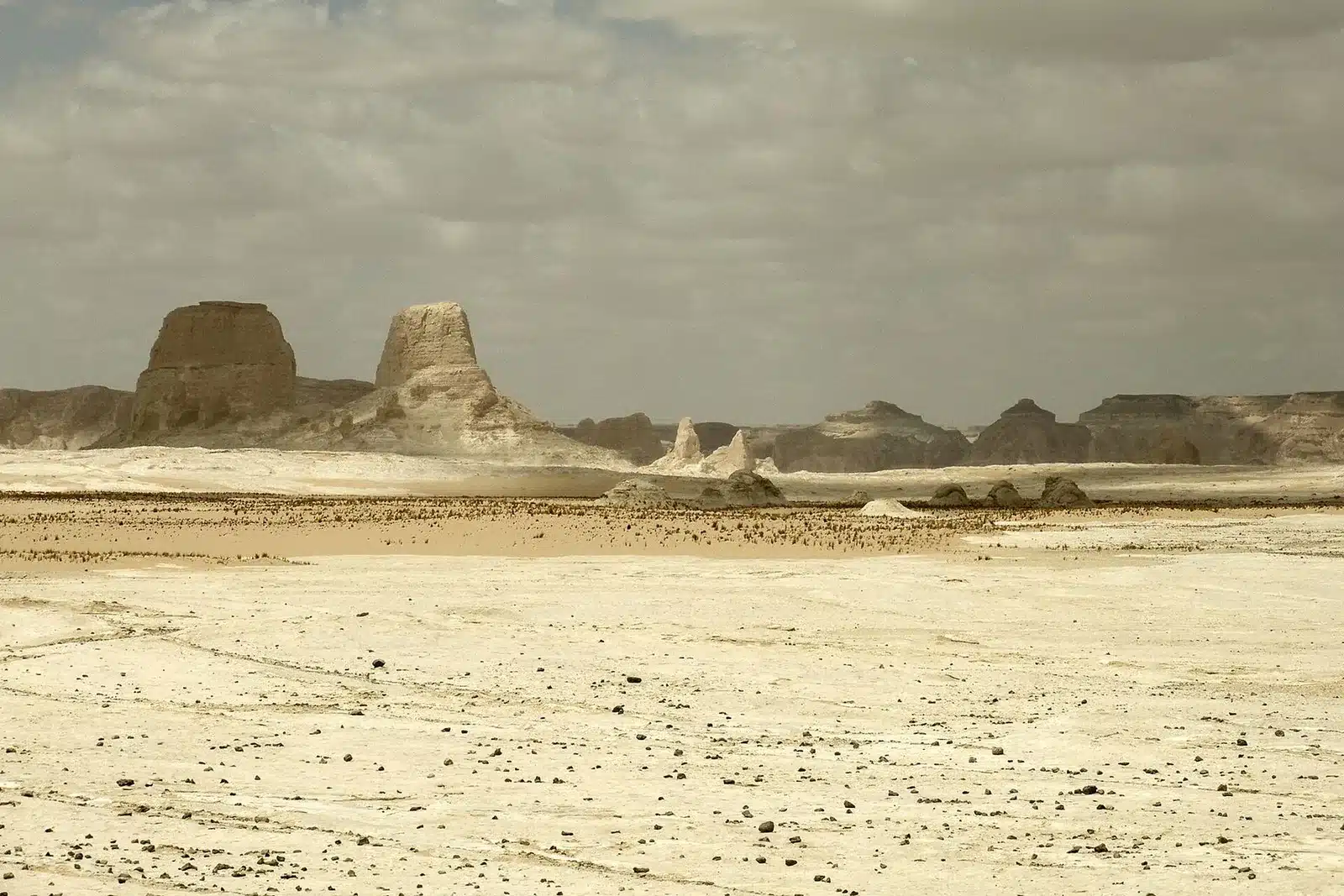
Long before this region became desert, layers of marine sediment accumulated here. The pale material that visitors see today is largely chalk and limestone. Wind, sand, temperature changes and occasional water erosion gradually removed softer material, leaving harder sections standing as towers, domes, ridges and balanced shapes. Geologists use the word karst for landscapes created as soluble rocks such as limestone are worn and dissolved into distinctive forms.
The result is not one continuous field of identical white rocks. You pass broad flat ground, small chalk fragments, isolated monuments, low ridges and dense groups of formations. Scale can be deceptive in photographs: a shape that looks small from the vehicle may be several metres high, while a distant ridge may be much farther away than it appears.
Fossils and mineral features add to the geological interest, but they must stay where they belong. Collecting pieces damages the site and removes part of the evidence that makes the protectorate valuable. Photograph what you find, do not pocket it, and follow the route chosen by the local guide.
The classic White Desert safari route from Cairo
Routes vary with season, road conditions, permissions and the pace of the group, but the sequence below is a useful mental map. A responsible operator should explain what is realistic rather than promising every named attraction in too little time.
1. Cairo to Bahariya Oasis
The road journey takes much of the morning. An early start is valuable because it protects daylight for the desert section. Private transport offers control over pick-up time and stops; public transport may reach Bahariya, but it does not replace the permitted, equipped 4×4 needed for the protected off-road route.
2. The Black Desert
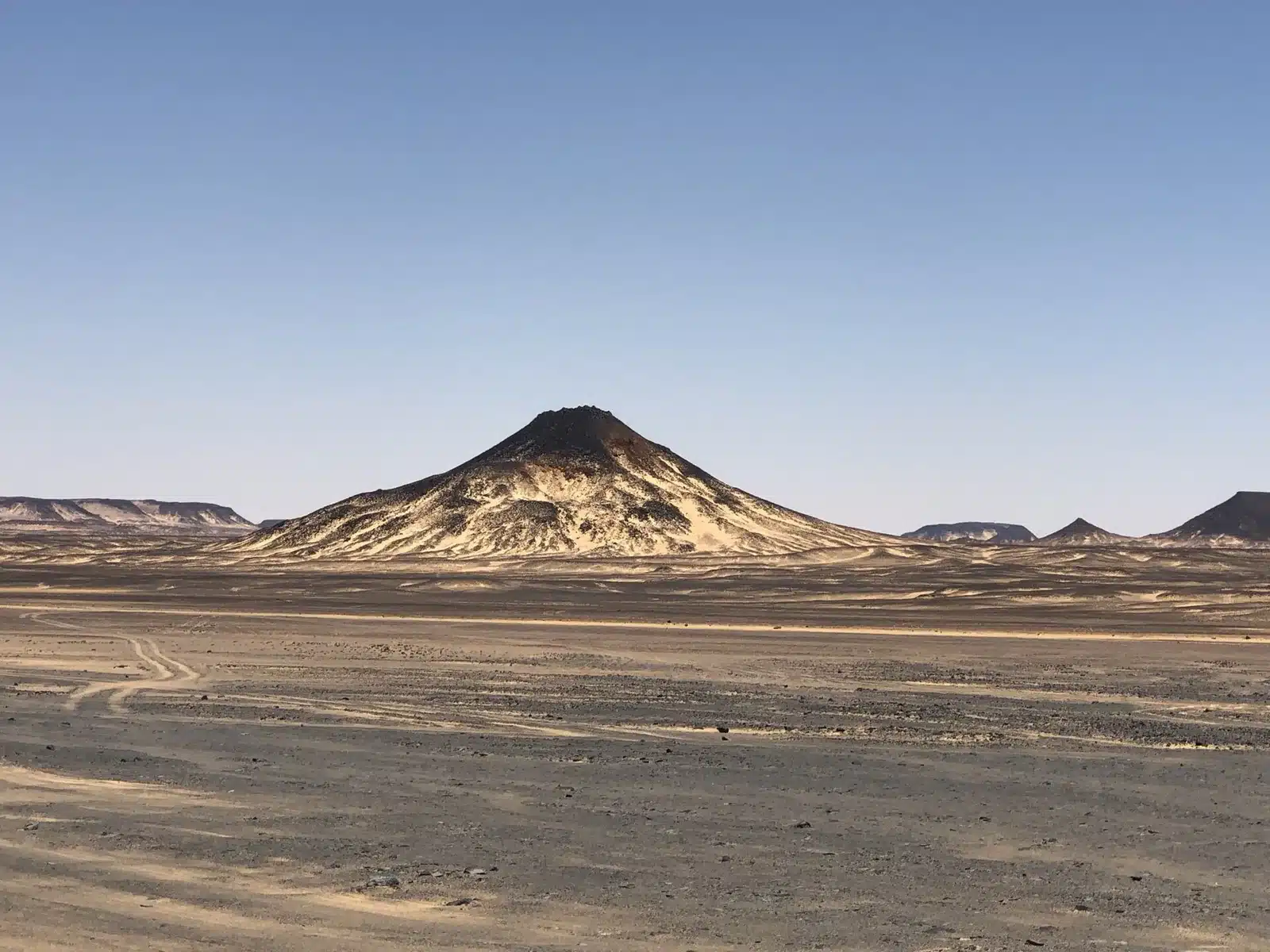
Dark volcanic material covers the tops and slopes of conical hills, creating a strong visual contrast with the pale landscape later in the trip. Read the complete Black Desert Egypt guide for the geology, best viewpoints and practical route from Bahariya. Short viewpoint walks are possible where conditions allow. The ground can be loose and exposed, so sturdy shoes and measured pacing are better than racing to the top.
3. Crystal Mountain
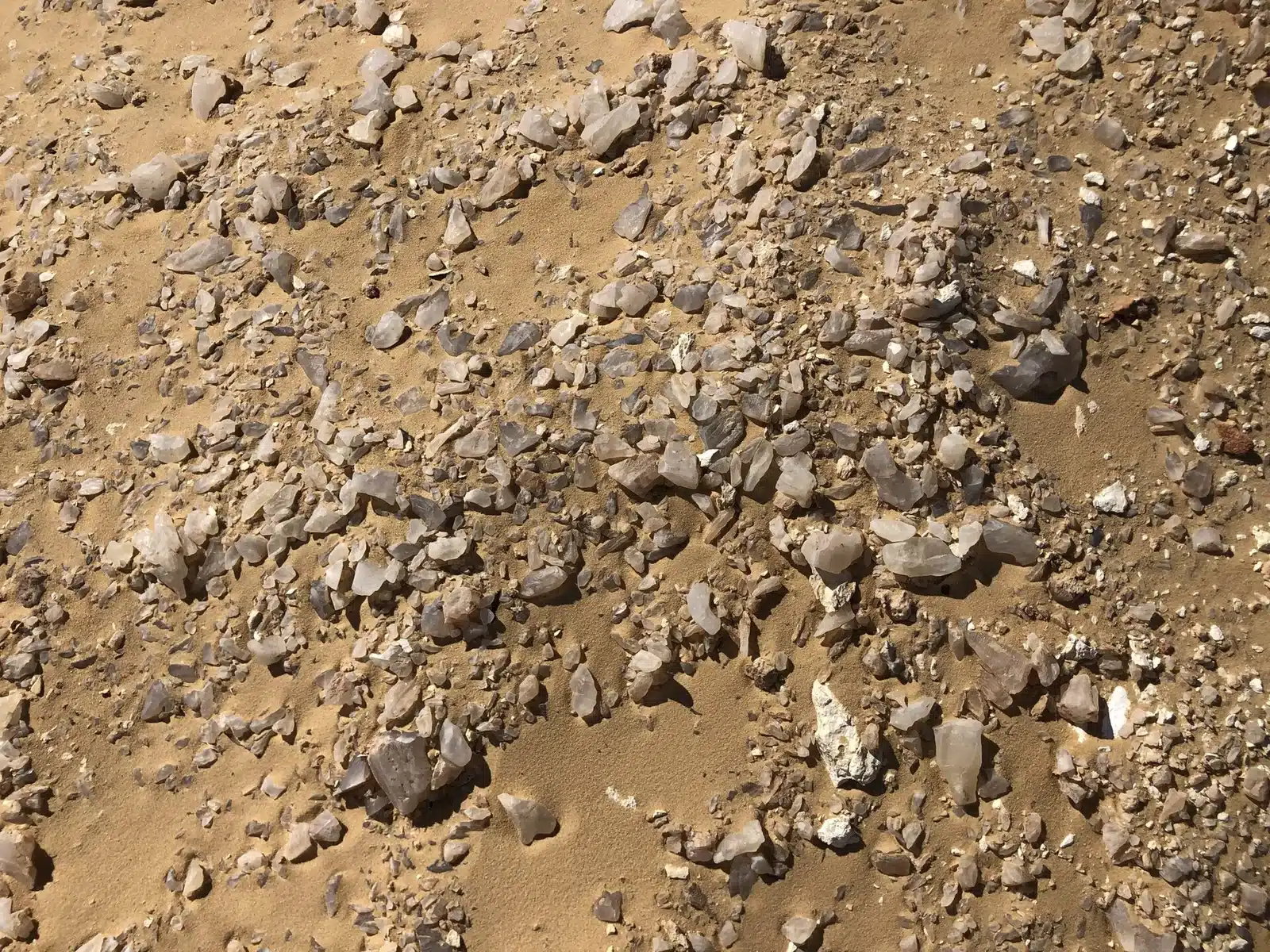
Crystal Mountain is a small geological formation rather than an Alpine-style mountain. Our complete Crystal Mountain Egypt guide explains the geology, responsible visiting and route timing. Sunlight can catch calcite and quartz-like crystals in the rock, which is why the stop is popular with photographers. The crystals are part of the site: look closely, take photographs, and leave every fragment in place.
4. Agabat Valley
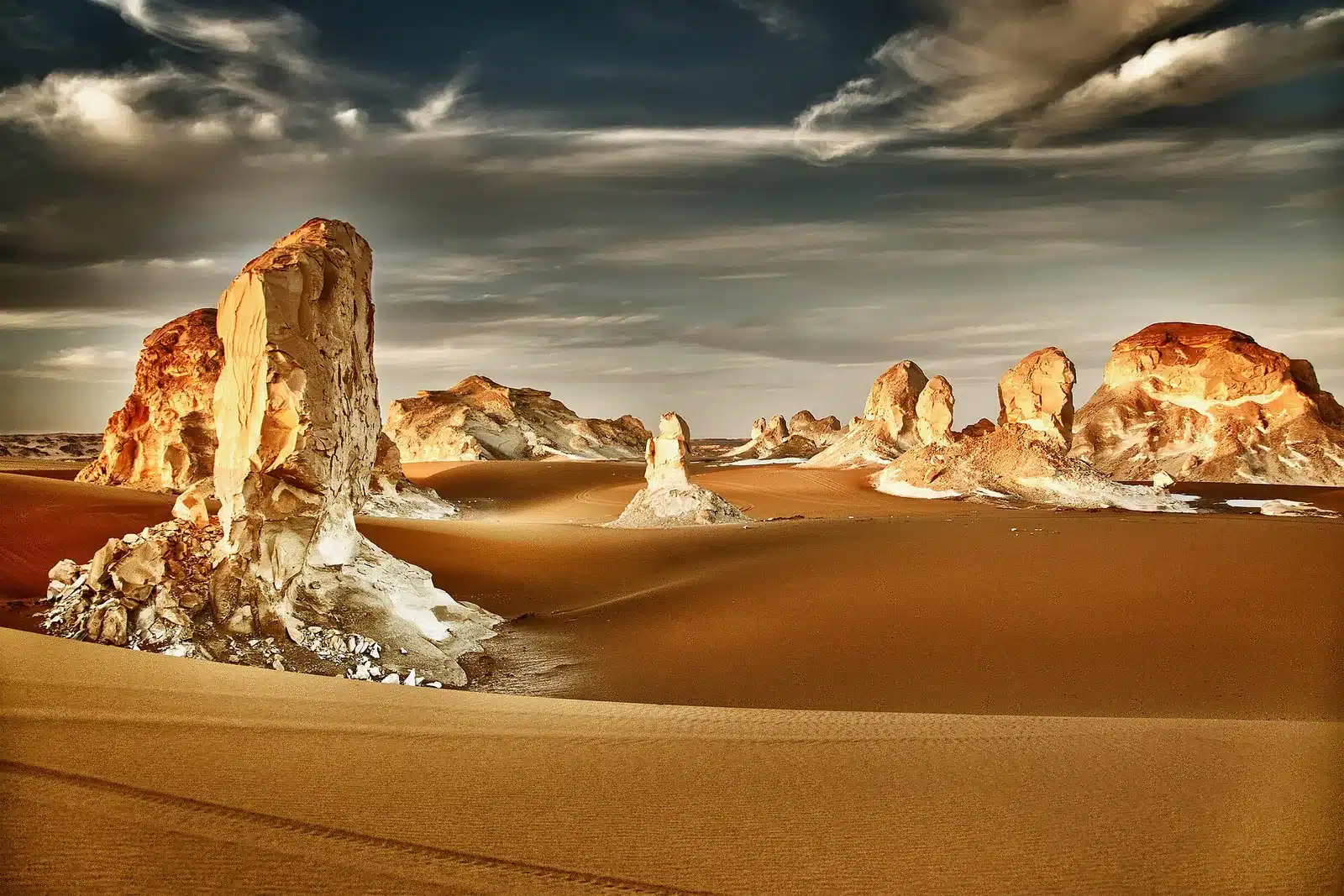
Our Agabat Valley Egypt guide explains a landscape known for broad pale cliffs and sculpted hills rising above the sand. It often feels more expansive than the compact clusters of White Desert formations. Depending on the route and current access, the guide may choose viewpoints, a sheltered lunch stop or a short walk. The White Desert and Agabat Valley safari is the stronger choice when this landscape is a priority rather than a quick photo stop.
5. The White Desert formations and camp
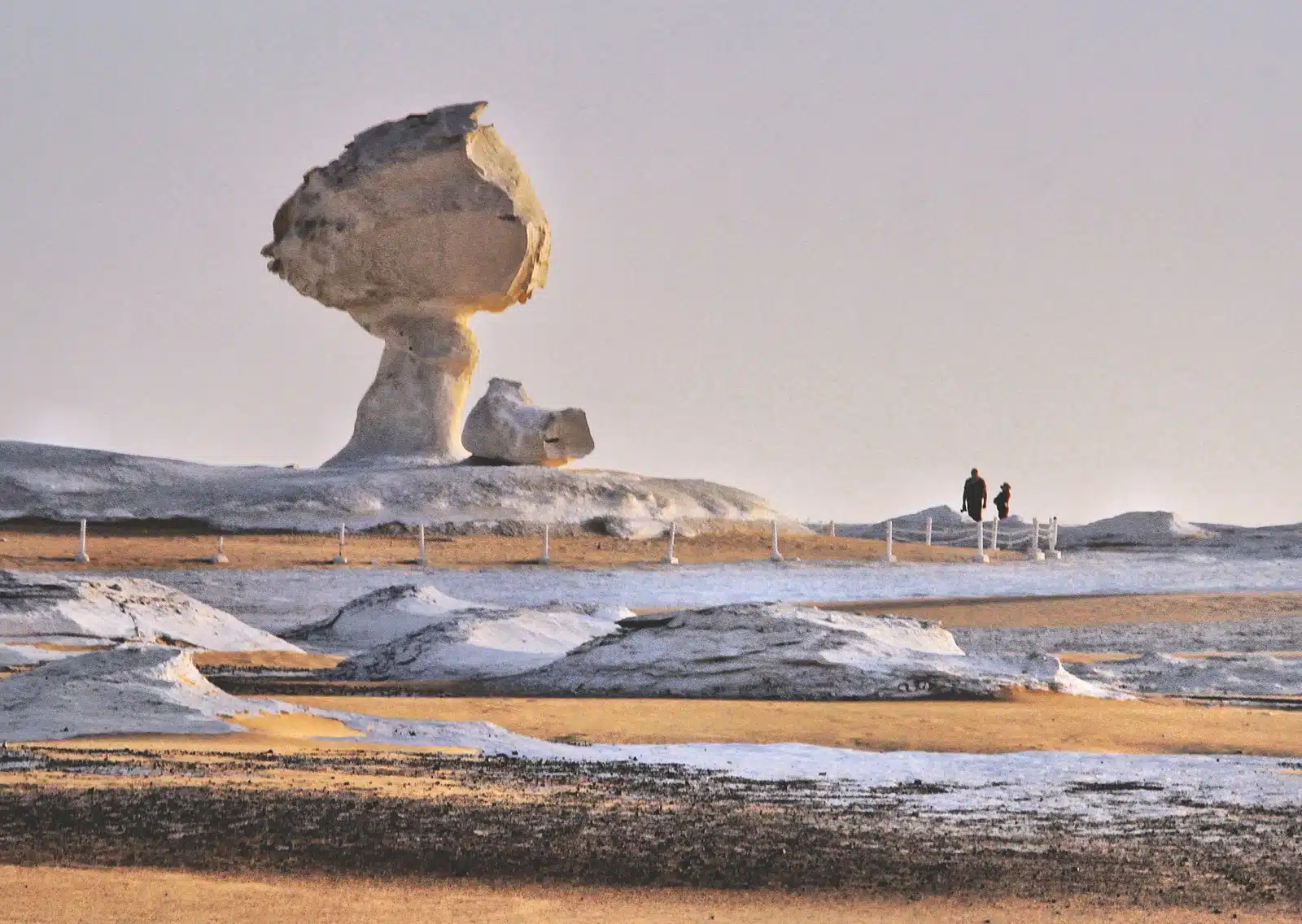
As the route reaches the pale formations, the 4×4 slows and the trip becomes less about distance and more about light, shapes and silence. Guides know recognisable formations, but unofficial names can vary. Mushroom rocks, animals, faces and towers are interpretations created by perspective; there is no need to force a checklist. The most memorable experience is often simply walking between the formations as the colour changes before sunset.
What camping in the White Desert is really like
White Desert camping is a simple wilderness experience, not a conventional hotel transplanted into the sand. Your team normally selects a suitable site, sets up sleeping equipment, prepares dinner and breakfast, and packs everything out the next morning. Exact arrangements differ, so ask before booking rather than assuming that every operator provides the same standard.
Sleeping
Some trips use tents; others use mattresses and sleeping bags in a sheltered open camp, with tents available for privacy or wind. In winter, the temperature difference between afternoon and pre-dawn can be substantial. A sleeping bag, clean blanket and insulating layer under the mattress matter more than decorative camp furniture.
Food and water
Dinner is usually freshly prepared at camp, with simple Egyptian dishes, rice or pasta, vegetables, bread and tea. Tell the operator about allergies, vegetarian requirements or medical dietary needs before departure. Carry personal snacks if you need familiar foods, but avoid packaging that can blow away.
Toilets and washing
Expect limited facilities. Many wilderness camps use a private toilet tent and a leave-no-trace system rather than permanent bathrooms. Water is for drinking and basic washing, not long showers. If a proper bathroom is essential, ask about a lodge night in Bahariya before or after the desert camp.
Electricity and phone signal
Assume there will be no reliable charging or mobile data at camp. Charge devices before leaving Bahariya and carry a power bank. Download maps, tickets and emergency information in advance. Disconnection is part of the experience, but the crew should still carry appropriate communication and safety equipment for the route.
Two days or three days: which White Desert tour is better?
| Question | 2-day trip | 3-day trip |
|---|---|---|
| Best for | Travellers with limited time who want one desert night | Travellers who want a slower route and more photography time |
| Pace | Long transfer days and a focused highlights circuit | More breathing room and flexibility around stops |
| Typical emphasis | Black Desert, Crystal Mountain, selected valley stops, White Desert camp | Deeper desert exploration, longer stops and possible Bahariya additions |
| Overnights | Usually one desert camp | Usually two nights in a route-specific combination |
| Who should avoid it | Anyone uncomfortable with a compressed schedule | Anyone who only has a single free night from Cairo |
Choose the 2-day White Desert safari from Cairo when your calendar is tight and you accept that both days include meaningful driving. Choose the 3-day White Desert safari when photography, quiet stops and a less rushed camp experience matter more than saving one day.
The name of a tour is less important than its written itinerary. Before paying, confirm the number of Cairo transfer days, desert nights, travellers per vehicle, private or shared status, included meals, sleeping equipment, entrance or protected-area fees, and the exact return point in Cairo.
Best time to visit White Desert Egypt
Our month-by-month White Desert timing guide explains why October through April is generally the most comfortable season for desert travel. Days are usually milder than in summer, but winter nights can feel cold, especially with wind. December and January are not automatically “warm because it is Egypt”; bring proper layers. March and April can bring changing wind and dust conditions, so route decisions should stay flexible.
Summer trips require more caution because heat raises the risk of dehydration, fatigue and vehicle problems. A reputable local team may change departure times, route length or camping decisions when conditions are unsuitable. That is a safety decision, not poor service.
- For comfortable hiking: favour the cooler months and start walks early.
- For photography: prioritise a route with both sunset and sunrise rather than chasing a particular month.
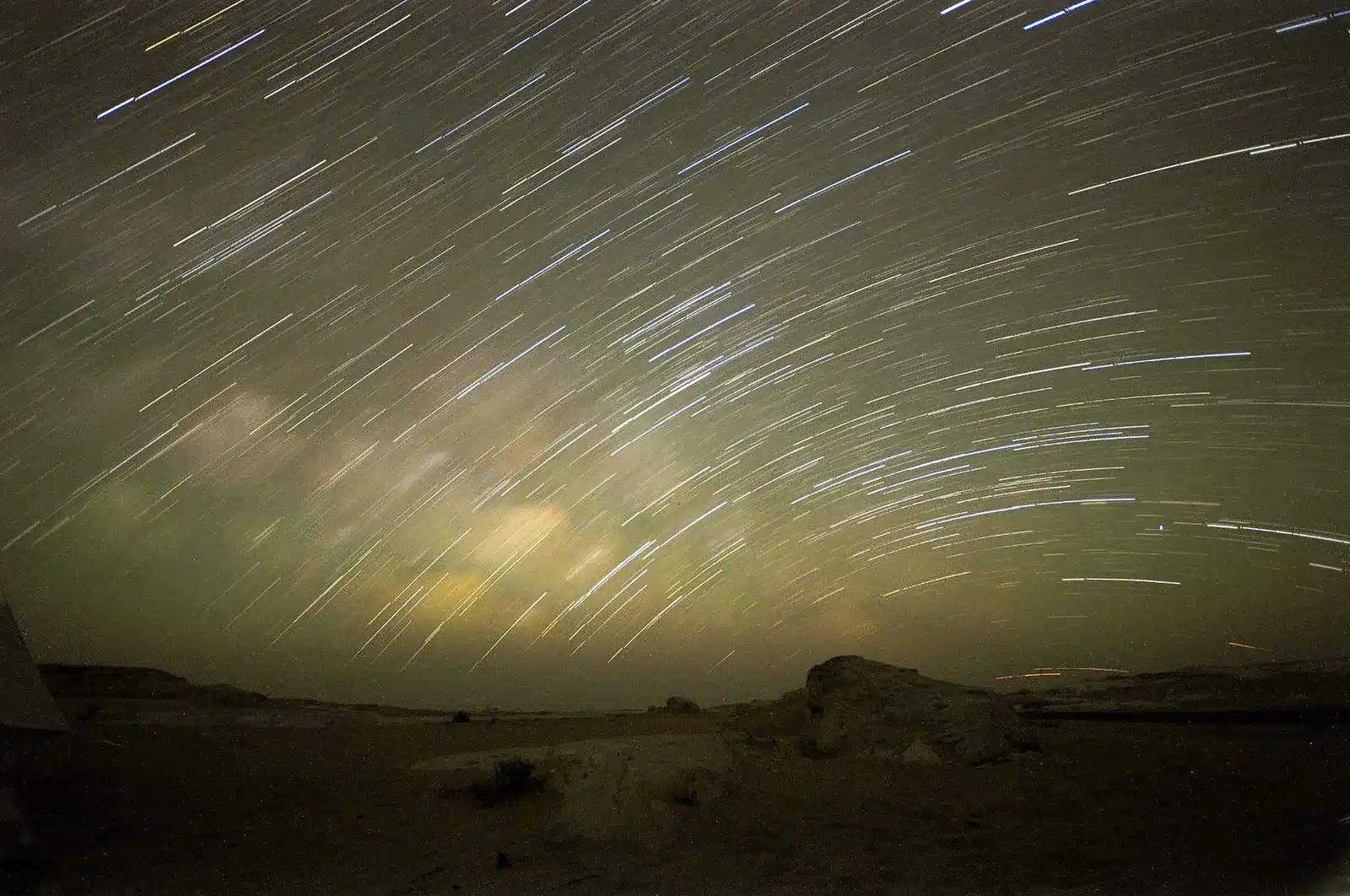
- For stargazing: check the moon phase; a bright full moon illuminates the rocks, while a darker moon reveals more stars.
- For fewer crowds: travel midweek and outside major holiday periods where possible.
White Desert safety, permits and choosing a guide
Our 2026 White Desert safety guide explains the current official advice and practical checks. The Western Desert is a remote environment, and official Egyptian tourism guidance recommends using a licensed guide, a suitable 4×4 and the necessary permissions. Requirements and access conditions can change, so old forum posts are not a reliable substitute for a current local check.
A good operator should be willing to answer practical questions:
- Who is the local desert driver and how well does the team know the current route?
- Is the trip private or shared, and what is the maximum number of guests per 4×4?
- Are current permits, protected-area entry fees and checkpoints handled?
- How much drinking water is carried, and is there reserve water?
- What happens if wind, heat, road conditions or an official instruction changes the itinerary?
- What sleeping bag, mattress, tent and toilet arrangements are included?
- Does the vehicle carry recovery, first-aid and communication equipment appropriate to the route?
Independent off-road driving is not a sensible shortcut. Navigation errors, soft sand, changing access and the absence of services make local experience essential. Tell your guide about mobility limitations, pregnancy, serious allergies or medical conditions before departure. Keep essential medication in your day bag, not buried in luggage.
What to pack for a White Desert safari
- Layered clothing: breathable daytime clothes, a warm mid-layer and a wind-resistant outer layer.
- Closed shoes: trainers or light hiking shoes with grip for loose rock and sand.
- Sun protection: hat, sunglasses and high-SPF sunscreen even in winter.
- Personal water bottle: the operator should provide drinking water, but your own bottle is convenient.
- Headlamp: easier and safer than using a phone torch around camp.
- Power bank: there may be no charging after Bahariya.
- Small towel and toiletries: choose unscented, low-waste products and pack out wipes.
- Medication: include motion-sickness or prescribed medicines you already use.
- Camera protection: use a simple dust bag and change lenses only when sheltered.
- Cash: useful for small purchases or tips in oasis areas; do not expect card terminals in the desert.
Private versus shared White Desert tours
A private tour gives you more control over photography stops, meal timing and walking pace. It is often the better fit for couples, families, older travellers and anyone connecting to a flight or another fixed itinerary. Private does not mean unlimited freedom: protected-area rules, daylight, checkpoints and safety still determine the route.
A shared tour can reduce the per-person cost, but ask how many guests share the Cairo transfer, the 4×4 and the camp. A “small group” on the booking page should translate into a clear maximum in writing. Egypt Safari Travel’s private desert tours are planned for small parties rather than bus-sized groups; if your group is larger, we arrange additional vehicles instead of overcrowding one car.
How much does a White Desert Egypt tour cost?
There is no honest single price that fits every White Desert trip. Our 2026 White Desert Egypt tour price guide compares current shared and private market ranges in detail. The cost depends on group size, private or shared transport, number of days, Cairo hotel location, vehicle allocation, camp equipment, meals, permits, protected-area fees and whether Bahariya accommodation is included. A very low headline price may exclude the Cairo transfer, charge entry separately or place more guests in each vehicle.
Compare like with like. Ask for a written inclusion list and the total for your actual travel date and party size. Use the live pages for the Bahariya Oasis safari from Cairo, 2-day White Desert tour and 3-day White Desert tour as the current reference rather than a price copied from an old article.
A realistic 2-day White Desert itinerary from Cairo
Day 1: Cairo, Bahariya, Black Desert and White Desert camp
Leave Cairo early and travel southwest to Bahariya. Meet the local desert team, take a practical meal or supply stop, and continue by 4×4. The route usually includes a viewpoint in the Black Desert, Crystal Mountain and selected scenery around Agabat before reaching the white formations. Walk during the softer late-afternoon light, watch sunset and have dinner at camp.
Day 2: Sunrise, formations, Bahariya and Cairo
Wake before or around sunrise, eat breakfast and explore additional formations while temperatures are comfortable. The team packs the camp and returns toward Bahariya, where you change to the Cairo vehicle. Arrival time depends on traffic, checkpoints, weather and the final desert route, so do not schedule an international flight or non-refundable evening event immediately after the tour.
Can families and older travellers visit?
Yes, if expectations and arrangements match the traveller. The main challenges are long road hours, getting in and out of a 4×4, uneven ground, cold nights and limited bathrooms. Families should ask for child-appropriate bedding, food and secure seating. Older travellers may prefer a private vehicle, shorter walks and a night in Bahariya before or after camping.
The trip is not wheelchair-accessible in the usual sense, but some experiences can be adapted around vehicle-accessible viewpoints. Tell the operator exactly what assistance is needed; vague labels such as “easy” are less useful than specific information about steps, walking distance and transfer support.
Responsible travel in the protected desert
The White Desert’s appeal depends on its fragility. Chalk surfaces mark easily, litter travels far in wind, and vehicle tracks can remain visible. Responsible behaviour is simple:
- Do not climb delicate formations or carve names into rock.
- Do not collect fossils, crystals, chalk or plants.
- Keep food and waste secure from wind and wildlife.
- Use established routes and follow the guide’s parking instructions.
- Keep noise low after dark and avoid disturbing other camps.
- Use water carefully and pack out wipes, batteries and plastic.
White Desert Egypt FAQ
Is the White Desert worth visiting?
Yes for travellers who value landscapes, camping, geology, photography and quiet. It is less suitable for someone who dislikes long road transfers or requires hotel-style facilities every night.
Can I visit the White Desert as a day trip from Cairo?
A same-day return is not a sensible way to experience it. The distance, change to a 4×4 and protected-area route make at least one overnight the practical minimum. If you have only one free day, choose a closer Cairo or Fayoum experience instead; our Fayoum safari guide explains those options.
Do I need a 4×4?
You need suitable local 4×4 transport for the off-road route. A normal Cairo transfer car can reach Bahariya by road but cannot replace the desert vehicle and experienced driver.
Is White Desert camping safe?
It can be a well-managed experience when current access is confirmed and the trip uses an experienced local team, appropriate vehicle, water, equipment and permissions. Remote desert travel is never risk-free, so operator quality matters.
Will I see the Black Desert and Crystal Mountain on the same trip?
They are commonly included on the Bahariya–White Desert circuit, but no stop should be assumed. Check the written itinerary, especially on short two-day departures.
Is there phone signal in the White Desert?
Do not rely on it. Download essential information, tell someone your itinerary and carry a charged power bank. The desert team should manage its own communication and safety procedures.
Can I add Djara Cave?
Djara Cave is a separate, more remote expedition that requires additional time, permissions and route planning. It should not be added casually to a compressed two-day tour. Read the Djara Cave Egypt guide and request a custom itinerary.
Plan a private White Desert safari with a local team
Tell us your travel date, number of adults and children, Cairo hotel, preferred trip length, and whether you want a private camp or are comfortable sharing camp space. We will recommend the shortest itinerary that still delivers the experience properly, confirm current route conditions, and explain the inclusions before you book.
Ask for a White Desert plan Compare all Egypt tours
Authoritative planning sources
- Egyptian Environmental Affairs Agency: White Desert Protectorate
- Experience Egypt: Bahariya Oasis
- Experience Egypt: Western Desert excursions
Image credits and licences
White Desert rock formations, karst formations and Bahariya–Farafra road: Vyacheslav Argenberg, CC BY 4.0. Mushroom rock: Asgalal, CC BY-SA 4.0. Black Desert and Crystal Mountain: Viktor Lazić, CC BY-SA 4.0. Sunset: Ahmed Yousry Mahfouz, CC BY-SA 4.0. Star trail: Ahmed Khalil, CC BY-SA 4.0. Images were resized and converted to WebP.
Where to stay in Bahariya Oasis before or after the White Desert
A hotel night can make the Cairo transfer and protected-area safari more comfortable. Egypt Safari Travel works with the following Bahariya accommodation partners and can coordinate the room, meals, Cairo pickup and local 4×4 timing as one clear plan.
Compare the 5 best hotels in Bahariya Oasis before booking your White Desert route →
Ready to plan your safari? Compare all White Desert tours or view the 2-Day White Desert Safari from Cairo.