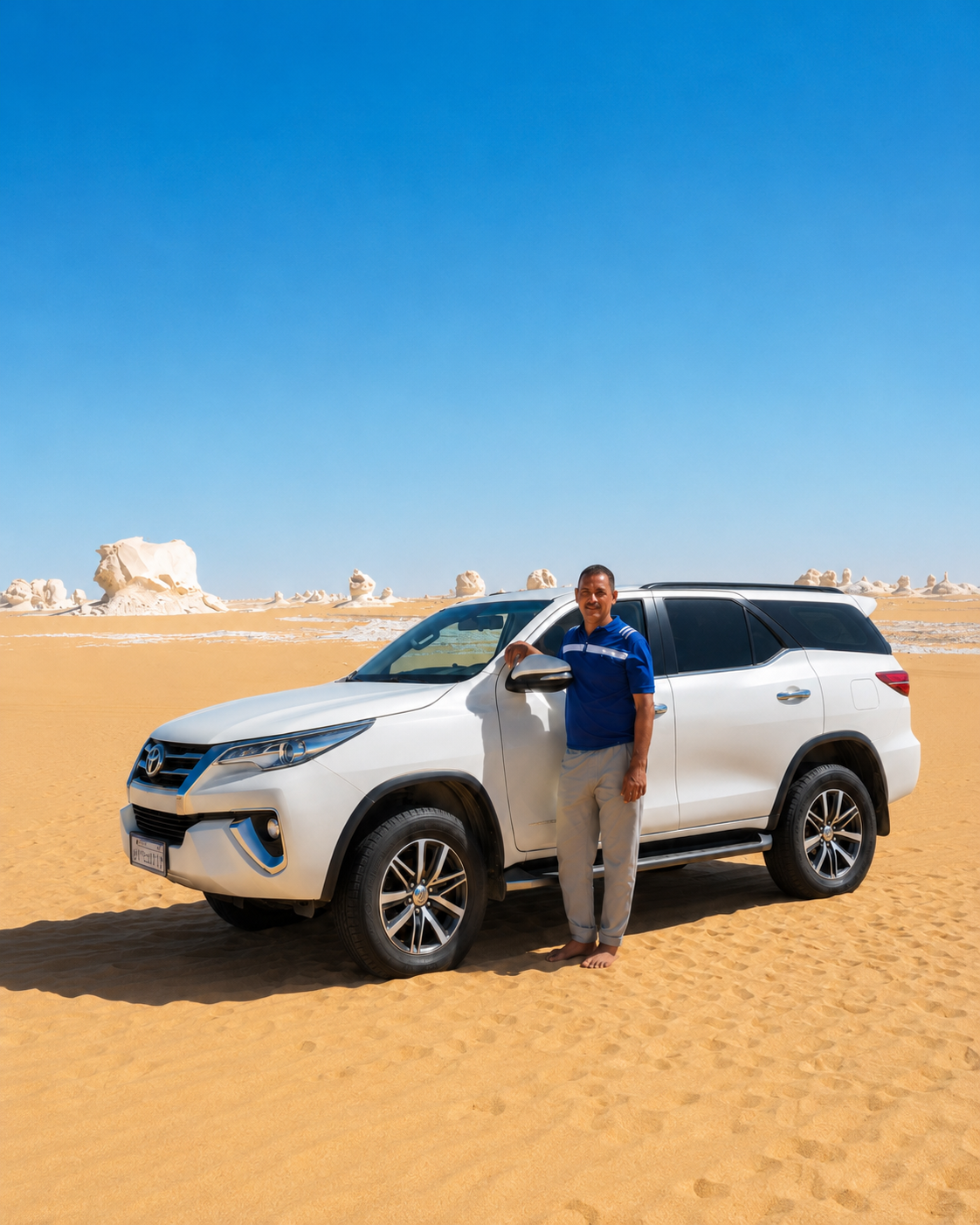
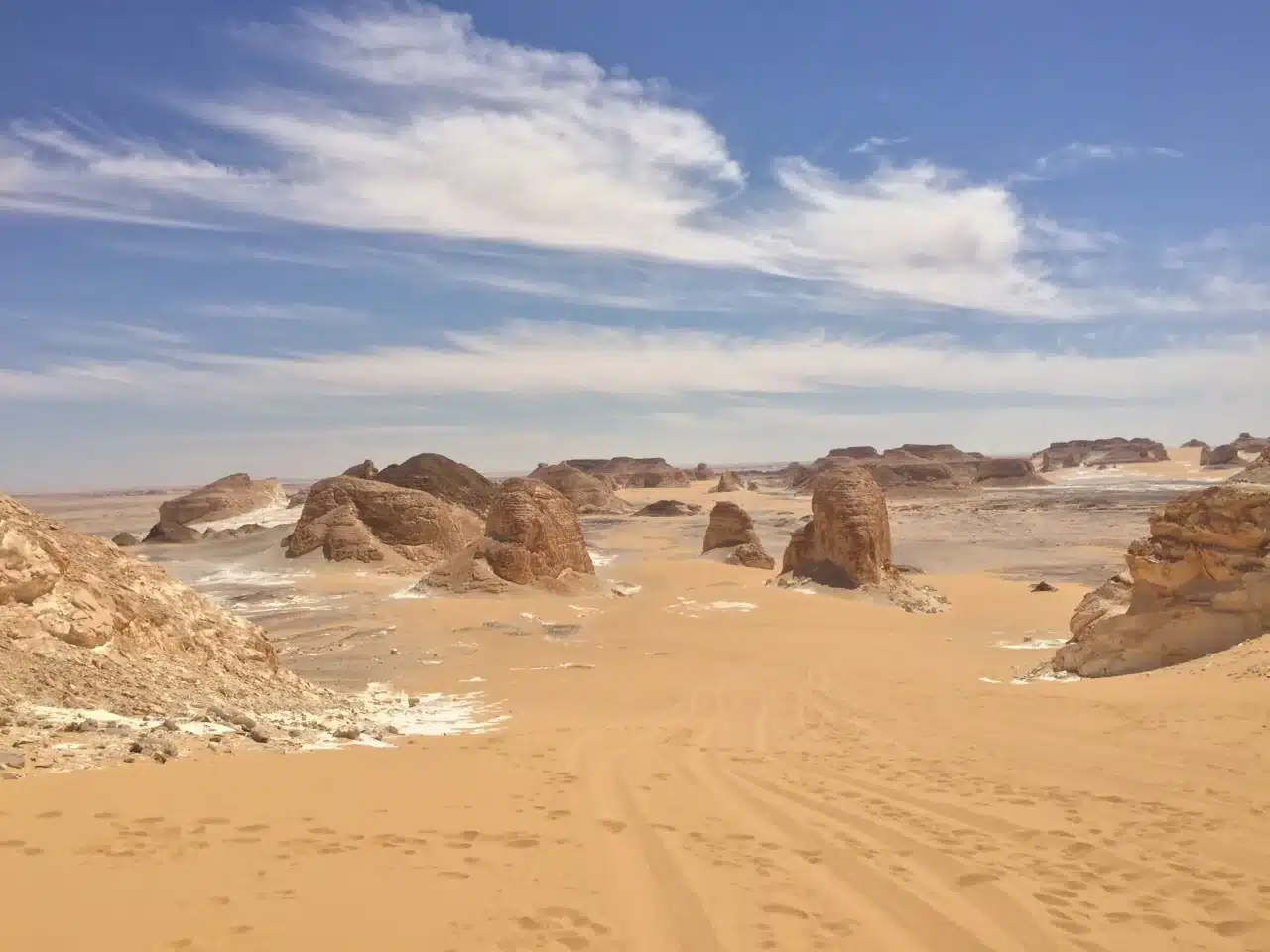
Agabat Valley Egypt is the moment when a White Desert journey stops feeling like a list of attractions and becomes a true expedition. Sand flows between isolated limestone towers, pale cliffs break the horizon, and every turn of the 4×4 changes the composition. Often written as El Agabat, Al Aqabat or Valley of Agabat, this remote Western Desert landscape is normally visited as part of a Bahariya–White Desert circuit rather than as a stand-alone day trip.
This guide explains what the valley really looks like, where it fits in the route, how long to allow, the best light for photographs, what a responsible private tour should include and how to avoid the rushed “photo stop” version. If you are planning the whole circuit first, open our White Desert Egypt travel guide, then use this page to decide how much time Agabat deserves.
Agabat Valley Egypt: quick planning facts
| Best for | Landscape photography, quiet desert time, geology, scenic 4×4 travel |
|---|---|
| Normal gateway | Bahariya Oasis with a local off-road team |
| Ideal trip length | Three days for a slower visit; two days for a compact highlights route |
| Best light | Lower morning or afternoon light, depending on route and camp position |
| Vehicle | Suitable 4×4 driven by an experienced local desert driver |
| Facilities | None at the remote stops; carry water, shade, food and waste bags |
| Best season | Generally October to April for milder daytime conditions |
| Can it be a Cairo day trip? | Not responsibly; the Cairo road transfer plus desert driving requires an overnight plan |
What makes the Valley of Agabat different?
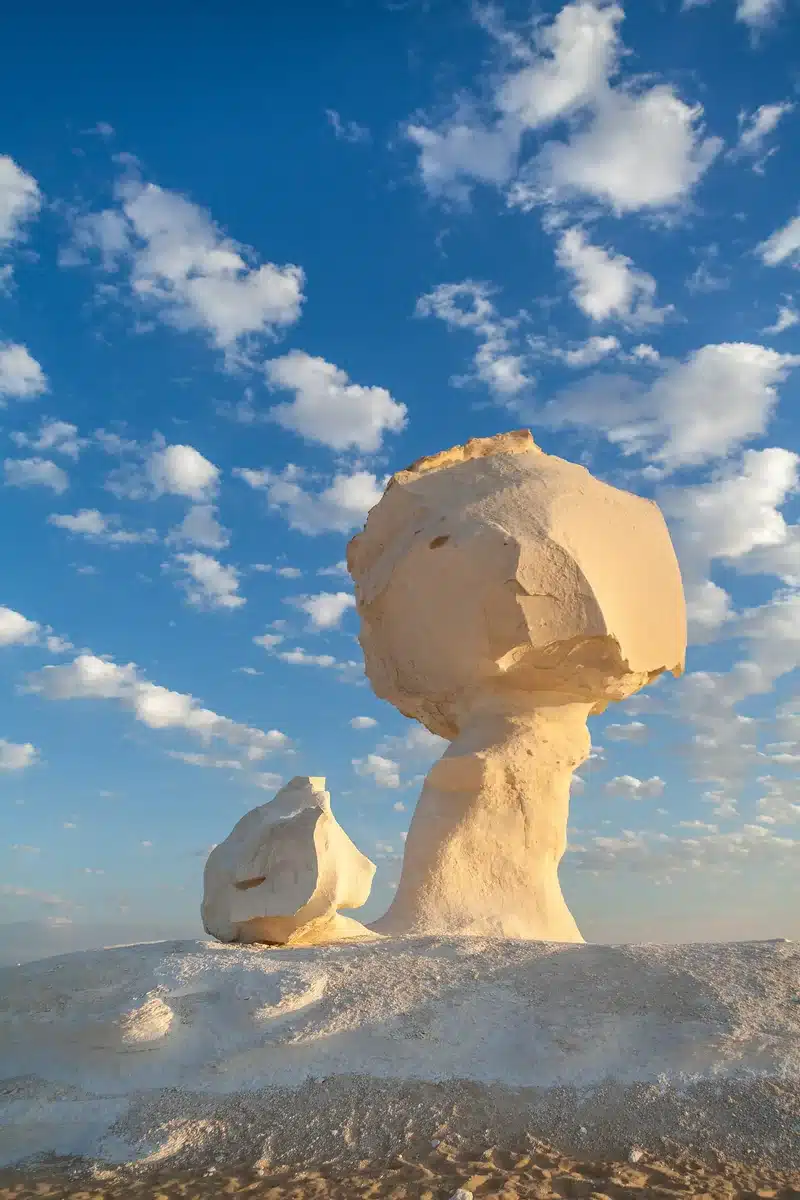
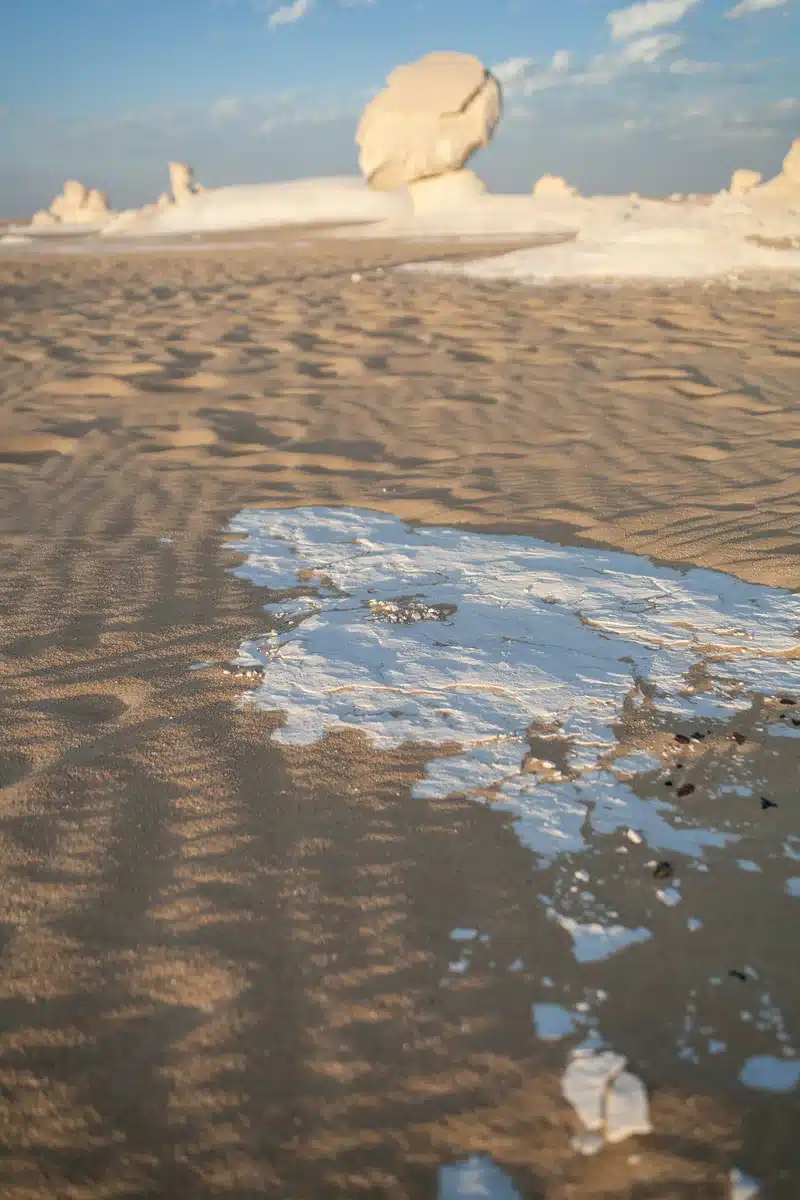
The White Desert is famous for isolated chalk mushrooms and animal-like sculptures. The Black Desert is recognised by dark-capped hills and volcanic-looking surfaces. Agabat feels different: it is a broad landscape of golden sand, pale walls, rounded towers and layered viewpoints. Instead of concentrating on one named rock, you read the valley as a whole.
That scale is exactly why quick itineraries undersell it. A driver can stop at one viewpoint, take a photograph and leave, but the valley changes as you move through it. Foreground dunes hide and reveal formations. Shadows create stronger depth. A viewpoint that appears flat at midday can become dramatic when lower light separates the ridges.
The Arabic place name is transliterated in several ways, so travellers may see Agabat, Aqabat, Akabat or El Aqabat. These spellings usually refer to the same broad stop on the White Desert circuit. Do not confuse it with Aqaba in Jordan or with similarly named valleys elsewhere in the region.
Where is Agabat Valley?
Agabat lies on the Western Desert circuit used between Bahariya Oasis and the White Desert/Farafra area. The practical gateway from Cairo is Bahariya: travellers use the paved road to reach the oasis, meet the local safari team, organise supplies and continue into desert terrain by 4×4. Read our detailed Cairo to White Desert route guide before comparing pickup promises.
Online maps are useful for understanding the region but should not be treated as turn-by-turn desert navigation. Tracks change, sand conditions vary, phone coverage can disappear and protected-area access rules may affect the route. The relevant question is not “Can my phone find it?” but “Does the local team know the current route, weather and access conditions?”
How Agabat fits into a White Desert itinerary
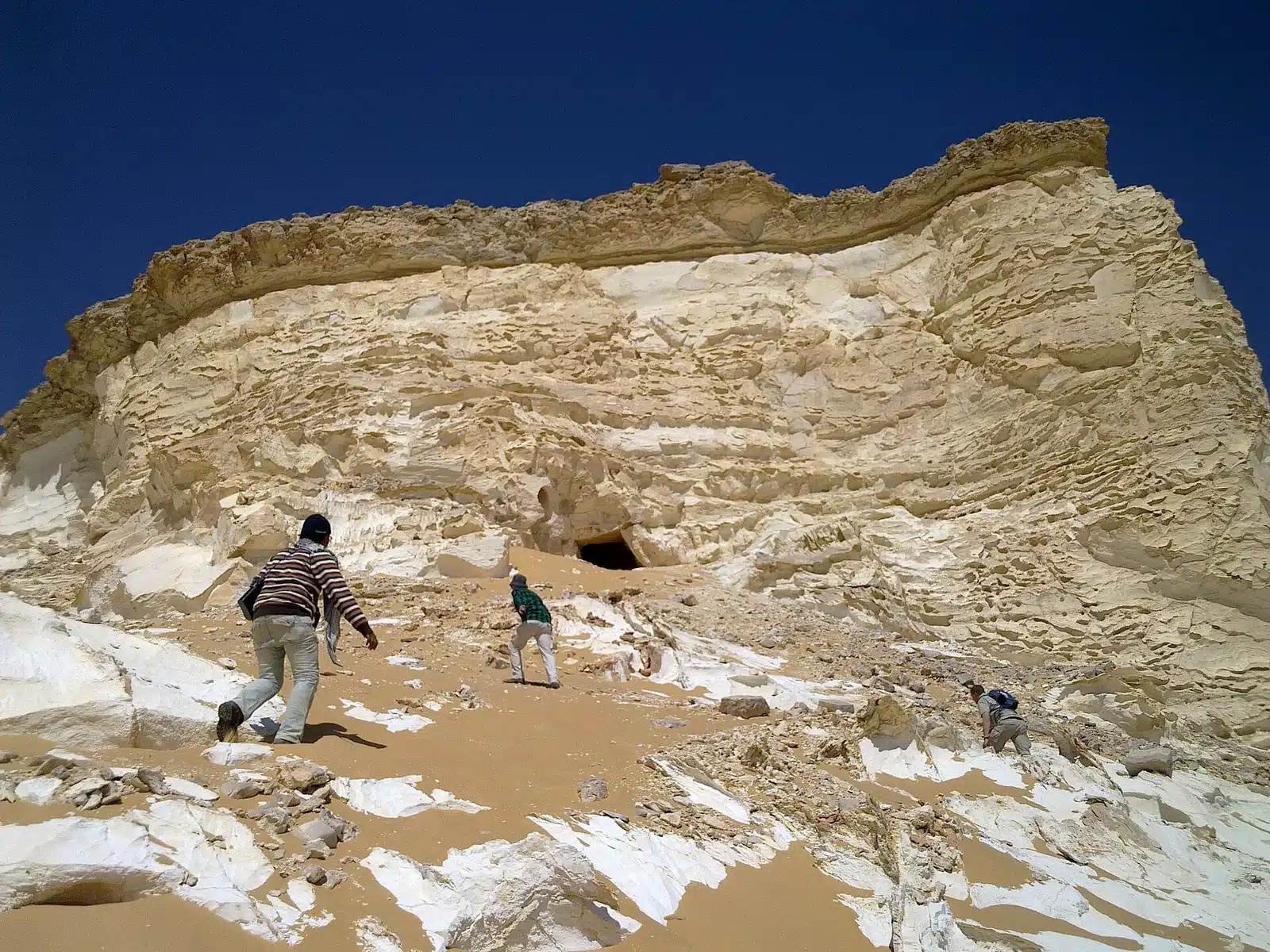
A well-designed circuit is a sequence of changing landscapes, not a race between pins. From Bahariya, many routes begin with the Black Desert, oasis stops and lunch, then continue towards Crystal Mountain, Agabat and the White Desert formations. The order can change because of weather, access, departure time and camp selection.
Compact two-day version
A two-day, one-night trip can include Agabat, but time is tight. Much of day one is consumed by the Cairo–Bahariya transfer, changing vehicles and beginning the desert circuit. The valley may therefore be one important stop among several before sunset and camp. This works for travellers with a fixed Egypt schedule who accept a faster pace.
Slower three-day version
Three days can create room for a longer Agabat passage, quieter viewpoints, a less pressured lunch and more flexibility around photography. It may also allow a second camp zone or additional time in Bahariya. It is not automatically better: ask for a written day-by-day route so that the extra night adds exploration rather than simply extending camp time. Our 2-day vs 3-day White Desert tour comparison shows the trade-offs clearly.
What you will actually see
Expect an open, changing landscape rather than a fenced attraction with a ticket office. Depending on the route, you may see:
- isolated pale towers rising from gold-coloured sand;
- layered escarpments and rounded buttes;
- wind-shaped surfaces and exposed sediment;
- wide panoramas with very little modern visual clutter;
- 4×4 tracks crossing firm ground and soft sand;
- strong colour contrast between cream, white, ochre and blue sky.
Descriptions sometimes call the forms “mountains,” “chalk towers” or “limestone sculptures.” In practice, the exact material and appearance vary through the circuit. It is safer to appreciate the visible layers and erosion without inventing a precise geological story for every formation. The national White Desert landscape is protected because of its exceptional formations and biological and geological value.
Best time to visit Agabat Valley
For most international visitors, October through April offers the most comfortable balance. Winter can bring pleasant days but surprisingly cold nights, especially in an exposed camp. Shoulder months can be warmer in daylight and comfortable after sunset. Summer heat makes long transfers, exposed stops and vehicle problems less forgiving.
Season is only one layer of the decision. Wind, haze and the precise departure time affect the experience on any date. Ask the operator how the team adapts to a windy forecast and whether the itinerary leaves time to reach camp before dark. A fixed promise of perfect sunset at every landmark is marketing, not serious desert planning.
Best time of day for photography
Lower-angle light usually creates stronger shadows and better separation between formations. Midday light can flatten texture, yet it also produces clean colour and may suit wide documentary images. The “best” time depends on which side of a formation you approach and whether sand, dust or cloud softens the sun.
For a private photography-focused route, tell the guide before departure that stopping time matters more than ticking every attraction. Keep one camera body or phone protected from blowing sand, change lenses inside the vehicle if possible and carry a simple cloth rather than repeatedly polishing dust across the glass. A polarising filter can deepen sky but may create uneven colour on very wide lenses.
Is sandboarding available?
Some itineraries offer sandboarding where slope, surface and local rules make it appropriate. Treat it as an optional activity, not a guaranteed feature of every Agabat visit. Boards vary in quality, wind can erase useful tracks and walking back up a dune is more tiring than promotional videos suggest.
Ask whether a board is carried, whether the selected dune is suitable that day and whether the activity is included. Avoid driving or boarding across fragile crusts and vegetation merely to reproduce a social-media shot. A good local team chooses a robust sand slope and keeps the experience proportionate to safety and conservation.
Can you camp in Agabat Valley?
Camp location is determined by current permission, wind shelter, surface, route timing and the operator’s responsible-use practice. Some tours describe “Agabat camping” loosely even when the overnight camp is in another part of the White Desert circuit. If the exact landscape matters, ask for the planned camp zone while accepting that conditions may require a safer alternative.
A proper desert camp should include clean sleeping equipment, enough drinking water, dinner and breakfast, a toilet plan explained before departure, waste collection and fire practices that do not damage the ground. Review our White Desert camping guide for a full packing and comfort checklist.
Safety: what a serious operator should provide
Agabat Valley Egypt is remote. Safety comes from preparation, not from describing the desert as either completely safe or inherently dangerous. A credible operator should confirm the vehicle plan, experienced local driver, water reserve, first-aid provision, communications approach, route permissions and contingency procedure.
Before paying, share medical needs, mobility limitations, food restrictions and the ages of children. Ask how many passengers will be in each 4×4 and whether seat belts are available. Private should describe your party and vehicle arrangement; it should not be used as a label while unrelated guests are added later.
During the trip, follow the driver’s instructions around steep slopes and soft ground. Do not wander behind formations without telling the guide. Closed shoes are more useful than sandals for climbing in and out of the vehicle, and a warm layer is essential in cooler months even if Cairo felt mild.

What to pack
- passport or required identification confirmed by the operator;
- refillable water bottle plus the team’s main water supply;
- sun hat, sunglasses and broad-spectrum sunscreen;
- closed shoes with useful grip;
- light layers for daytime and a warm layer for night;
- personal medication and a small sealed dust pouch;
- power bank and charging cable;
- headlamp rather than relying on a phone battery;
- wet wipes and personal hygiene supplies;
- a compact bag so equipment stays organised inside the 4×4.
Responsible travel rules that matter
The desert can look indestructible, but vehicle tracks, litter, fire scars and broken formations remain. Keep all waste with the team, never carve or remove rock, avoid feeding wildlife and use existing robust routes where possible. Drones should never be assumed legal or welcome; ask about current permissions before bringing one.
Egypt’s official tourism portal provides a useful overview of the country’s natural wonders and publishes a dedicated Deserts and Oases guide. Regulations and access can change, so a local team should check current conditions rather than relying on an old blog itinerary.
Common planning mistakes
- Calling it a Cairo day trip. The road transfer and desert section deserve an overnight itinerary.
- Choosing only by the lowest price. Compare party size, 4×4 arrangement, permits, meals, camp equipment and pickup location.
- Assuming every tour spends meaningful time here. Ask how Agabat is scheduled, not merely whether its name appears.
- Planning photographs to the minute. Wind, road timing and light require flexibility.
- Packing for Cairo temperatures. Open-desert nights can feel much colder.
- Treating a map pin as navigation. Remote travel requires current local route knowledge.
Frequently asked questions
Is Agabat Valley the same as the White Desert?
It is a distinct landscape stop within the wider Bahariya–White Desert circuit. Travellers usually visit both on the same safari, but Agabat’s broad sand-and-tower scenery looks different from the White Desert’s famous isolated chalk sculptures.
How many days do I need?
Two days can cover the classic circuit with one night, while three days provides a better chance of slower exploration and photography. The written route matters more than the label.
Can children visit?
Many families can enjoy the trip if children tolerate long road transfers and off-road movement. Ask for private pacing, appropriate seating, frequent stops and a clear camp setup. Families with very young children should discuss the route honestly before booking.
Is there phone signal?
Do not depend on continuous coverage. Tell family when you expect to return, save key documents offline and ask the operator about communications and contingency procedures.
What does an Agabat tour cost?
Prices depend on group size, private or shared operation, number of nights, Cairo transfer, camp standard and inclusions. Use our White Desert tour price guide to compare like with like.
Plan a private Agabat Valley route
The best itinerary is built around your available days, arrival time, group size and reason for travelling. Photographers need light and stopping time; families need pacing and comfort; first-time visitors often want the full Black Desert, Crystal Mountain, Agabat and White Desert sequence.
Send us your Cairo dates, number of travellers, preferred duration and whether photography, sandboarding or camping comfort is the priority. We will suggest a realistic private route with clear inclusions instead of promising every landmark in an impossible schedule. View the 2-day Bahariya and White Desert tour or request a custom Agabat Valley itinerary.