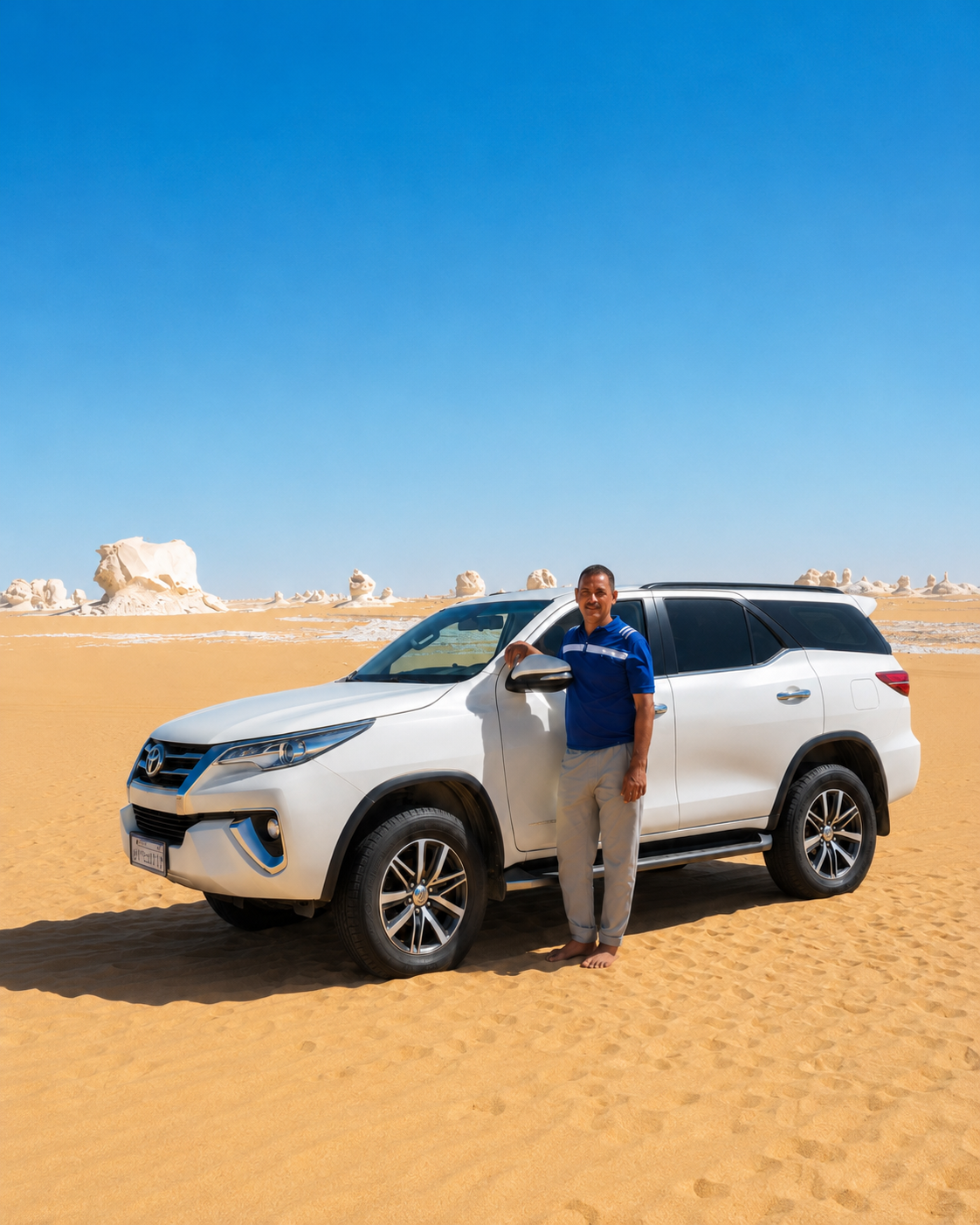
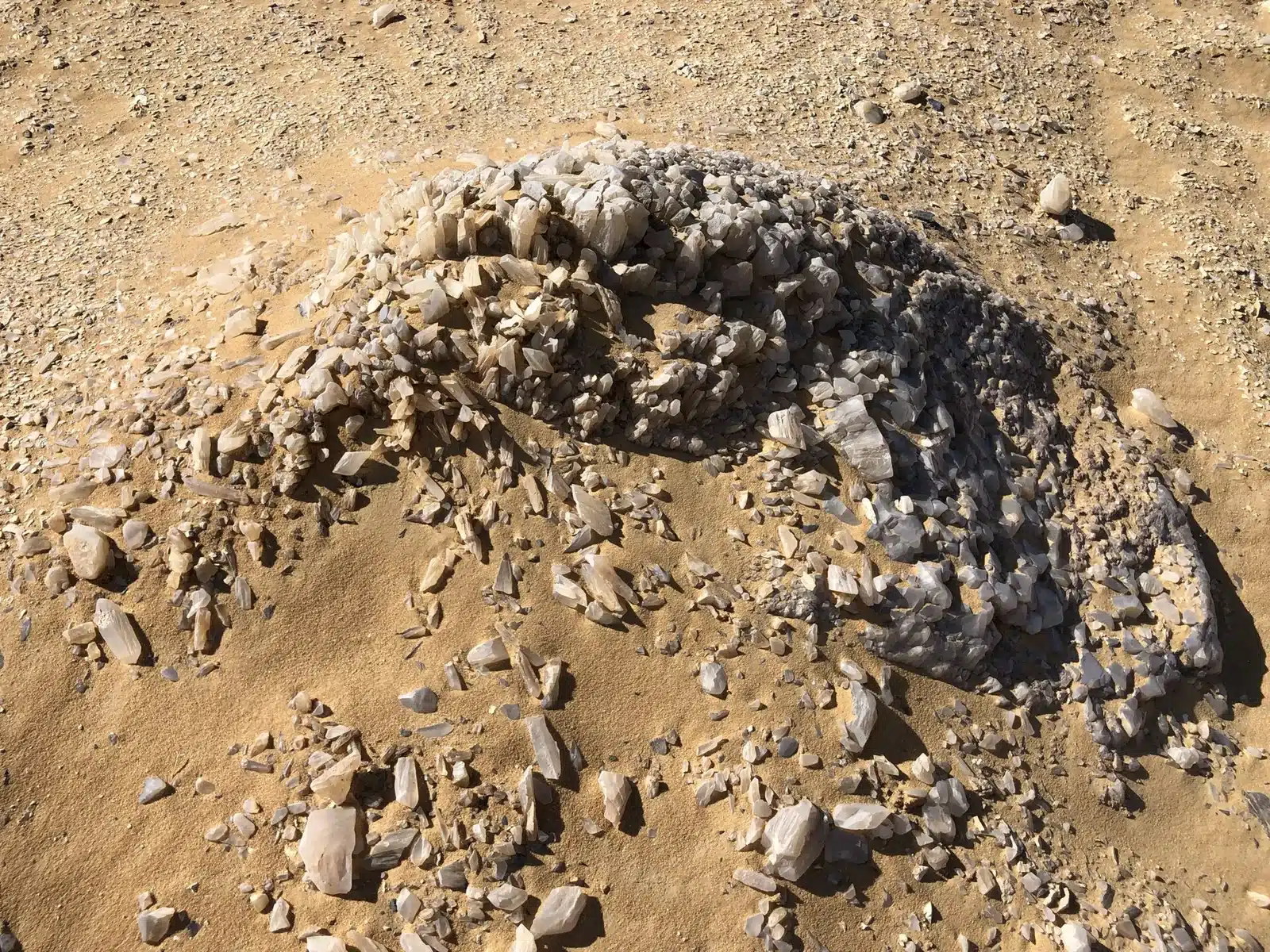
Crystal Mountain Egypt is a compact mineral-rich rock formation on the Western Desert route between Bahariya Oasis, Farafra and the White Desert. It is not a high mountain or a place for a long summit hike. Travellers stop to examine exposed crystals, a small natural arch and coloured rock layers before continuing toward Agabat Valley and the White Desert formations. The site is protected, so the correct experience is to look closely, photograph the minerals and leave every fragment where it is.
Crystal Mountain Egypt: quick answer
- What it is: a small eroded rock outcrop with exposed crystalline minerals, coloured layers and a natural opening.
- Where it is: inside the wider White Desert protected region, between Bahariya and Farafra.
- How to visit: with a licensed local guide and suitable 4×4 as part of a Western Desert circuit.
- Normal stop length: roughly 20–45 minutes, depending on the route, heat and group mobility.
- Important rule: do not take crystals, fossils or rock fragments.
Plan the full White Desert route or see the private 2-day safari.
What is Crystal Mountain in Egypt?
Crystal Mountain is one of the best-known geological stops in Egypt’s Western Desert. The word “mountain” creates the wrong expectation for many first-time visitors: this is a compact formation rather than a towering peak. Its appeal is in the close detail—mineral veins, translucent crystals, weathered openings and differently coloured rock concentrated in a relatively small area.
Egypt’s official tourism information describes Crystal Mountain as part of the White Desert excursion circuit. The Egyptian State Information Service places it within the White Desert region between Bahariya and Farafra and describes multiple types of crystal clustered in the formation. The precise distance printed by official pages varies slightly, which is common for desert route measurements; what matters to travellers is that it is a stop on the longer Bahariya–Farafra journey, not an independent attraction near Cairo.
The site is sometimes called Gebel al-Izzaz or the “Mountain of Crystal.” Local and translated spellings vary. These names refer to the mineral-rich formation on the Western Desert route, not Crystal Mountain in Sinai or similarly named attractions in other countries.
Where is Crystal Mountain Egypt?
Crystal Mountain lies within the White Desert protected landscape in Egypt’s New Valley Governorate. Official sources place it about 120 kilometres north of Farafra and roughly 160–170 kilometres south of Bahariya Oasis. It is far from Cairo, so a map pin showing the formation does not represent the full travel time.
Most foreign visitors follow this sequence:
- Travel from Cairo to Bahariya Oasis by road.
- Meet the local desert driver and transfer to a suitable 4×4.
- Explore selected Black Desert viewpoints.
- Continue south to Crystal Mountain.
- Travel through or near Agabat Valley.
- Reach the White Desert for sunset and an overnight camp.
This order can change because of daylight, permissions, road conditions or weather. Read the Black Desert Egypt guide to understand the first major landscape after Bahariya, and use our Bahariya Oasis guide if you want to add springs, farms or archaeological stops.
What are the crystals made of?
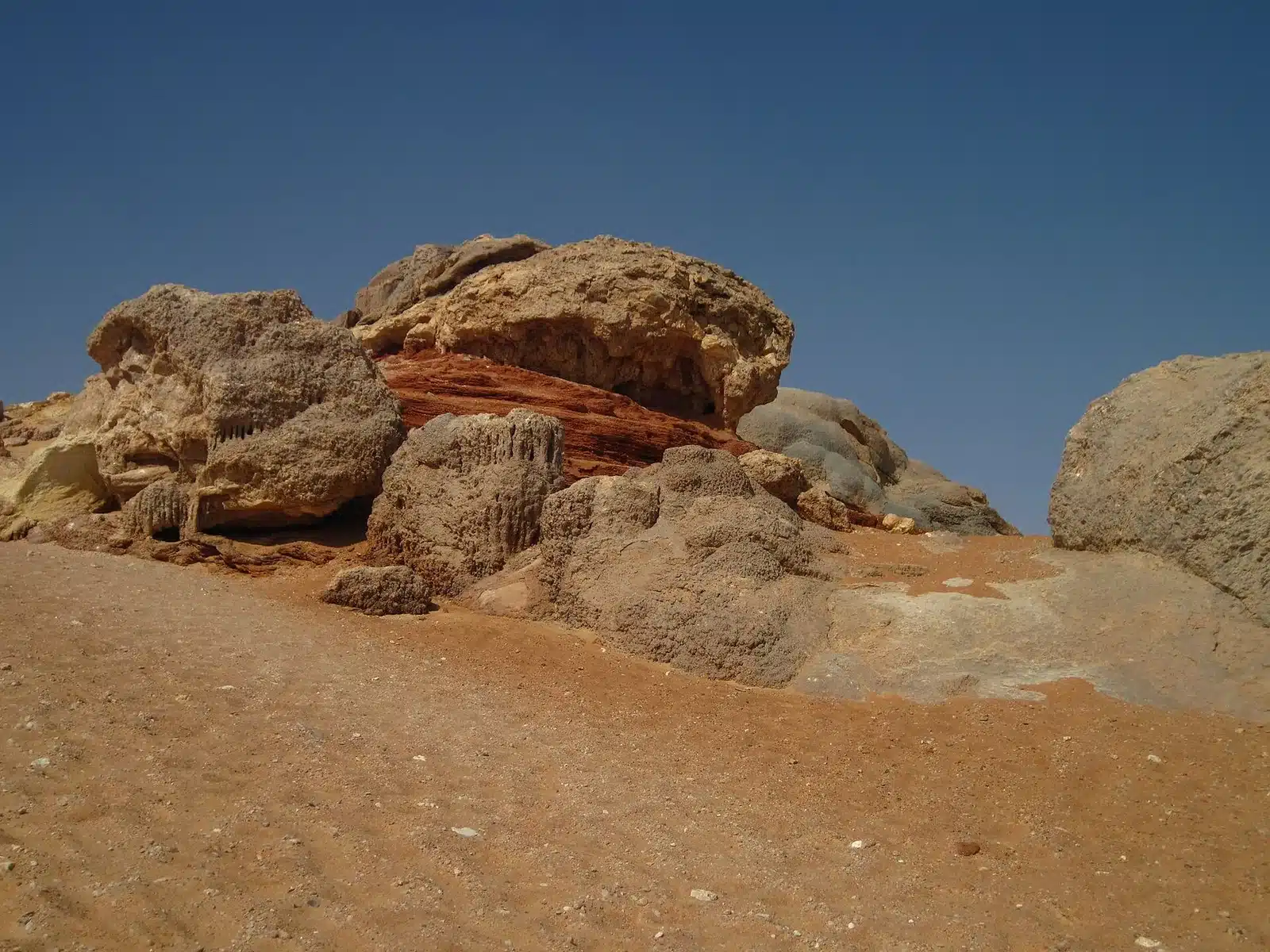
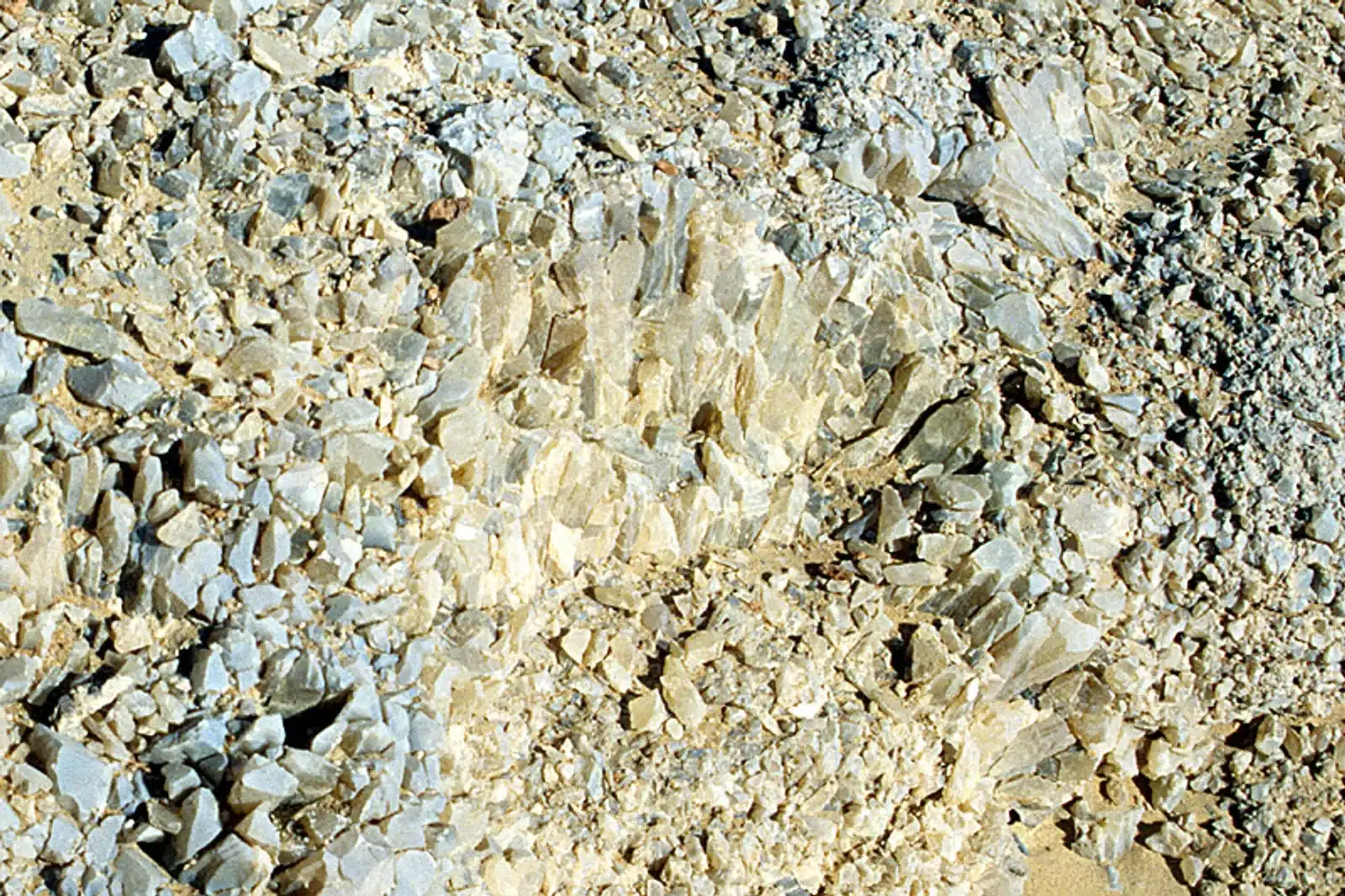
Online travel pages often label every bright fragment as either quartz or calcite. That is too simple. Official Egyptian information describes more than one type of crystal at the site, and mineral identification cannot be done reliably from colour or a phone photograph alone. The formation contains translucent and pale crystalline material alongside coloured sedimentary rock and mineral veins.
For a visitor, the useful observation is physical rather than chemical: sunlight reflects from flat crystal faces, broken-looking clusters emerge from the rock, and mineral bands produce colour changes across a small area. You do not need to assign a mineral name to appreciate the geology.
If your interest is scientific, photograph the feature in place and record its position without disturbing it. Removing a fragment destroys context—the relationship between the mineral, surrounding rock and erosion surface that makes the site valuable to geologists.
How did Crystal Mountain form?
The wider White Desert preserves evidence of ancient marine environments, layered sedimentary rock, mineral deposition and long periods of erosion. Egypt’s official description explains that mineral- and salt-rich sediments accumulated when a shallow sea covered the region. As conditions changed and the surface was exposed, weathering removed softer material and revealed harder mineral features.
Crystal Mountain should therefore be understood as an eroded geological window, not as a pile of loose crystals that appeared recently. Rock layers were deposited and altered over an immense span of time; wind, temperature changes and occasional water then shaped what is visible today.
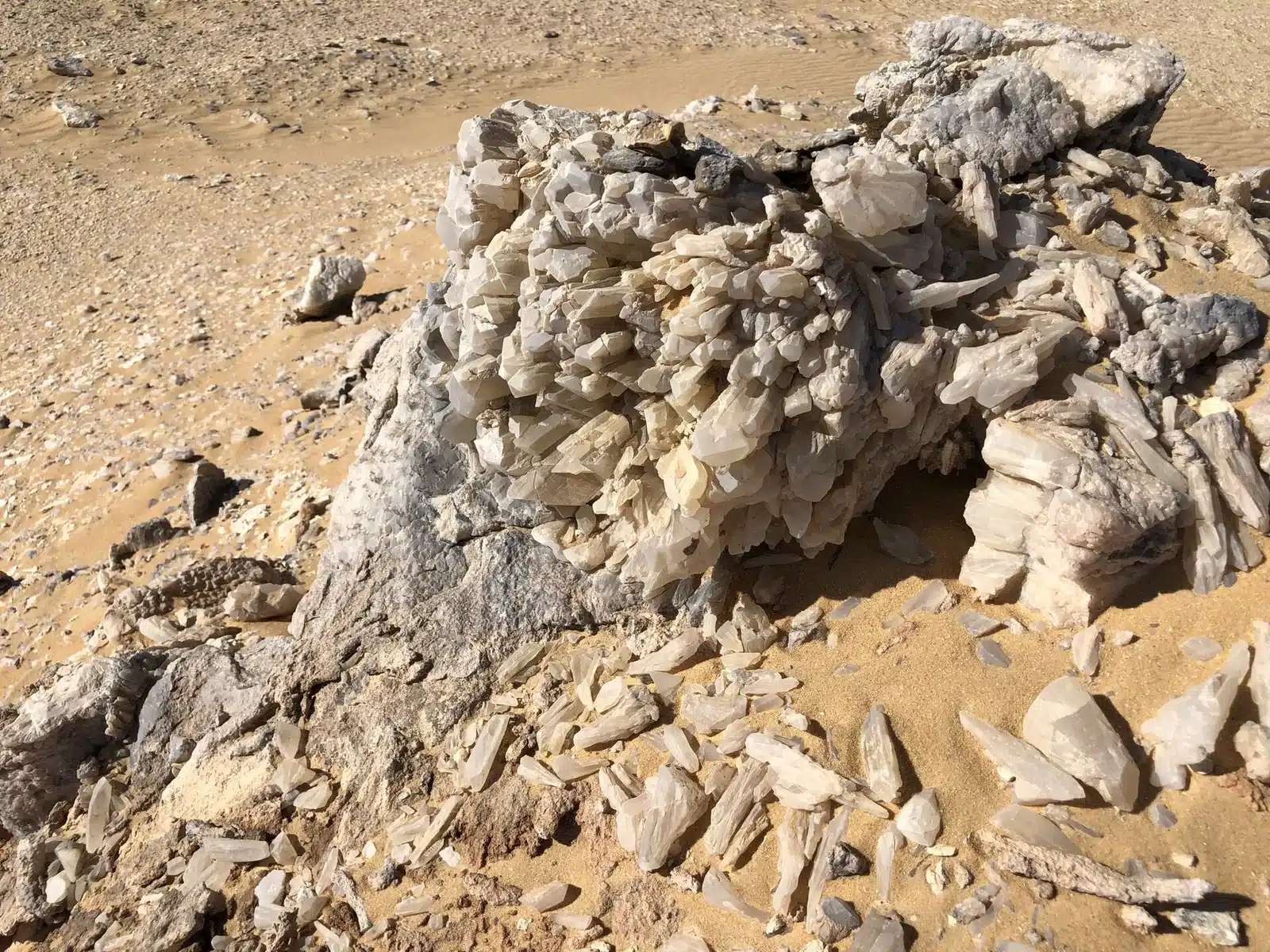
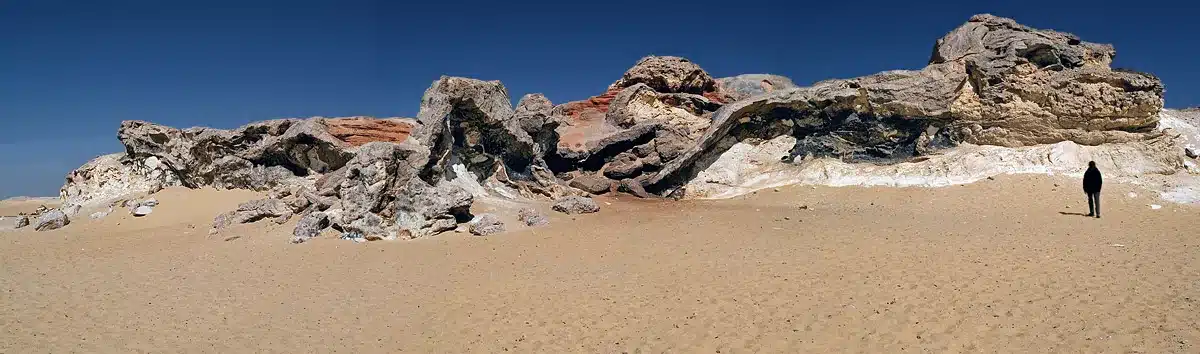
The coloured sections are also important. Cream, grey, brown, reddish and dark bands reveal that the formation is more complex than a white crystal mound. The most reflective pieces attract attention, but the transitions between rock types tell a richer geological story.
Why taking a crystal is not harmless
Crystal Mountain has suffered damage from visitors removing pieces. Egypt’s State Information Service specifically identifies collection as a conservation problem. A fragment may look small, but thousands of people making the same decision can dismantle a formation piece by piece.
There are three reasons to leave everything in place:
- It is protected natural heritage: the formation belongs to the White Desert protected area.
- Scientific context matters: a mineral separated from its layer loses information.
- Future visitors deserve the same site: photographs are renewable; crystals are not.
Do not buy a fragment that a seller claims came from the site. A responsible guide will stop collection, avoid driving against the formation and choose walking lines that reduce damage.
What you will see at Crystal Mountain
Crystal clusters and mineral faces
The most obvious features are pale crystal clusters emerging from the ground and rock. Move around them slowly rather than touching; the reflection changes with angle, so a cluster that looks dull from one side may shine from another.
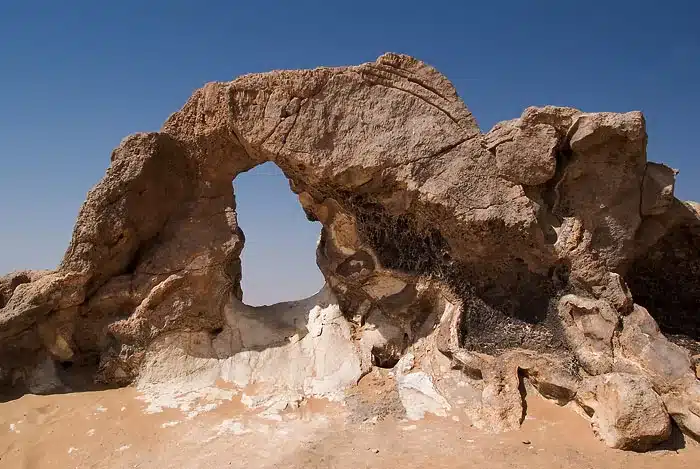
A natural rock window
A weathered opening or arch is one of the most photographed features. It is modest in scale, and wide-angle phone photos can make it look much larger. Avoid climbing onto it or placing weight on fragile edges.
Coloured rock layers
Parts of the formation contain ochre, rust, dark and pale layers. These surfaces can be more visually interesting than isolated bright crystals because they show how varied material is packed into a small outcrop.
Open Western Desert views
The surrounding plain helps explain why Crystal Mountain became a useful landmark on the route. The outcrop feels concentrated and colourful against a broad, pale landscape. Vehicles should stop at a safe distance rather than crowding the geological features.
How long do you need at Crystal Mountain?
For most travellers, 20 to 45 minutes is enough for a careful walk, photographs and a guide’s explanation. A geologist or macro photographer may want longer, while high heat or limited mobility may make a shorter stop sensible.
Be cautious when a short two-day itinerary advertises an unrealistic number of stops. Cairo to Bahariya already takes much of the morning. Crystal Mountain should not be stretched into a false half-day attraction, but it also should not be reduced to a moving vehicle photo. A well-planned route balances it with the Black Desert, Agabat and the White Desert camp.
Two-day and three-day itineraries
Two days from Cairo
Day one normally includes the Cairo transfer, a practical stop in Bahariya, selected Black Desert scenery, Crystal Mountain and onward travel to the White Desert camp. Day two covers sunrise, more white formations and the return through Bahariya to Cairo. This is efficient but involves long driving days.
Three days from Cairo
An extra day creates space for longer viewpoints, Bahariya experiences, photography and a less compressed camp schedule. It can also allow the team to change the order of stops more easily when wind, checkpoints or group pace affect timing.
Compare the 2-day White Desert safari, the 3-day private safari and the White Desert and Agabat Valley route.
Best time to visit Crystal Mountain
October through April is generally the most comfortable season. The site has little shade, so even a short inspection becomes tiring in extreme heat. Winter days can be pleasant, but the same trip may include a cold White Desert night.
- Morning: cooler temperatures and cleaner directional light on some crystal surfaces.
- Midday: strong reflections, high contrast and harsher heat.
- Late afternoon: warmer colours and longer shadows, but the team must preserve daylight for the camp route.
The best time of day is therefore a route decision, not only a photography preference. Your guide must consider how far the camp is, current road conditions and the season.
Safety and access
Crystal Mountain sits in a remote protected landscape. Use a licensed guide, appropriate 4×4 and current permit arrangements. A normal rental car may travel sections of paved road but does not replace the desert vehicle or local route knowledge.
At the formation itself:
- Wear closed shoes; sharp fragments and uneven ground are common.
- Do not climb the arch or unstable crystal clusters.
- Keep children close and explain the no-collecting rule before leaving the vehicle.
- Carry water even for a short stop.
- Follow the guide if a section is closed, fragile or unsafe.
- Do not schedule an international flight immediately after a desert return.
Photography tips
- Use side light to reveal texture instead of photographing only flat reflective surfaces.
- Take one wide frame for context, then close details without touching the rock.
- Expose for the bright crystal face so highlights do not become pure white.
- A phone’s 2x lens can isolate a mineral cluster without moving dangerously close.
- Include a vehicle or person at a safe distance to show the formation’s true scale.
- Protect cameras from dust and change lenses inside the vehicle.
What to pack
- Closed shoes with grip.
- Hat, sunglasses and high-SPF sunscreen.
- Layered clothing for a route that continues into a cold desert night.
- Water bottle and personal medication.
- Power bank and dust protection for electronics.
- Headlamp if the itinerary includes camping.
Is Crystal Mountain suitable for families?
Yes, because the main features can be seen during a short walk close to the vehicle. The challenges are the long Cairo transfer, uneven rock and limited facilities. A private tour allows families and older travellers to control the pace and avoid unnecessary climbing.
Ask specific questions about the step into the 4×4, walking distance, toilet arrangements and sleeping equipment. Tell the operator about mobility limits, allergies or medical requirements before departure.
Crystal Mountain Egypt tour cost
Crystal Mountain is usually included within a larger Black and White Desert safari, not priced as a separate attraction. Your final quote changes with the size of the party, whether vehicles are shared, the length of the route, camping standard, meals, permissions and the Cairo collection area.
Compare complete inclusion lists. A low headline price may exclude the Cairo transfer, protected-area fees or private 4×4 allocation. Use live tour pages for current prices rather than a figure copied from an old blog post.
Crystal Mountain Egypt FAQ
Is Crystal Mountain made entirely of crystal?
No. It is a rock formation containing exposed crystals, mineral veins and several coloured rock types.
Can visitors take a crystal?
No. Removing minerals damages a protected geological site and strips the fragment of its scientific context.
Is it a difficult mountain climb?
No. It is a compact formation usually explored on a short, uneven walk. Climbing fragile features is unnecessary and harmful.
Can I visit from Cairo in one day?
A same-day return would be dominated by road time and is not recommended. Include Crystal Mountain in a two- or three-day Bahariya and White Desert safari.
Is Crystal Mountain in the White Desert?
It lies within the wider White Desert protected region and excursion circuit, between Bahariya and Farafra.
Does every White Desert tour stop there?
Many do, but routes depend on duration, permissions, daylight and conditions. Confirm the written itinerary instead of assuming.
Plan a Crystal Mountain and White Desert safari
Tell us your travel date, party size, Cairo pick-up area and whether you have two or three days. We will explain the route order, time at Crystal Mountain, sleeping arrangement and what is included before you book.
Request a private safari plan Compare desert tours
Authoritative planning sources
- Egypt State Information Service: Crystal Mountain
- Experience Egypt: Western Desert excursions
- Egyptian Environmental Affairs Agency: White Desert Protectorate
Image credits and licences
Crystal Mountain photographs 21 and 32: Viktor Lazić, CC BY-SA 4.0. Mineral detail: Roland Unger, CC BY-SA 3.0. Rock window: Michael Hoefner, CC BY-SA 1.0. Western Desert formation: Michael Hoefner, CC BY-SA 2.5. Landscape image: public domain. Images were resized and converted to WebP.