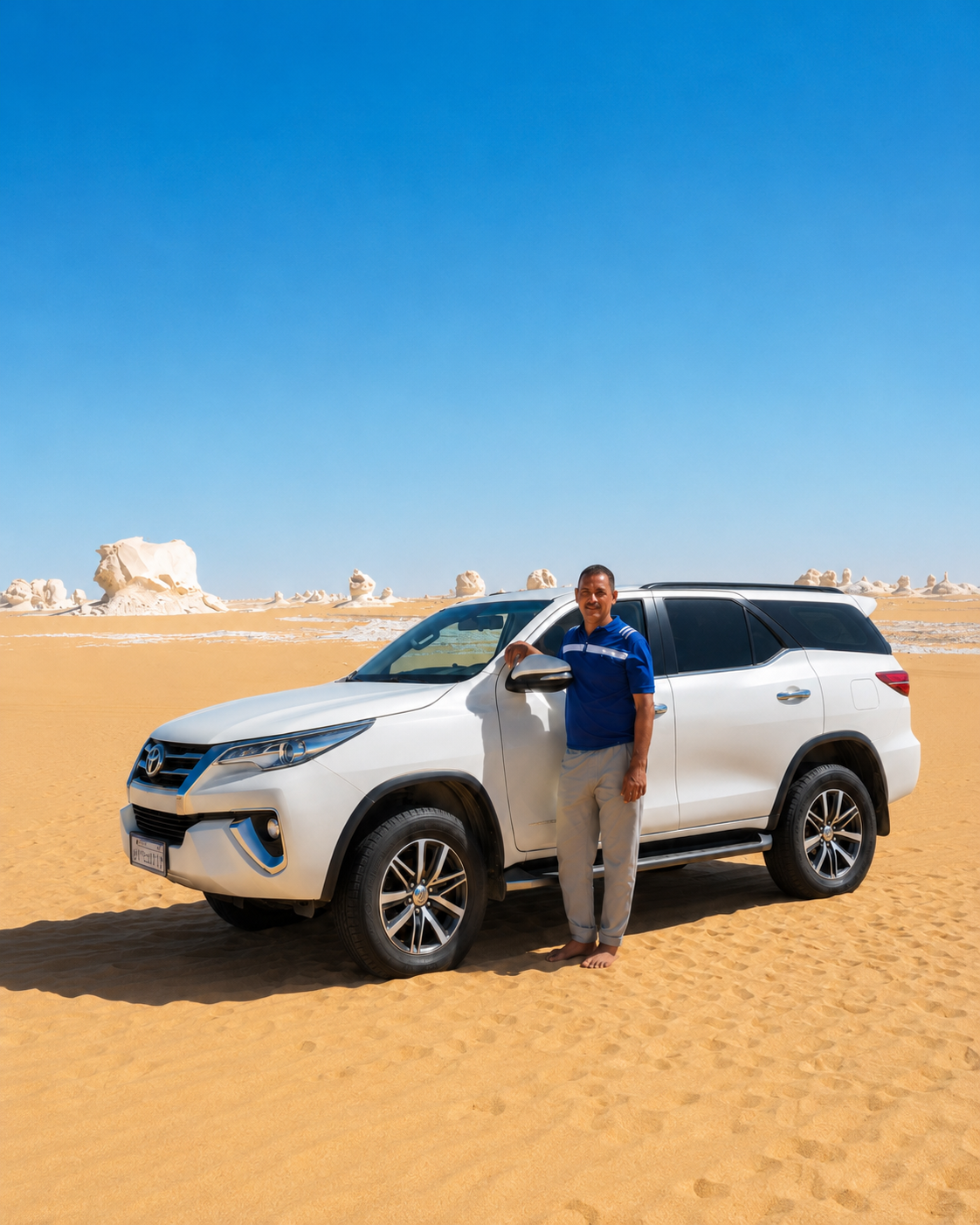
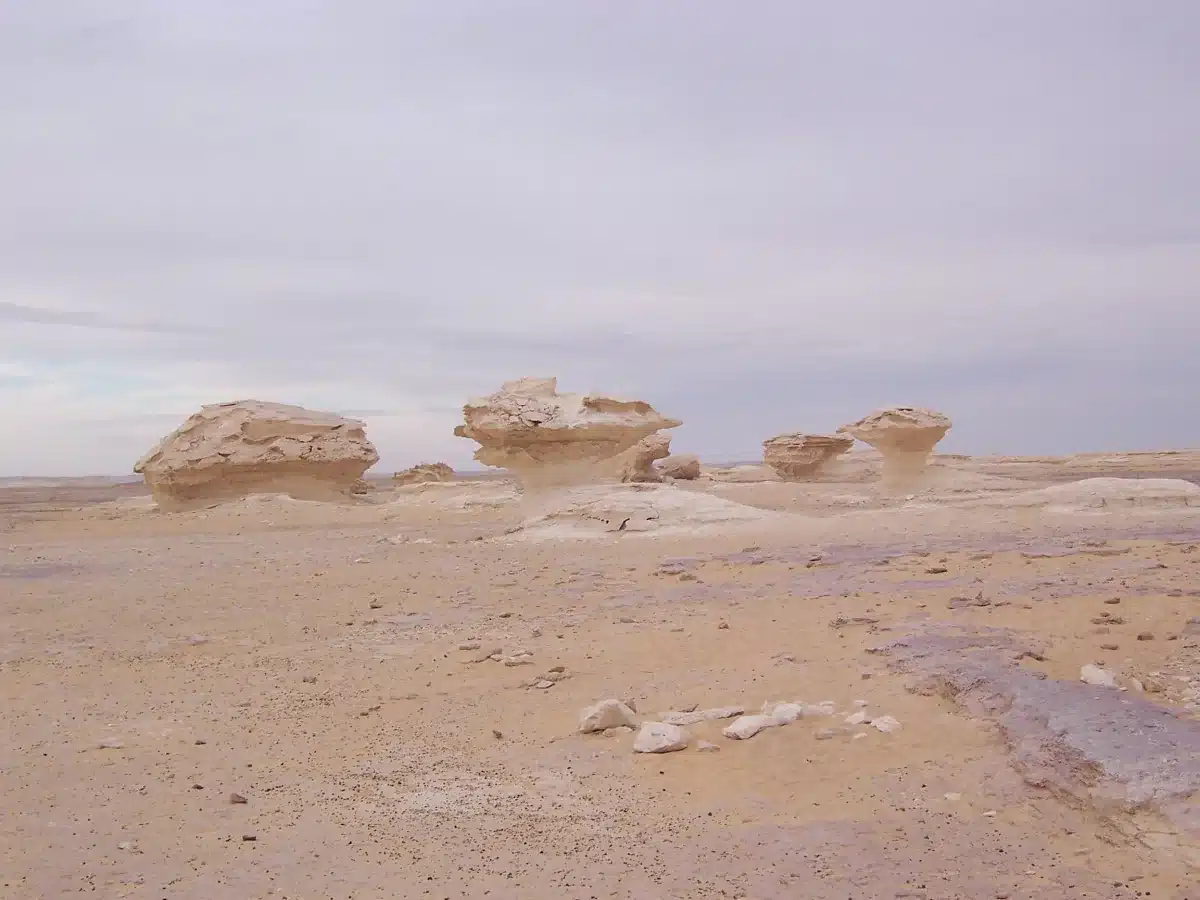
Is White Desert Egypt safe? For many visitors, a properly permitted White Desert trip with a professionally licensed operator, experienced local driver and suitable 4×4 can be planned responsibly. It is not a place for casual self-driving or for treating an old blog route as current. Security advice, access permission, weather, vehicle condition, communications, camp hygiene and personal health all matter.
This guide gives a practical answer without promising that any journey is “100% safe.” It separates national travel advisories from everyday desert risks and provides a booking checklist you can use before paying. Advice can change quickly, so the official links below were checked on 29 August 2026 and must be checked again for your nationality and dates.
Is White Desert Egypt safe? The short answer
Yes, it can be an appropriate trip for informed travellers using a licensed professional company on an authorised route. But the answer depends on four separate questions:
- Does your government currently advise that your route is acceptable?
- Will your insurance cover the exact destination, camping and off-road activity?
- Is the operator licensed, locally experienced and checking current permits?
- Are the vehicle, water, communications, first aid and camp procedures adequate?
If any one of these cannot be answered clearly, pause the booking. A beautiful itinerary and good reviews do not replace permission, insurance or an emergency plan.
What official travel advice says in August 2026
Official advice is not identical across countries. The UK FCDO currently advises against all but essential travel to broad parts of the Western Desert but lists the White Desert, Black Desert, Bahariya, Farafra and the Giza–Farafra road corridor among the exceptions. The US State Department’s Egypt advisory says not to travel to the Western Desert unless travelling with a professionally licensed tour company and specifically tells visitors who go to use one.
This difference is why a generic statement such as “the government says it is safe” is unreliable. Read the map, wording and insurance consequence published for your own passport. Check shortly before payment and again before departure:
- UK FCDO Egypt travel advice
- US State Department Egypt advisory
- Australian Smartraveller Egypt advice;
- your own foreign ministry’s Egypt page if you are not British or American;
- your insurer’s written policy terms and high-risk-area exclusions.
Important current camping and route warning
Checked 29 August 2026: Australian Smartraveller reports that authorities have banned safaris and camping near Bahariya until further notice and says camping in the White Desert may also be banned. UK and US wording differs, so no operator should treat a national advisory as confirmation that a specific departure is permitted.
Before payment, require a fresh local permission check for your exact date and route, then confirm that your travel insurance remains valid.
Do not assume that advice for Siwa, the Libya border, North Sinai or a remote cross-desert expedition automatically describes the classic Bahariya–Black Desert–White Desert tourist circuit. Equally, do not assume that an established tourist circuit makes every nearby track acceptable.
Licensed guide, permits and route checks
Egypt’s official tourism portal recommends experienced licensed guides who know the terrain, use of a 4×4 for excursions beyond the oasis and checking permits and regulations with an authorised guide or agency. That is the minimum planning standard, not an optional upgrade.
Ask the operator to confirm in writing that the team is licensed and will handle the current route permissions. Avoid asking for secret detours or border-adjacent routes because a social-media post made them look empty. Access can change, and responsible drivers adapt the itinerary rather than bypass controls.
The main practical risks
| Risk | How a good plan reduces it |
|---|---|
| Vehicle problem or getting stuck | Maintained 4×4, local driver, recovery tools, route knowledge and communications |
| Dehydration and heat | Water reserve, shade, cool-season dates and sensible stop timing |
| Cold and wind at camp | Forecast check, sheltered site, proper mattress, sleeping bag/blankets and warm layers |
| Lost contact | Shared route plan, check-in procedure and a communication method beyond wishful thinking |
| Food or hygiene illness | Clean water handling, fresh food, hand hygiene and clear toilet practice |
| Falls and minor injury | Closed shoes, no climbing fragile formations, first-aid kit and guide instructions |
| Security/access change | Licensed company, current permits, official advice and willingness to change route |
| Insurance refusal | Written confirmation that destination and activities are covered |
Vehicle safety questions to ask
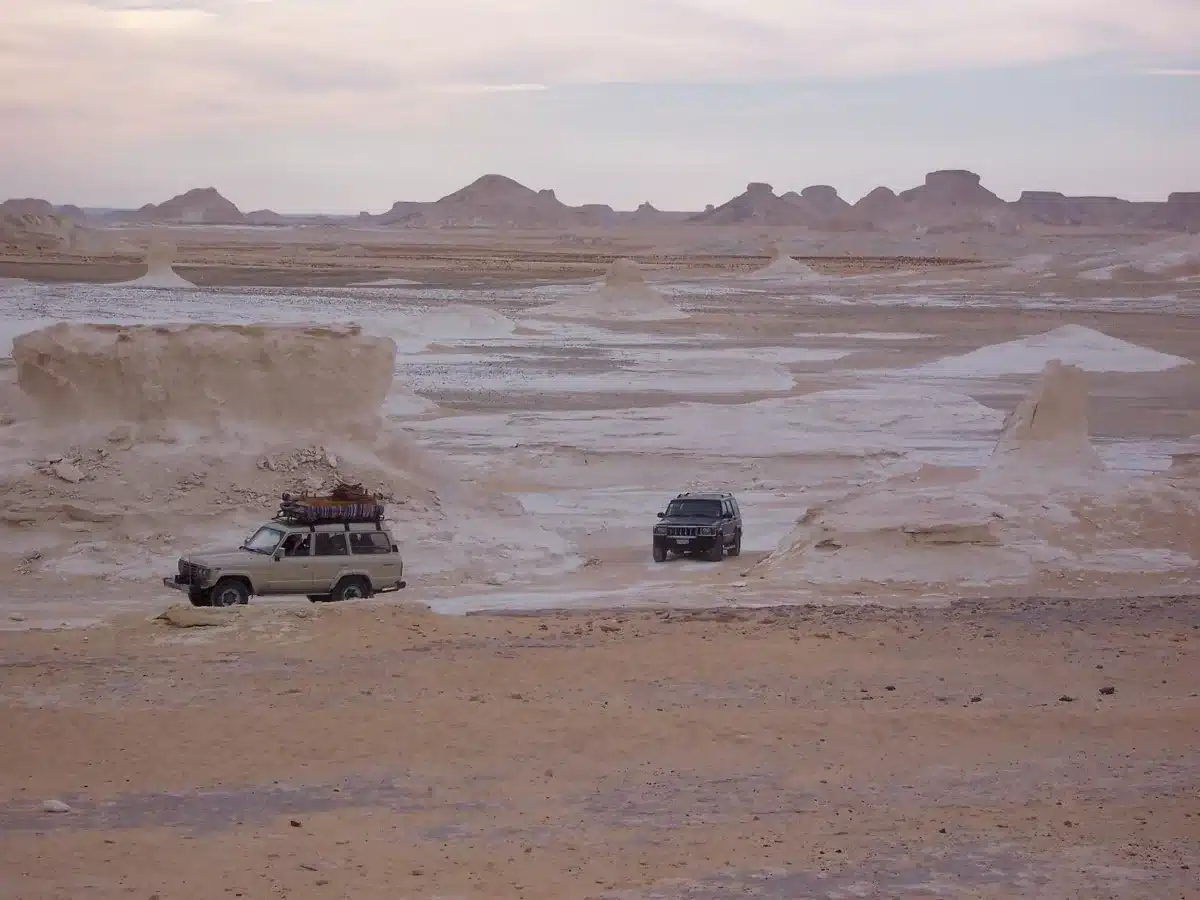
The classic route normally uses a road vehicle between Cairo and Bahariya, then a local 4×4 for the off-road circuit. Before booking, ask:
- How many guests and crew will be in each vehicle?
- Are passenger seat belts available and usable?
- Who is the local desert driver and how is the route checked?
- What recovery tools, spare tyre and water reserve are carried?
- What happens if a vehicle cannot continue?
- For a longer expedition, is a second vehicle required or planned?
- Is Cairo pickup private, shared or a public-bus connection?
“Private tour” should mean a clear arrangement for your party, not merely a private booking form followed by unexpected passengers. Our Cairo to White Desert route guide explains the transfer and 4×4 handover.
Camping safety
A mobile desert camp can be comfortable when the team manages wind, fire, food, waste and sleep equipment properly. Ask for the expected setup instead of relying on a generic tent photograph. You need to understand:
- tent or open sleeping arrangement;
- mattress, sleeping bag and blanket quality;
- cold-weather provision for your month;
- where cooking and fire will happen;
- how the toilet is managed;
- what lights remain on for safe movement;
- how all waste is removed.
Tell the guide before walking away from camp at night. Formations can block the view of tents and vehicles, while uneven ground is harder to read in darkness. Use a headlamp, closed shoes and a warm layer. Read the full White Desert camping checklist.
Health, medication and medical help
The White Desert is remote from full medical facilities. Share relevant conditions privately with the operator before travel, especially severe allergies, diabetes, heart or respiratory issues, pregnancy, mobility limitations and medication that requires refrigeration. Carry medicine in its original packaging with more than the minimum quantity.
Your first-aid kit should match your training; carrying equipment you cannot use is not a medical plan. The operator should have basic supplies and a route for reaching help, while travellers should have insurance that includes suitable medical treatment and evacuation. Ask the insurer directly whether overnight desert camping and off-road transport are covered.
Drink regularly, use sun protection even in winter and avoid waiting until you feel ill to mention symptoms. Heat exhaustion, dehydration and stomach illness are easier to manage when recognised early.
Food and water hygiene
Confirm that drinking and cooking water is carried from a reliable source and protected from contamination. Use clean hands or sanitiser before eating. If you have allergies or strict dietary needs, send them in writing and carry a safe backup snack; a remote camp cannot replace ingredients easily.
Food should be stored, prepared and served with temperature and dust in mind. Ask what dinner and breakfast normally include, then judge the clarity of the answer rather than expecting a hotel menu. If you develop persistent vomiting, severe diarrhoea, confusion or signs of dehydration, tell the team immediately.
Communications and phone signal
Do not plan around continuous mobile coverage. Send your operator name, route outline and expected return time to someone you trust. Save passport, insurance, booking and emergency details offline. Keep a power bank charged and prevent the cold from draining phone and camera batteries overnight.
Ask the operator how the team communicates when mobile service is unavailable and what check-in procedure is used. A credible answer can vary by route; “there is always signal” is not a credible universal answer.
Is the White Desert safe for solo women?
Many women visit Egypt and the desert successfully, but solo status makes operator choice and communication especially important. Use a verifiable licensed company, share the complete booking, agree on whether your vehicle or camp includes other guests and ask who the guide and driver will be.
Keep control of your passport, money and phone. Set boundaries clearly and contact the company immediately if arrangements change. Read your government’s women-traveller advice for Egypt. If you prefer not to camp alone with an all-male crew, say so before payment and choose a group departure, companion or different overnight arrangement.
Is it safe for families?
Families can enjoy the circuit when children tolerate the Cairo road transfer, off-road movement and camping. The right plan depends on age, car-seat needs, allergies, sleep habits and temperature. Ask about usable seat belts, maximum passengers, food, toilet practice, warm bedding and the possibility of a Bahariya hotel alternative.
A private schedule should allow shade, water, toilet and movement breaks. Do not let an itinerary force children onto steep formations for photographs. For very young children or complex medical needs, discuss the route with your clinician and insurer before committing.
Weather and the safest season
October through April is the normal comfort window. Winter reduces daytime heat but can produce very cold-feeling nights, especially in wind. March and November are often easier for first-time campers. Summer heat reduces comfort and emergency margin, so “we operate all year” should not be confused with “all months are equally suitable.”
Check the forecast and ask how the team responds to high wind, dust or unusual heat. Route and camp changes can be evidence of good judgment, not a failure to deliver. Our month-by-month White Desert guide explains the seasonal trade-offs.
Red flags before booking
- The seller refuses to identify the licensed operating company.
- They encourage self-driving beyond the oasis without local support.
- The route includes restricted or border areas but permissions are vague.
- They guarantee phone signal, perfect weather or “zero risk.”
- Passenger count, vehicle type and seat belts are not explained.
- The price is clear but water, camp bedding and transfers are not.
- There is no cancellation or severe-weather procedure.
- They tell you to ignore your government’s advice or insurance terms.
What happens if the route changes?
A route change is not automatically a problem. Wind, soft sand, permission updates, vehicle issues or a late Cairo arrival can make the published sequence unwise. The operator should explain the reason, the safe alternative and whether a major paid inclusion is affected. A responsible team protects sunset driving time and camp setup instead of trying to recover every missed minute after dark.
Agree before booking how material changes, cancellation and refunds are handled. During the trip, keep calm, follow the local driver’s instructions and avoid pressuring the team into a closed track. If the replacement plan is substantially different, record the agreed facts and discuss the commercial issue after reaching a safe location.
24-hour pre-departure checklist
- Recheck your government’s Egypt travel advice.
- Confirm the route is open and permissions are arranged.
- Send operator, route and return details to a trusted contact.
- Verify water, sleeping equipment, passengers and pickup time.
- Pack medicine, ID, warm layers, sun protection, headlamp and power bank.
- Save insurance and emergency numbers offline.
- Ask about wind and temperature at the actual camp, not only Cairo.
For official local planning guidance, see Experience Egypt’s desert excursions and Bahariya natural wonders pages.
Frequently asked questions
Can I self-drive to the White Desert?
Do not treat the off-road circuit as a normal rental-car drive. Use a licensed professional operator and experienced local 4×4 driver, and confirm current permission and route rules.
Is a two-day tour safer than three days?
Duration alone does not determine safety. Vehicle, driver, route, supplies, communication and camp standards matter more. Longer expeditions may need additional support. Compare the 2-day White Desert safari and 3-day White Desert safari by the exact written plan.
Does travel insurance cover it?
Policies differ. Ask the insurer in writing about the White Desert, government-advisory wording, off-road transport, overnight camping, medical treatment and evacuation. Do not rely on a generic “Egypt covered” badge.
Is camping safer than returning at night?
A properly managed camp avoids a rushed night drive and is the normal experience. Its safety depends on equipment, weather, fire and hygiene procedures. The itinerary should reach camp with enough light to set up responsibly.
Do I need a permit to visit the White Desert?
Access and permission procedures can change. A licensed operator should confirm the current route, protected-area requirements and any required permissions before departure. Do not rely on an old itinerary or attempt the off-road circuit independently.
Which itinerary is better for a first White Desert visit?
The 2-day tour suits travellers who want the classic highlights and one camp night, while the 3-day tour gives more time for slower driving, photography and flexible camp pacing. Compare the written route, vehicle, passenger count and camp setup—not duration alone.
Plan a responsible private White Desert tour
Send us your nationality, travel dates, party size, children’s ages, medical or dietary needs and preferred number of nights. We will explain the current classic route, vehicle and camp arrangement, and what needs confirmation before departure.
Choose a safety-first White Desert itinerary
2-Day White Desert Safari — from $159: the classic first visit with one desert night, Bahariya, the Black Desert and White Desert highlights. See the 2-day itinerary and inclusions.
3-Day White Desert Safari — from $219: a slower route with more time for remote landscapes, photography and camp pacing. See the 3-day itinerary and inclusions.
Still deciding? Read the 2-day vs 3-day comparison, check the White Desert tour price guide, or return to the complete White Desert Egypt guide.
Ask about safety & availability on WhatsApp Send your dates by email