Djara Cave Egypt is proof that some of the most beautiful places in the country are the ones nobody tells you about. I still remember the first time I drove a group deep into the Western Desert, across the limestone plateau between the Nile Valley and Farafra Oasis, and stopped in the middle of what looked like absolute nothingness. My name is Khaled, a desert guide who has spent years reading these sands, and I watched their faces as I said, “We are here.” They looked around at the flat, empty plateau and clearly thought I had lost my mind. Then we climbed down into the earth, and they understood. Welcome to Djara Cave, the desert’s best-kept secret.
If you have never heard of it, you are not alone. Djara Cave is one of those rare corners of Egypt that most tourists rush straight past on the highway, never knowing that just beneath the surface lies a hidden cathedral of stone. Let me tell you why Djara Cave Egypt is worth the detour, and everything you need to know before you go.
What exactly is Djara Cave?
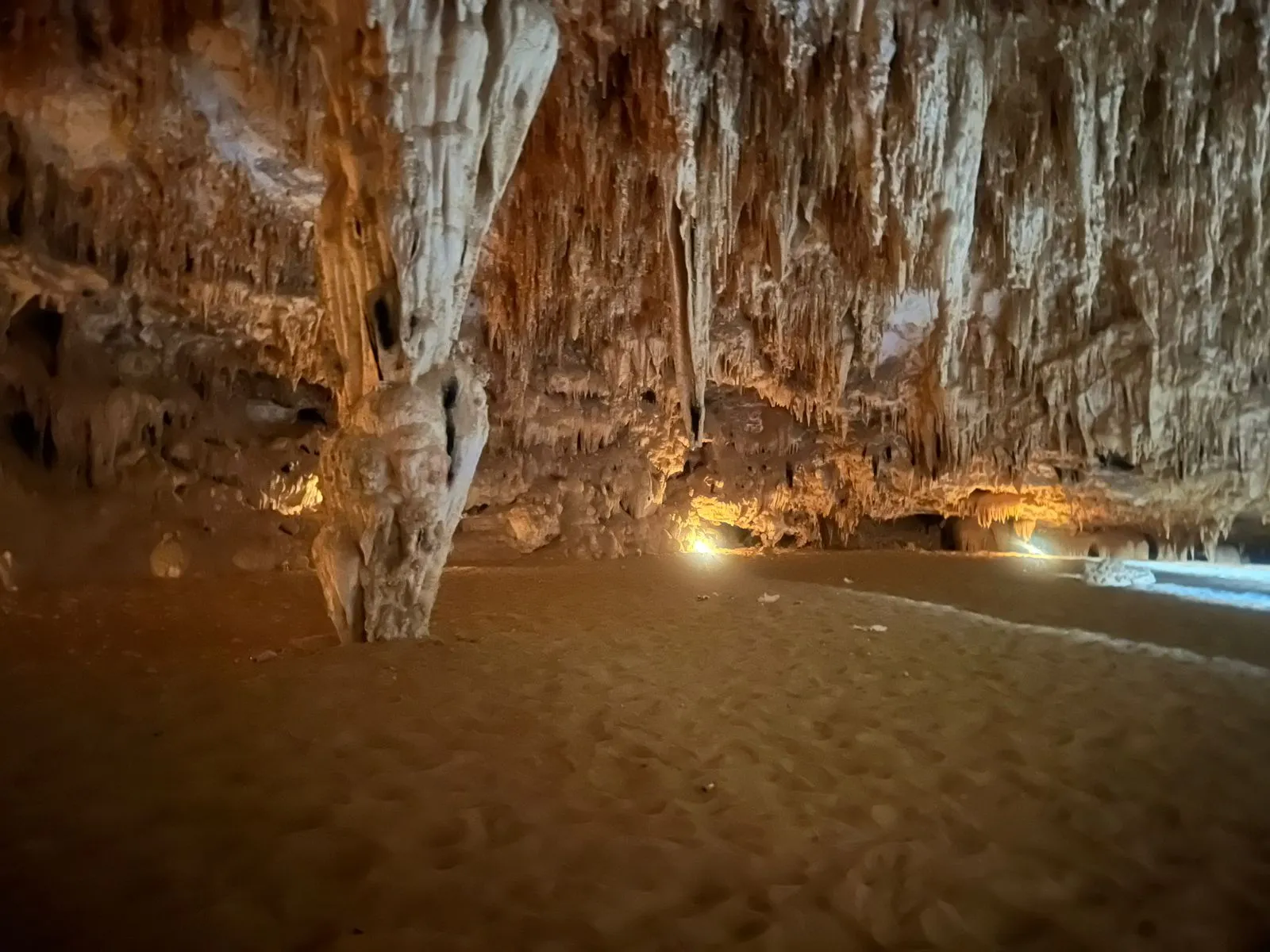
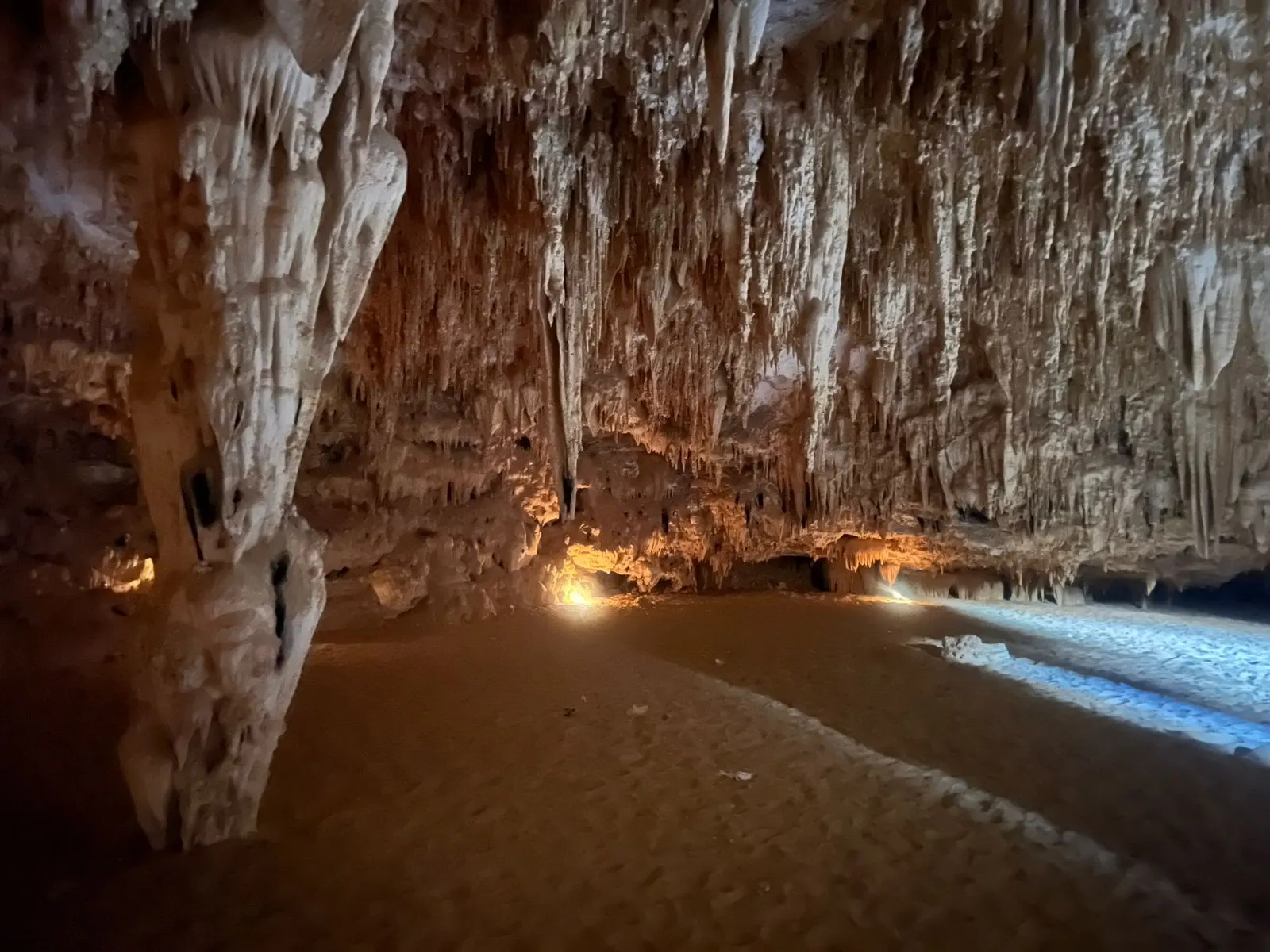
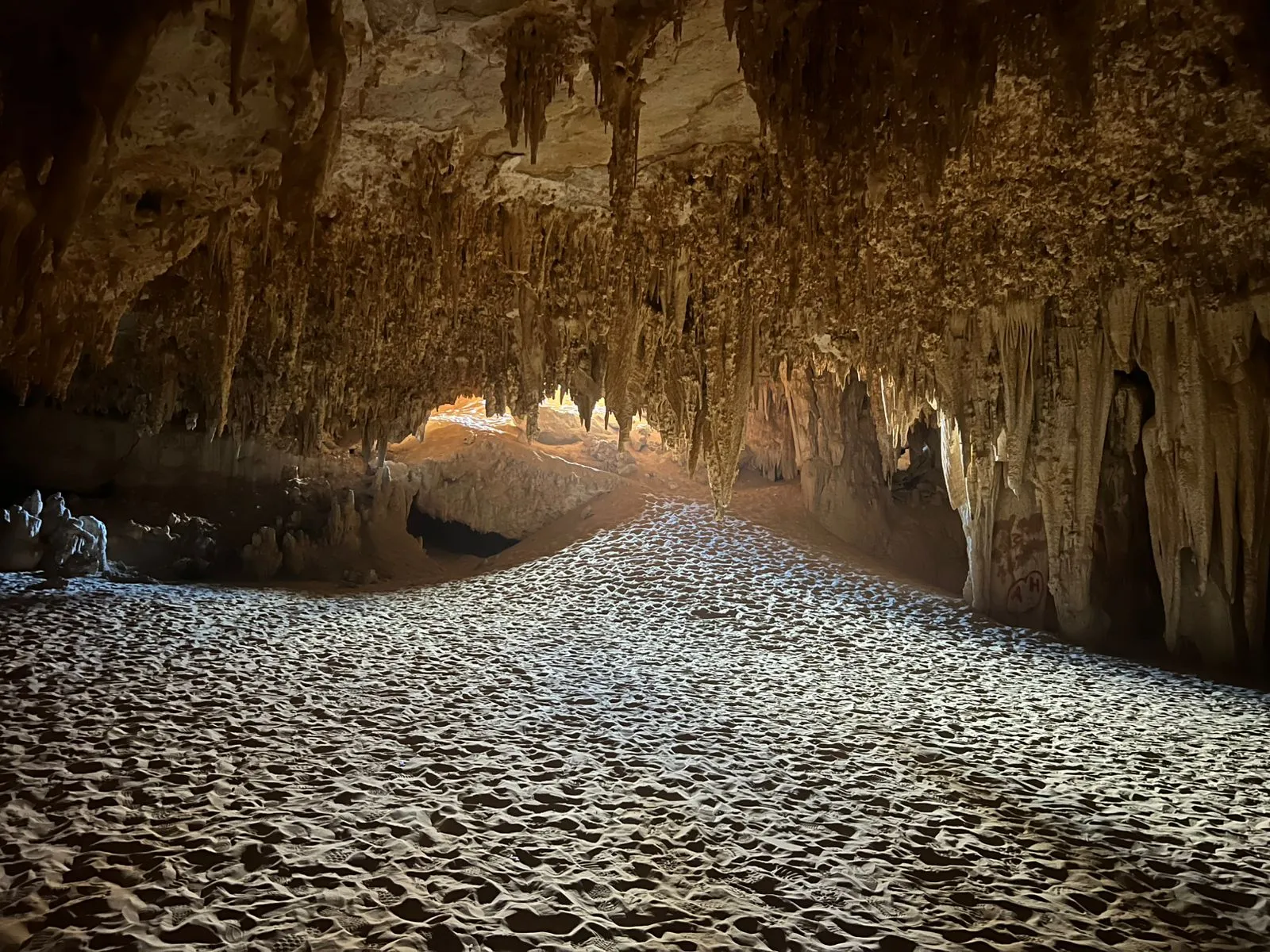
Djara Cave is a natural limestone cavern hidden in the Western Desert plateau, roughly halfway along the old caravan route between Assiut and the Bahariya Oasis. From the outside, Djara Cave Egypt shows almost nothing, just a modest opening in the desert floor. But step down inside and the temperature drops, the light softens, and you find yourself surrounded by stalactites, stalagmites, columns and flowstone formed during far wetter periods of the region’s deep past.
What makes it so surreal is the contrast. You have just spent hours crossing one of the driest deserts on the planet, and suddenly you are standing in a cooler, dim and silent cave that feels like it belongs to another world entirely. It is the kind of place that makes even the most talkative travellers go quiet.
Why do stalactites form in the middle of a desert?
This is the question everyone asks me, and the answer is a story of deep time. Millions of years ago, this entire region was very different, wetter, greener, and washed by water that slowly seeped through the limestone. As each drop of mineral-rich water fell from the ceiling and evaporated, it left behind a tiny deposit of calcite. Over unimaginable stretches of time, those deposits grew downward into stalactites and upward into stalagmites.
The desert you see today is what remained after the climate dried out. So when you stand inside Djara Cave, you are really looking at a frozen record of an ancient, greener Egypt, a time when this land was home to animals and early humans who left their mark nearby.
Who discovered Djara Cave?
Djara Cave Egypt was first described to the wider world by the German explorer Gerhard Rohlfs during his desert expedition in 1873. For a long time afterwards it slipped back into obscurity, known mainly to Bedouin travellers who used the desert routes. In more recent decades, archaeologists found rock art and Neolithic tools nearby, evidence that people were living and hunting in this area thousands of years ago, when it was far less hostile than it is now.
That layer of human history is part of what makes Djara Cave Egypt feel so special. It is not just a geological wonder, it is a place where the very ancient past still lingers in the silence.
How do you get to Djara Cave?
Djara Cave sits far off the beaten track, and there is no signposted road leading to its mouth. Reaching Djara Cave Egypt means a proper desert expedition by 4×4, usually setting out from Cairo and crossing the open desert with an experienced guide who knows the route by heart. The drive itself is half the adventure, a long, hypnotic journey across gravel plains and golden dunes.
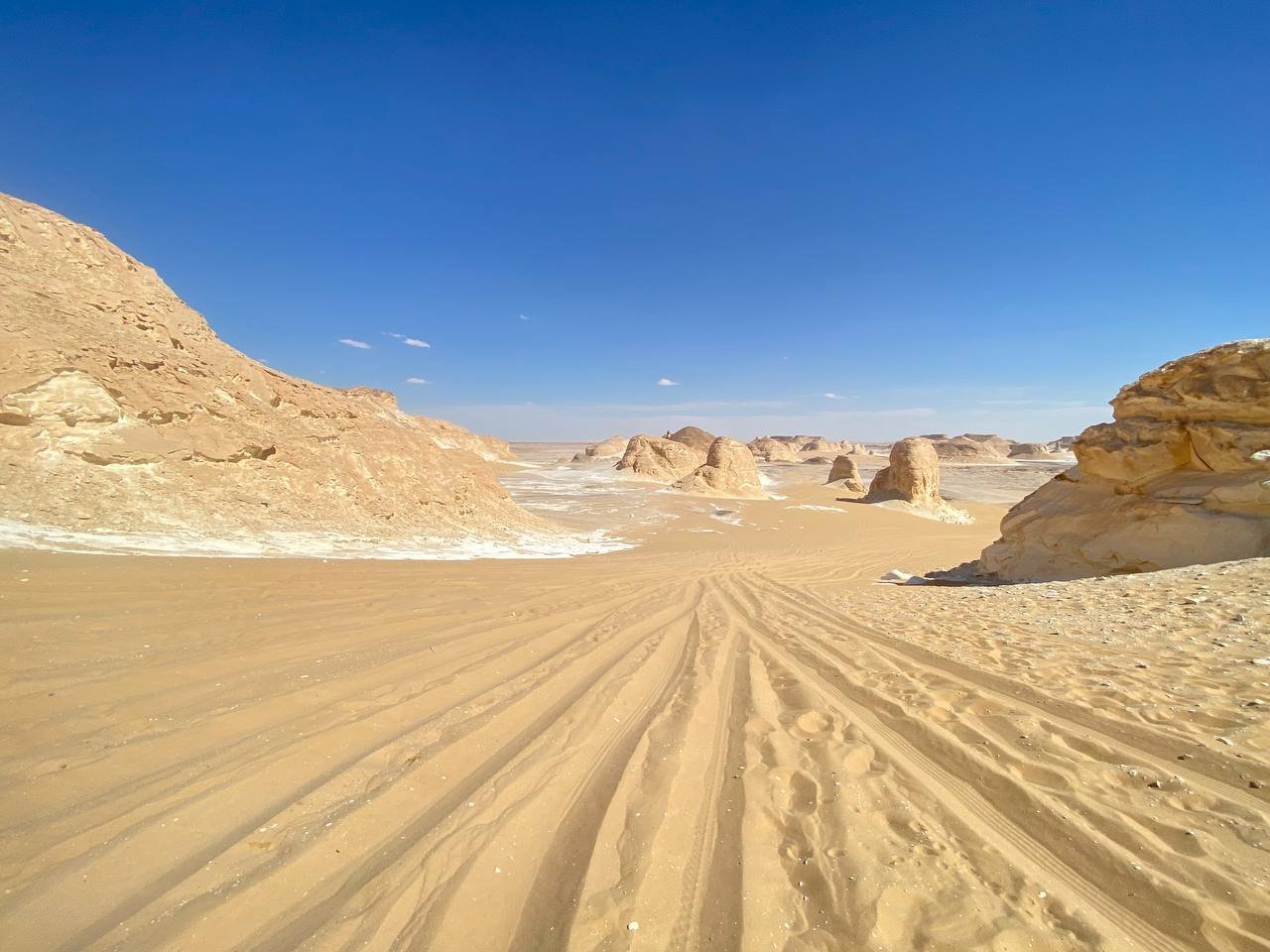
Because the cave is so remote and completely unmarked, this is absolutely not a place to attempt alone in a normal car. The nearest help can be hours away, phone signal disappears, and the tracks shift with the wind. Going with a licensed desert team is the only sensible way to experience it, and it turns a risky gamble into an unforgettable day.
What else will you see on the way?
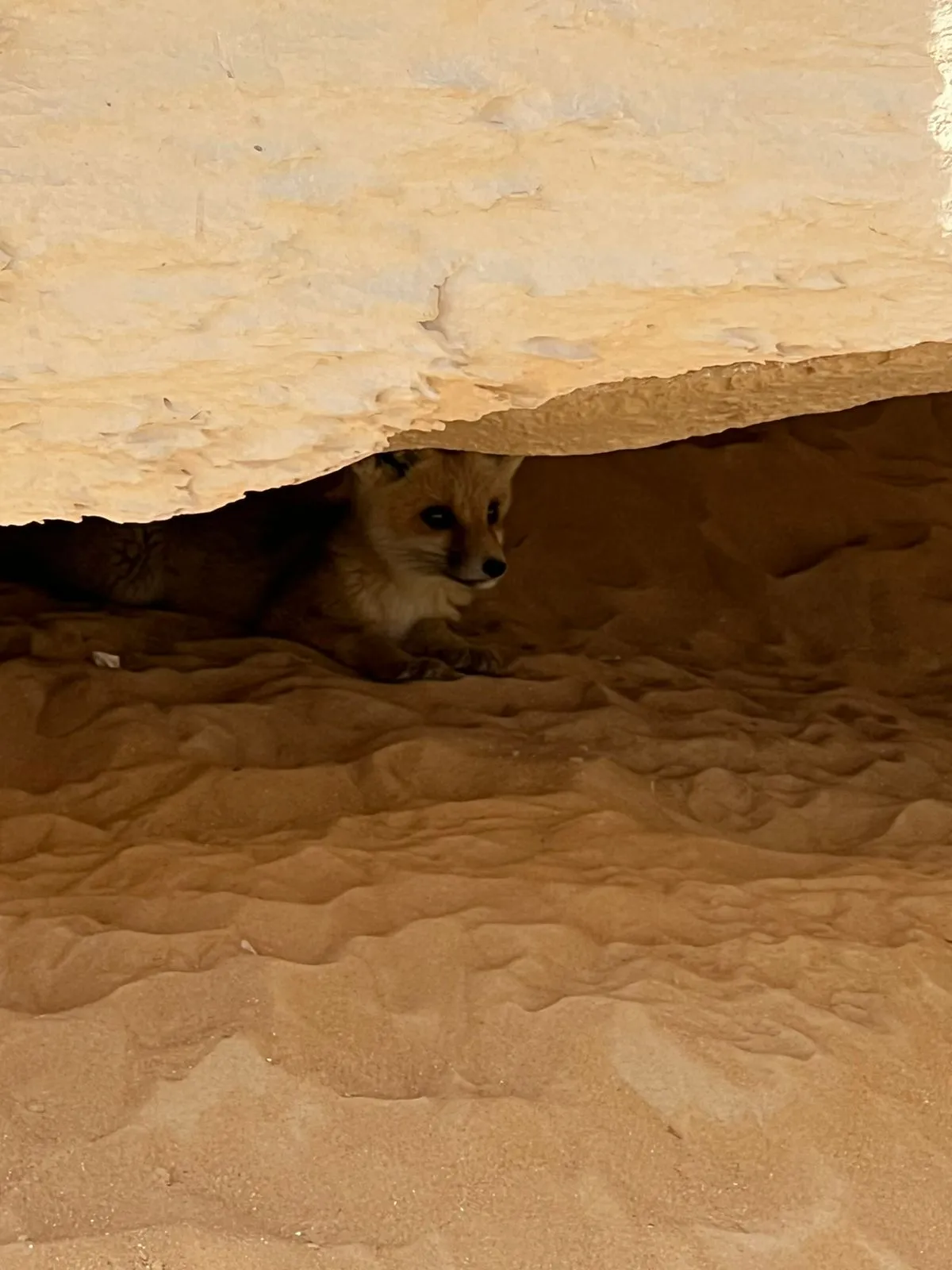
One of the joys of a Djara Cave trip is everything that surrounds it. The Western Desert is alive in ways that surprise people. If you are lucky and quiet, you might spot a fennec fox, the tiny, enormous-eared desert fox that shelters from the midday heat under rocky ledges and comes out as the air cools.
The wider region is also a gateway to some of Egypt’s greatest desert scenery. Many travellers combine the cave with the volcanic hills of the Black Desert and the ghostly chalk formations further west. If those landscapes call to you, my Bahariya Oasis guide and my White Desert safari guide map out exactly what to expect.
When is the best time to visit Djara Cave?
The comfortable season to visit Djara Cave Egypt runs from October to April, when daytime temperatures are pleasant and the long drive is genuinely enjoyable. Summer, from June to August, brings punishing midday heat out on the open plains, so serious desert trips are best avoided then. Inside the cave itself the air stays cool and still all year round, a welcome relief the moment you climb down out of the sun.
What to bring for a Djara Cave trip
- Sturdy closed shoes with good grip, because the descent into the cave can be uneven and slippery.
- A headlamp or torch to see the formations properly in the dim light.
- Plenty of water and snacks, since there are no shops anywhere near the cave.
- A warm layer for early mornings and the cool cave interior.
- A hat, sunglasses, and strong sunscreen for the long desert drive.
- A camera, because photos of the stalactites are worth every bump on the road.
Is it safe to enter Djara Cave?
Entry can be planned responsibly only when current access is permitted and you go with an experienced licensed guide. The main chamber is spacious, but the sand slope, uneven surfaces and darkness still require a light and careful footing. The real risk with Djara Cave Egypt is not the cave itself but the desert around it, the remoteness, the heat, and the total absence of roads and signal. That is exactly why a licensed 4×4 team matters so much. They handle the navigation, the water, and the timing, leaving you free to simply stand in the dark and marvel.
Please also treat the formations with respect. Speleothems form on geological timescales. Touching, marking or breaking them damages an irreplaceable scientific and cultural record. You can read more about how such formations develop from the National Geographic guide to stalactites and stalagmites.
What scientific research reveals
Djara is more than a scenic cavern. A peer-reviewed cave study describes stalactites, columns, stalagmites and flowstone, with some formations reaching several metres. Uranium-series dates from sampled speleothems point to humid intervals hundreds of thousands of years ago. The important lesson is not one simple “the Sahara was green” date: the cave records several climatic phases, while later human activity belongs to a different archaeological timeline.
Archaeological research documented engravings and evidence of prehistoric use in and around the cave. The rock art includes animal and human figures, and excavation work connects the Djara region to periods when water and vegetation made the plateau more usable. For readers who want the evidence rather than a recycled legend, see the peer-reviewed cave morphology and climate study and the Djara excavation and survey record.
How many days does a Djara Cave trip need?
Djara should not be sold as a casual Cairo day trip. The cave is on the remote limestone plateau between the Nile Valley and Farafra, and the approach includes long road and off-road sectors. A realistic private expedition normally needs several days, current permissions, supplies and a route designed around daylight. The exact number depends on the approved approach, camp plan and whether the journey combines Farafra, Bahariya or the White Desert.
Ask for a written day-by-day sequence with driving logic, not only a list of attractions. A useful plan explains where you sleep each night, when the off-road section begins, which support vehicle or communication method is used, and what happens if wind, access or a vehicle issue changes the route. Our White Desert safety guide gives the checks to apply to any remote Western Desert expedition.
A realistic expedition structure
- Preparation and approach: leave Cairo early, complete the main road transfer, meet the local desert team, verify supplies and continue only as far as daylight and permission allow.
- Djara exploration: reach the cave with time for a controlled descent, photography and archaeological respect. No formation or engraving should be touched, traced or lit with flame.
- Return or combined circuit: use the final day for the authorised exit route or continue into a pre-agreed Farafra/White Desert circuit. Do not add distant attractions impulsively.
Route names online are often vague. “Djara from Cairo” can mean very different kilometres, vehicle changes and camp standards. Compare the party size, number of nights, 4×4 time, permits, water, meals, bedding and emergency support. If the cave is the priority, protect enough time for it instead of squeezing it behind a rushed White Desert highlights tour.
Djara Cave booking checklist
- licensed operating company and experienced local driver;
- current permission and route confirmation;
- vehicle count, passenger count, seat belts and recovery equipment;
- water reserve, meals, first aid and communication plan;
- camp mattress, bedding, toilet and cold-night arrangements;
- written cancellation and severe-weather procedure;
- insurance that covers the exact route, camping and off-road activity.
October to April is the normal comfort window, but month and wind matter. Use our Western Desert season guide and ask the team about conditions on the plateau, not only the Cairo forecast. For budget comparison, the White Desert tour price guide shows which inclusions change a quote.
How to plan your Djara Cave adventure
The easiest way to see Djara Cave Egypt is on a dedicated desert expedition. Our Djara Cave Safari from Cairo takes care of the 4×4, the route, and the permits, so you can focus on the wonder rather than the logistics. It is a rare trip that very few visitors to Egypt ever get to experience.
And if the desert leaves you wanting more, there is a whole world of it waiting. The palm-fringed springs of Siwa, the whale fossils of the Fayoum, and the star-filled nights of the White Desert are all part of the same magnificent Western Desert. My Siwa Oasis guide and my Fayoum desert guide are the perfect place to plan your next chapter.
My advice, after all these years, is simple: say yes to the places nobody talks about. Djara Cave will not be crowded, it will not be easy to reach, and that is precisely why it will stay with you. Some wonders you share with a thousand other tourists; this one, you get almost to yourself.
Frequently asked questions about Djara Cave
How far is Djara Cave from Cairo?
Djara lies on the remote Egyptian Limestone Plateau between the Nile Valley and Farafra Oasis. From Cairo it requires a serious multi-day expedition rather than a normal day trip; the exact route, timing and access must be confirmed by the licensed operator.
Can you visit Djara Cave on your own?
It is strongly discouraged. The cave is unmarked, remote, and surrounded by trackless desert with no phone signal, so a licensed 4×4 guide is essential for both navigation and safety.
What will I see inside Djara Cave?
The cave contains stalactites, stalagmites, columns, flowstone and rock-art areas. Peer-reviewed research has dated sampled speleothems to ancient humid intervals, long before today’s hyper-arid landscape.
Is Djara Cave suitable for children?
Older children who can handle a long desert drive and a short scramble into the cave usually love it, but the remoteness and heat make it less suitable for very young kids.