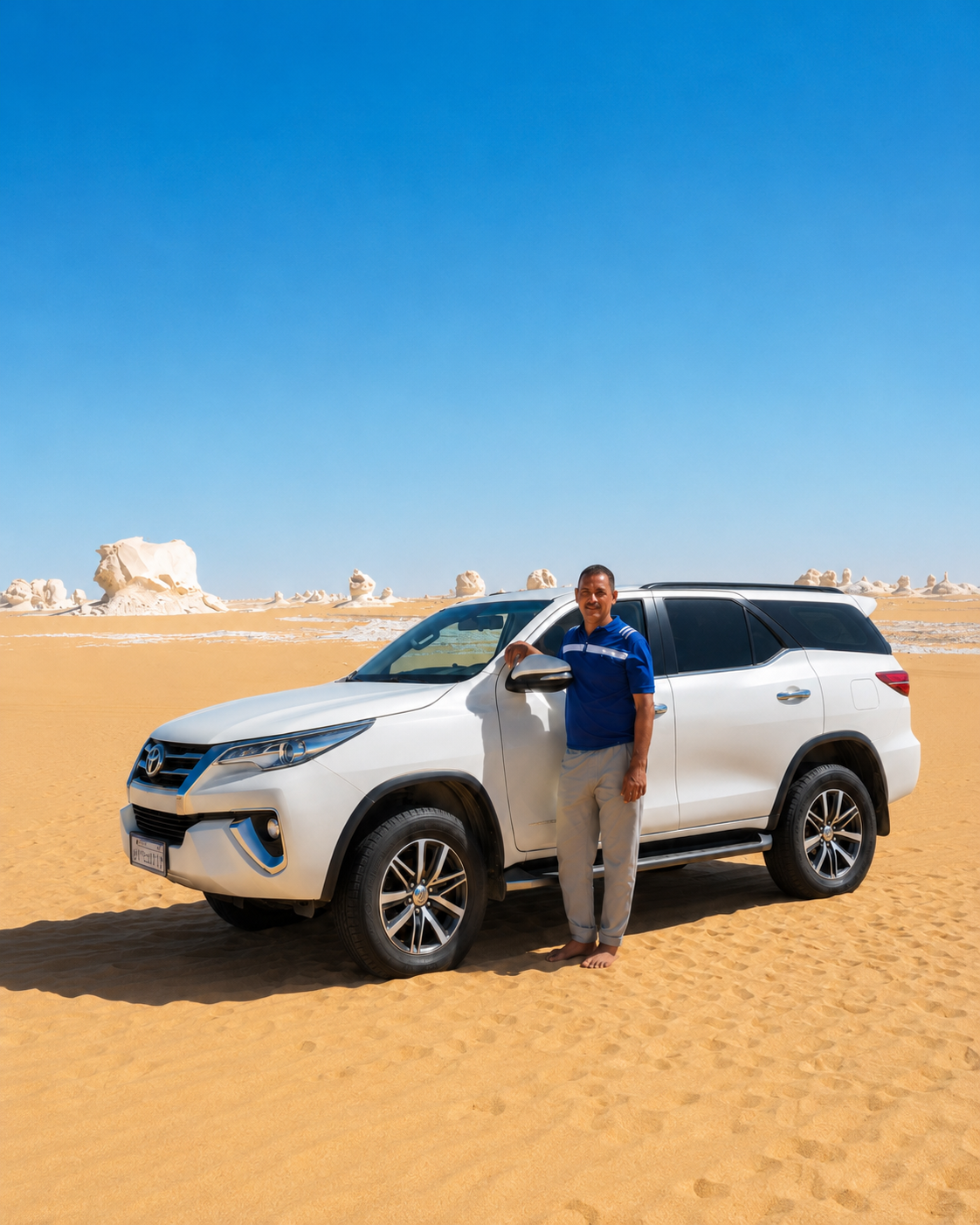
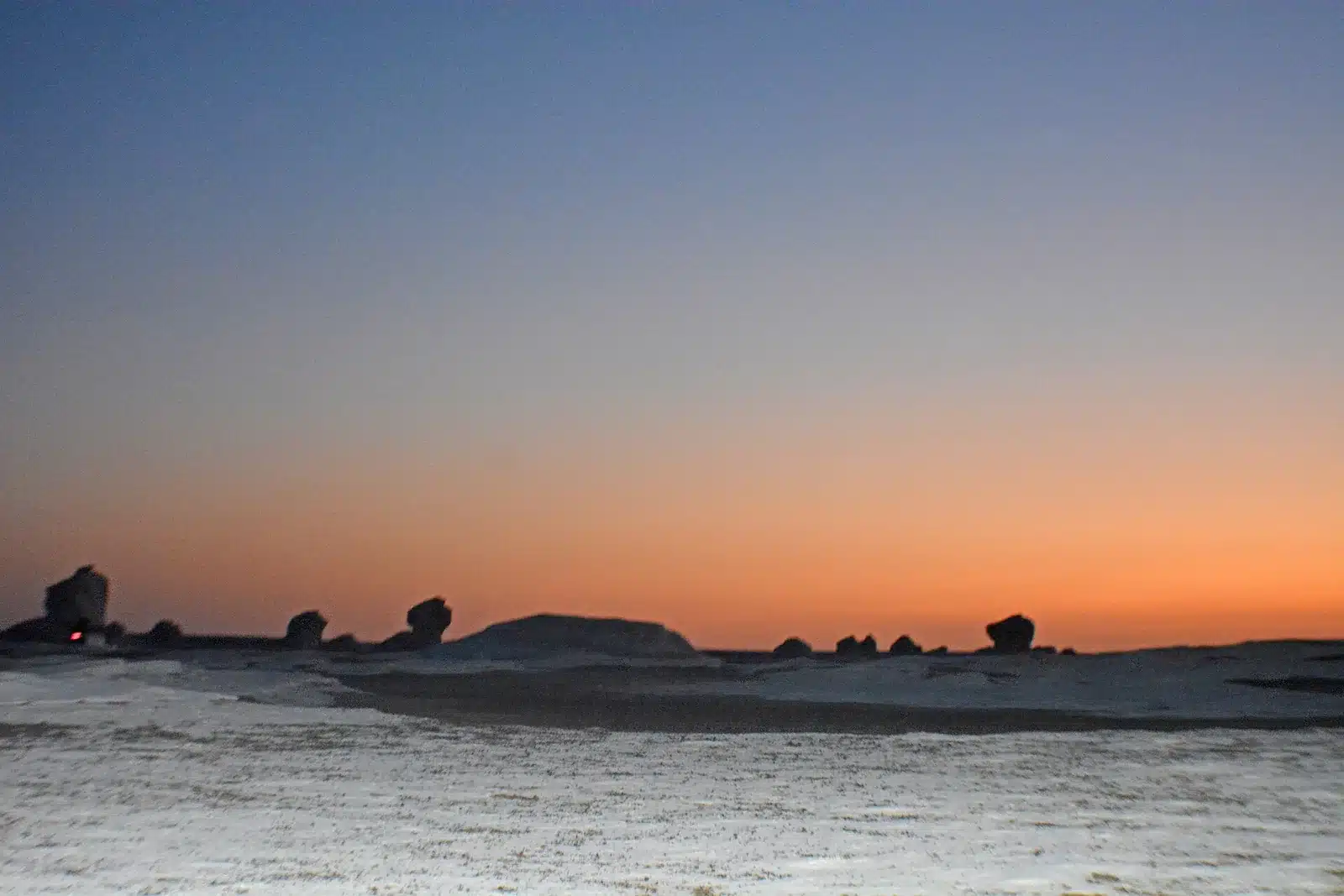
White Desert camping Egypt combines a remote Western Desert journey with one quiet night among pale chalk formations, an open horizon and a sky far darker than Cairo’s. The experience is simple rather than luxurious: a mobile camp, dinner prepared by the desert crew, mattresses and blankets, and a sunrise that begins before the long return drive. The quality of that night depends less on decorative cushions than on route permission, a competent 4×4 team, clean equipment, enough water, safe food handling and a responsible campsite.
This practical guide explains exactly what to expect, which questions to ask before paying, how cold the night can feel, how toilets work, what to pack and whether two or three days is better. For geology, protected-area boundaries and the full driving circuit, also read our White Desert National Park Egypt guide and the main White Desert Egypt safari guide.
Check current camping permission before paying
Updated 29 August 2026: Australia’s Smartraveller currently reports restrictions on safaris and camping near Bahariya and says White Desert camping may also be banned. Permissions can change at short notice. We only confirm a camping departure after the local route and camping status has been checked.
Read the current official advisory, check your own government’s advice and ask your insurer to confirm cover for the exact route.
White Desert camping Egypt: the honest version
A standard private camp is set up for one night by the same local crew that drives the off-road section. There is no permanent resort inside the chalk landscape and no guarantee of phone signal, electricity, running water or a conventional bathroom. You normally receive a tent or protected sleeping area, foam mattress, sleeping bag or heavy blankets, dinner, breakfast, drinking water and hot tea. Details vary between operators, so every item should appear in writing.
The word “Bedouin camp” is often used loosely online. Some crews come from oasis families with generations of desert knowledge; others use the phrase as marketing for a simple campsite. Judge the service by the named local team, equipment, environmental practice and route planning—not by staged photographs or a label.
How the camping trip works from Cairo
- Early Cairo pickup: a road vehicle collects your party and travels to Bahariya Oasis.
- Change to the desert 4×4: supplies and luggage are organised with the local team.
- Explore the northern circuit: the usual sequence can include the Black Desert, a spring or lunch stop and Crystal Mountain.
- Continue through Agabat: the driver follows approved tracks toward the White Desert.
- Watch sunset: the crew selects a permitted site and begins the camp setup.
- Dinner and night: eat, stargaze and sleep in the mobile camp.
- Sunrise and breakfast: the camp is dismantled and every item of waste is packed out.
- Return through Bahariya: change vehicles and continue to Cairo.
Track access and the exact camping area can change with protected-area instructions, weather or security procedures. A professional operator does not promise the identical GPS point shown in an old social-media photograph.
What kind of tent will you sleep in?
Closed private tent
A zipped tent gives the best protection from wind, dust and insects. It is the preferred option for most first-time campers, couples and families. Ask for the internal dimensions, mattress thickness and whether bedding is washed between departures. “Tent included” does not tell you whether two adults can sit comfortably or whether the zipper works.
Open windbreak camp
Some traditional setups use fabric windbreaks around mattresses instead of a fully closed tent. They create a stronger sense of sleeping under the stars but provide less privacy and weather protection. Choose this only after seeing a current photo of the actual setup and checking the forecast.
Sleeping outside
Sleeping directly under the sky can be beautiful on a calm night, yet it should be an option rather than the only arrangement. Wind, cold, dew or blowing sand may make it uncomfortable. A closed backup tent should remain available.
How cold is White Desert camping?
Travellers often prepare for daytime sun and underestimate the night. Dry desert air loses heat quickly after sunset. From December through February, camp can feel very cold, especially in wind and around dawn. The thermometer alone does not describe comfort: a thin mattress conducts cold from the ground, and an inadequate sleeping bag becomes obvious at 3 a.m.
Bring base layers, long trousers, warm socks, a fleece and a wind-resistant jacket. A wool hat is useful even when Cairo felt warm that morning. Confirm whether the crew supplies a proper sleeping bag, blankets or both. If you sleep cold, request an extra blanket before leaving Bahariya; there is no storeroom beside the camp.
In warmer months the problem reverses. Daytime heat increases dehydration and vehicle risk, while the night may still cool sharply. October to April is usually the practical camping season, but wind and daily conditions matter more than a fixed calendar promise.
Toilets, washing and privacy
There are few permanent facilities in the off-road landscape. A responsible private camp should explain one of three arrangements: a portable chemical toilet inside a privacy tent, a dry toilet system designed for removal, or a designated low-impact toilet protocol away from camp and water-sensitive areas. Ask which one you will receive. “There is a toilet” can mean very different things.
A full shower is not normal on a one-night mobile safari. Carry unscented wipes and a small washcloth, but pack every wipe out—even products marked biodegradable. The crew should provide handwashing water and soap near the cooking area. Menstrual products, tissues and all hygiene waste need sealed bags for removal.
Families, older travellers and guests with limited mobility should request a private toilet tent and a campsite with firm, level access. Discuss this before booking, not after the 4×4 leaves Bahariya.
Food and drinking water at camp
Dinner is normally cooked at the campsite or partly prepared in the oasis and finished in the desert. A typical meal may include soup, rice or pasta, vegetables, salad, chicken or another protein, fruit and tea. Breakfast is usually simple: bread, eggs, cheese, jam, fruit and hot drinks. Exact menus should be confirmed for allergies, vegetarian diets, vegan diets and children.
Food safety matters more than variety. Cold ingredients should remain chilled, raw meat should be separated, utensils kept clean and leftovers packed out. Drinking water must be sealed or stored in clean food-grade containers. Ask how many litres are carried per guest and whether water is included for the entire Cairo-to-Cairo itinerary.
Is camping in the White Desert safe?
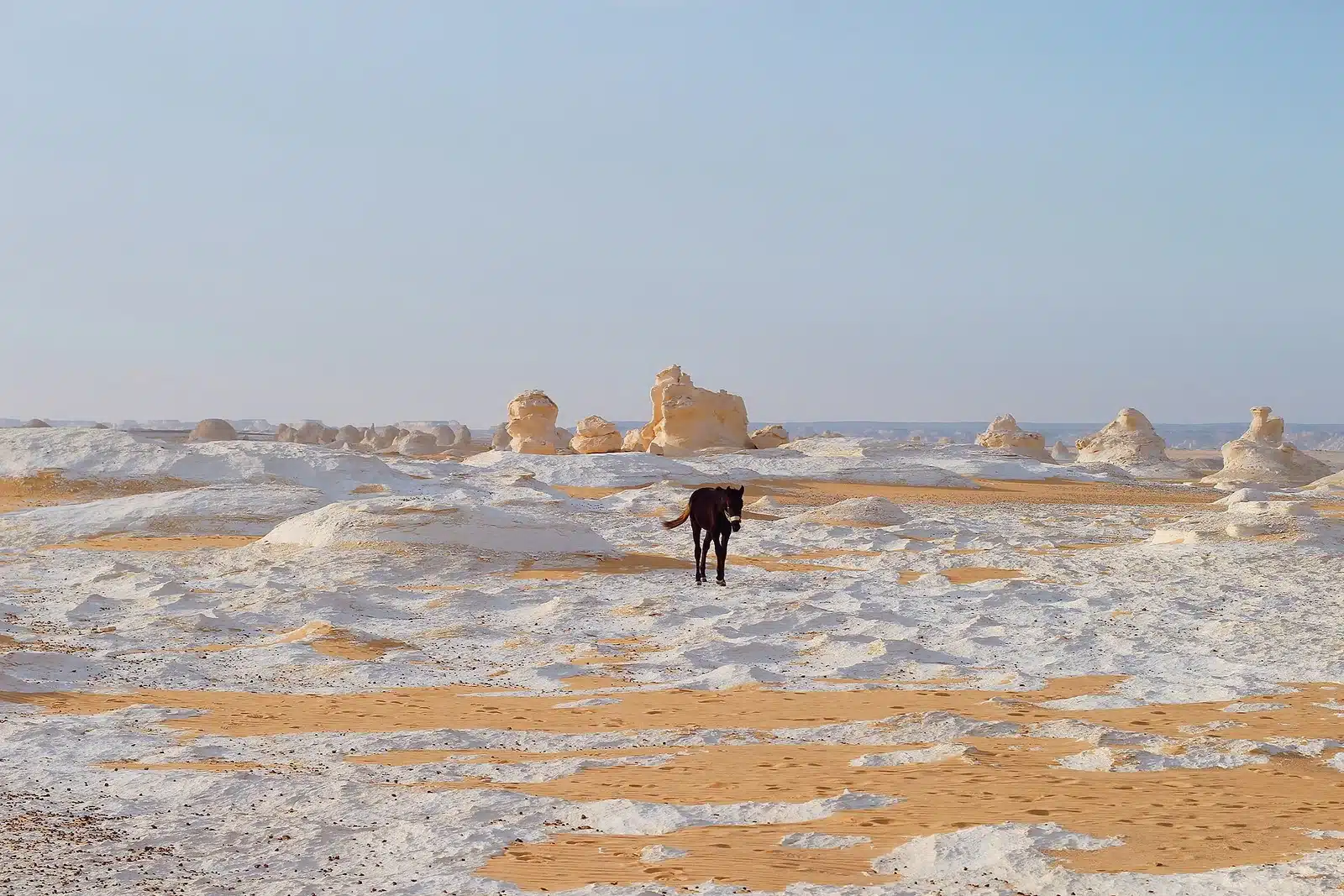
A well-run trip manages predictable risks: long road transfers, off-road vehicle issues, dehydration, cold, food hygiene and changing access rules. Safety begins with a maintained 4×4, experienced local driver, spare tyre, tools, enough fuel, water reserve and a communication plan. It also depends on permits and approved routes.
Before departure, provide medical information that affects the trip and carry essential medicines in your day bag. Travel insurance should cover the activity and remote area. Guests with serious conditions should ask how the team would communicate and evacuate if the vehicle could not move.
Wild foxes sometimes approach camps because previous visitors fed them. Do not offer food, leave scraps outside or try to touch an animal. Keep shoes and small objects inside the tent, secure rubbish and follow the guide’s instructions.
Responsible campsite rules
- Camp only where current protected-area rules allow it.
- Use durable ground, not the base of a fragile chalk formation.
- Do not climb, carve, collect chalk, move fossils or build rock stacks.
- Bring fuel for any permitted cooking fire; never cut desert plants.
- Use a contained fire and extinguish it completely.
- Pack out food waste, charcoal, foil, bottle caps and cigarette ends.
- Keep music low and lights directed toward camp rather than the landscape.
- Do not feed foxes or chase wildlife for photographs.
- Leave the site visually unchanged after the vehicle departs.
White chalk makes pollution and tyre damage highly visible. A clean camp should disappear in the morning without a burn scar, tissue, food scrap or new track crossing the formations.
Stargazing and night photography
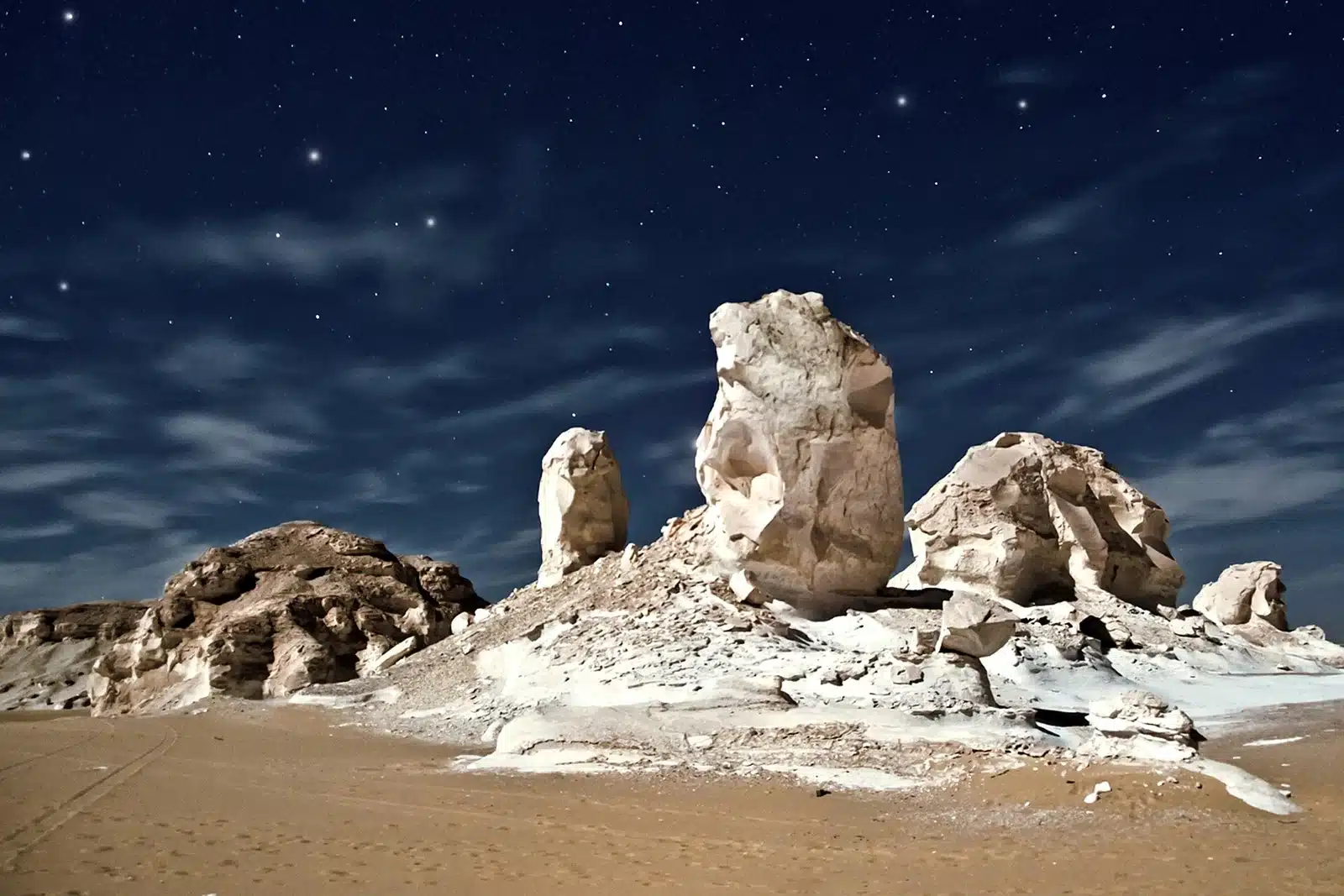
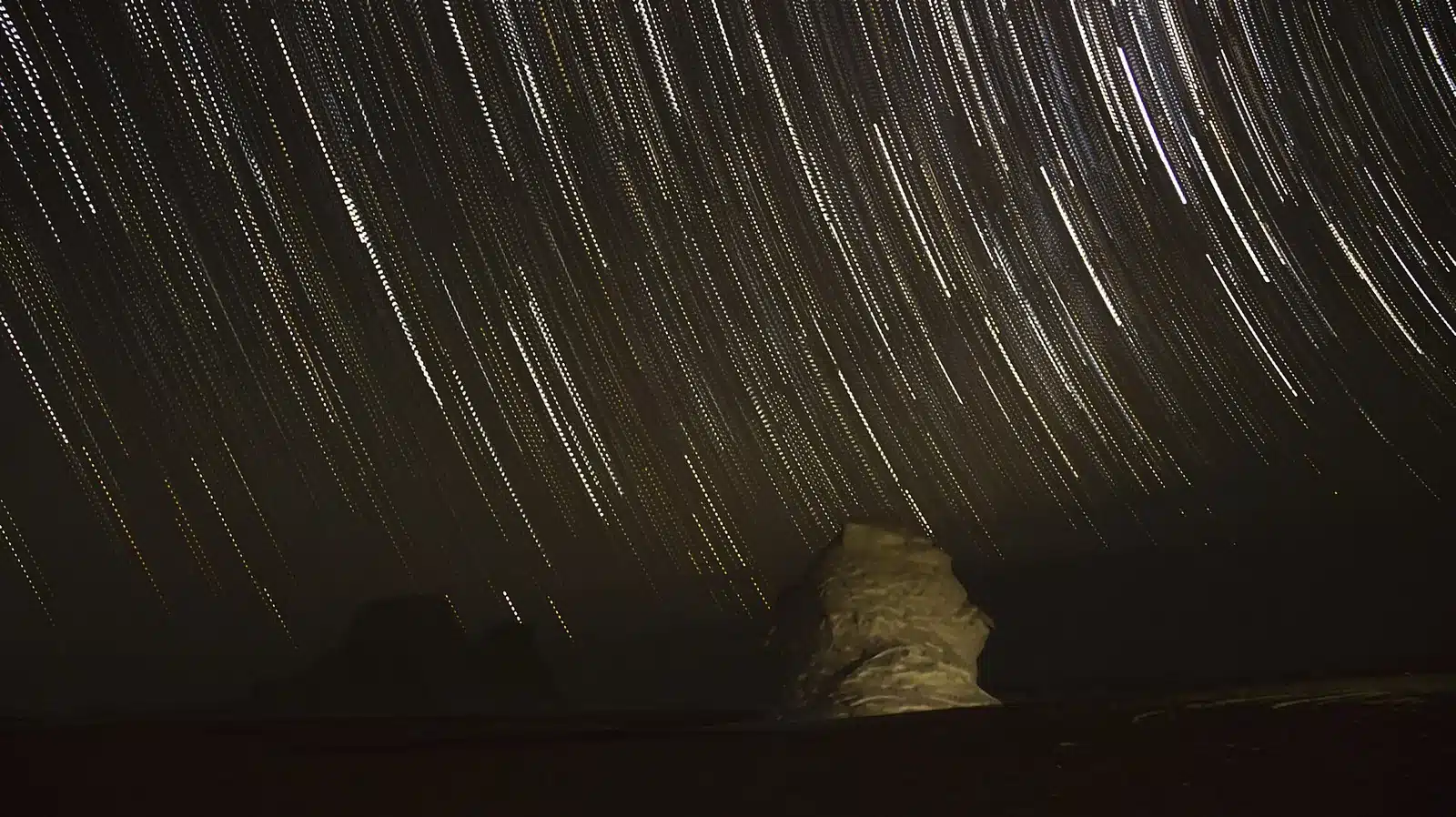
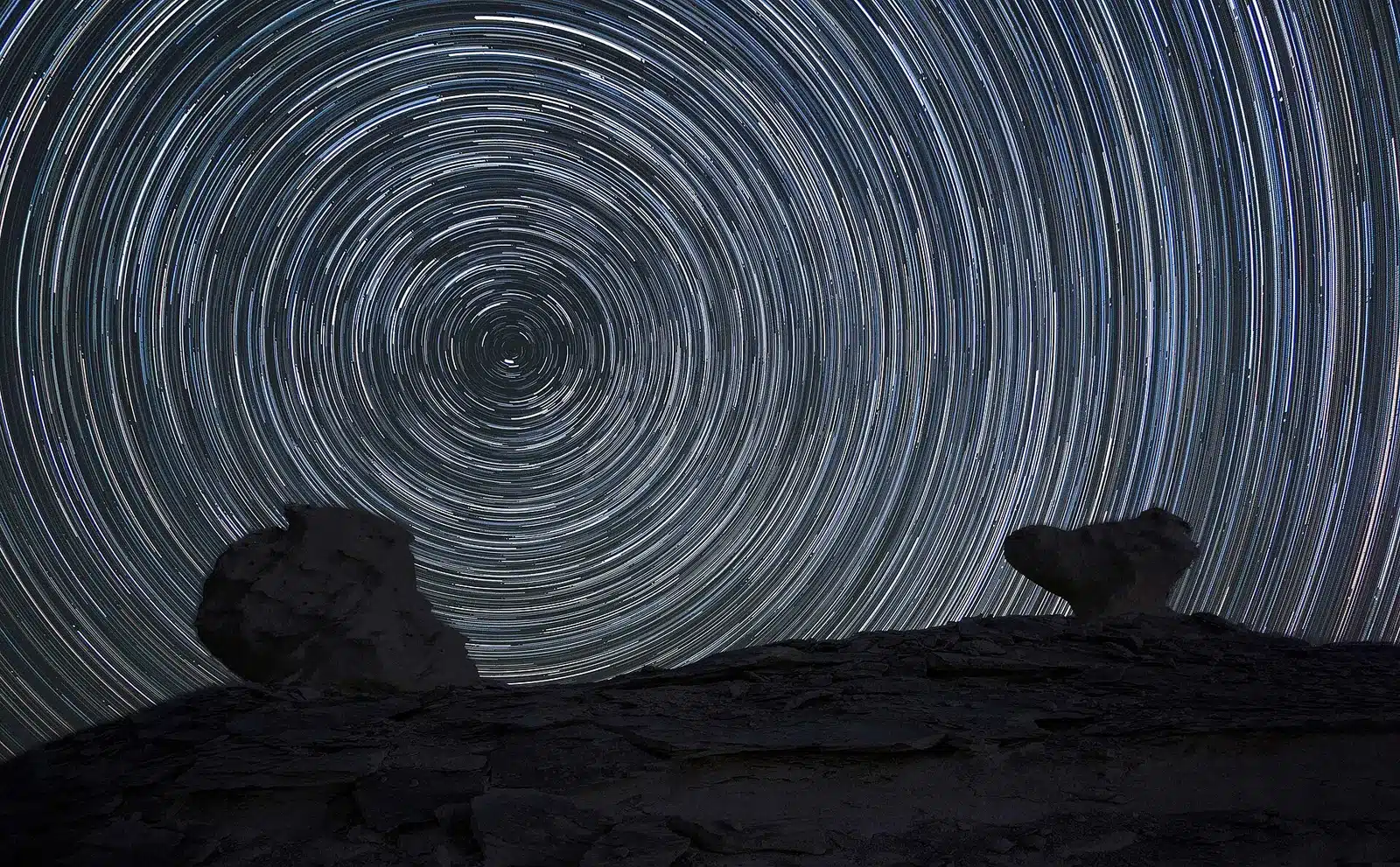
The remote location offers dark skies, but moon phase, haze and cloud affect what you see. A bright moon illuminates the chalk dramatically and reduces the visibility of faint stars. A moonless night reveals more of the Milky Way but makes walking and composition harder.
For photographs, bring a stable tripod, wide lens, spare batteries and a headlamp with a red mode. Focus before the scene becomes completely dark. Avoid shining powerful lights at other guests, wildlife or drivers. Long star trails require patience; a single sharp night landscape is often a better memory than spending the whole evening operating a camera.
Two-day versus three-day camping
The 2-day White Desert safari from Cairo is the minimum realistic overnight plan. It gives one sunset, one camp and one sunrise, but both days include long transfers. It is best for guests with limited time and good tolerance for driving.
The 3-day White Desert safari offers better pacing and may include a second desert night, depending on the confirmed itinerary. It is a stronger choice for photographers, families and travellers who want unhurried walks rather than a rapid sequence of stops.
Ask where each night is planned. “Three days” does not automatically mean two nights inside the White Desert; one night could be in Bahariya. Neither arrangement is wrong, but the written itinerary should make it clear.
What White Desert camping costs include
Prices vary with party size, private versus shared transport, number of desert nights, Cairo pickup location, camp equipment and seasonal availability. A transparent quote should list the road transfer, local 4×4, driver and guide, permits or entrance charges, meals, drinking water, tents, mattresses, bedding and any oasis accommodation.
Compare the cost per person and the exact services, not only the headline total. A very low offer may exclude the Cairo transfer, use a shared 4×4, provide thin bedding or add permits later. For a tailored quote, send your dates, number of adults and children, hotel area and preferred two- or three-day plan through our contact page.
Complete packing checklist
- Passport and travel-insurance details.
- Warm base layer, fleece, windproof jacket, long trousers and warm socks.
- Sun hat, sunglasses and high-SPF sunscreen.
- Closed walking shoes and easy camp footwear.
- Headlamp plus spare batteries.
- Power bank and charging cables.
- Reusable water bottle.
- Personal medicines and a small personal first-aid kit.
- Unscented wipes, toilet paper and sealable waste bags.
- Small towel and lip balm.
- Camera dust protection and tripod if needed.
- Soft overnight bag rather than a large rigid suitcase.
Seven booking questions that prevent disappointment
- Is the Cairo transfer private, and which vehicle is used?
- How many guests share the 4×4 and the campsite?
- What exact tent, mattress, sleeping bag and blankets are supplied?
- Which toilet and privacy arrangement is carried?
- Are every meal, drinking water, permit and entrance charge included?
- Where is the night planned, subject to current rules?
- What happens if weather or authorities change the route?
Frequently asked questions
Can beginners camp in the White Desert?
Yes. The crew handles driving, setup and meals, so no technical camping skill is required. You should still be comfortable with basic facilities, temperature changes and a long road transfer.
Is there mobile signal?
Coverage is unreliable and may disappear completely. Tell family not to expect immediate replies and download essential information before leaving Bahariya.
Will I see the Milky Way?
It depends on season, moon phase, clouds and atmospheric clarity. Dark conditions improve the chance, but no operator can guarantee a specific night-sky view.
Are there insects or snakes?
Desert wildlife exists, though most guests see little around a clean camp. Keep the tent zipped, wear shoes after dark, use a light and avoid placing hands under rocks.
Can children join?
Yes, when parents prepare for long drives, cold nights and simple toilets. Request private transport, child restraints, suitable food and a closed family tent. A three-day route is usually less rushed.
Can I charge my phone?
Do not depend on camp electricity. Bring a charged power bank. Some vehicles have USB outlets, but these are not a substitute for your own backup.
Book a private White Desert camp
For an accurate plan, send your dates, group size, Cairo pickup area, dietary needs, mobility considerations and preferred comfort level. We will explain the actual tent, bedding, toilet arrangement, vehicle plan and included services before confirmation. The goal is not simply to “sleep in the desert”; it is to do it safely, comfortably and without leaving damage behind.
Official planning reference: Egypt’s official tourism portal advises travellers to check with an authorised agency or guide regarding permits and regulations before desert excursions. See Experience Egypt: Desert Excursions. Protected-area instructions can change, so current local confirmation always takes priority over a static itinerary.