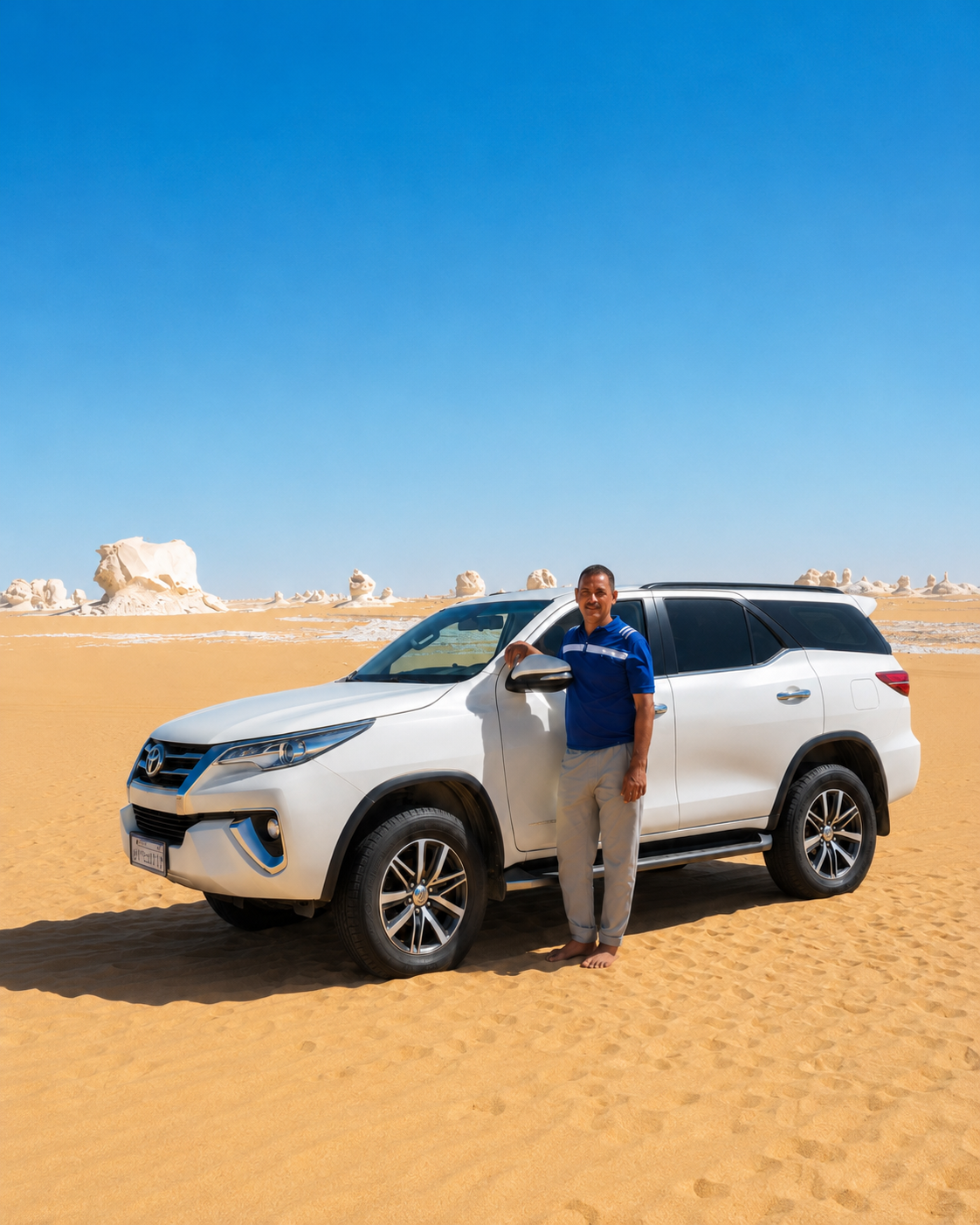
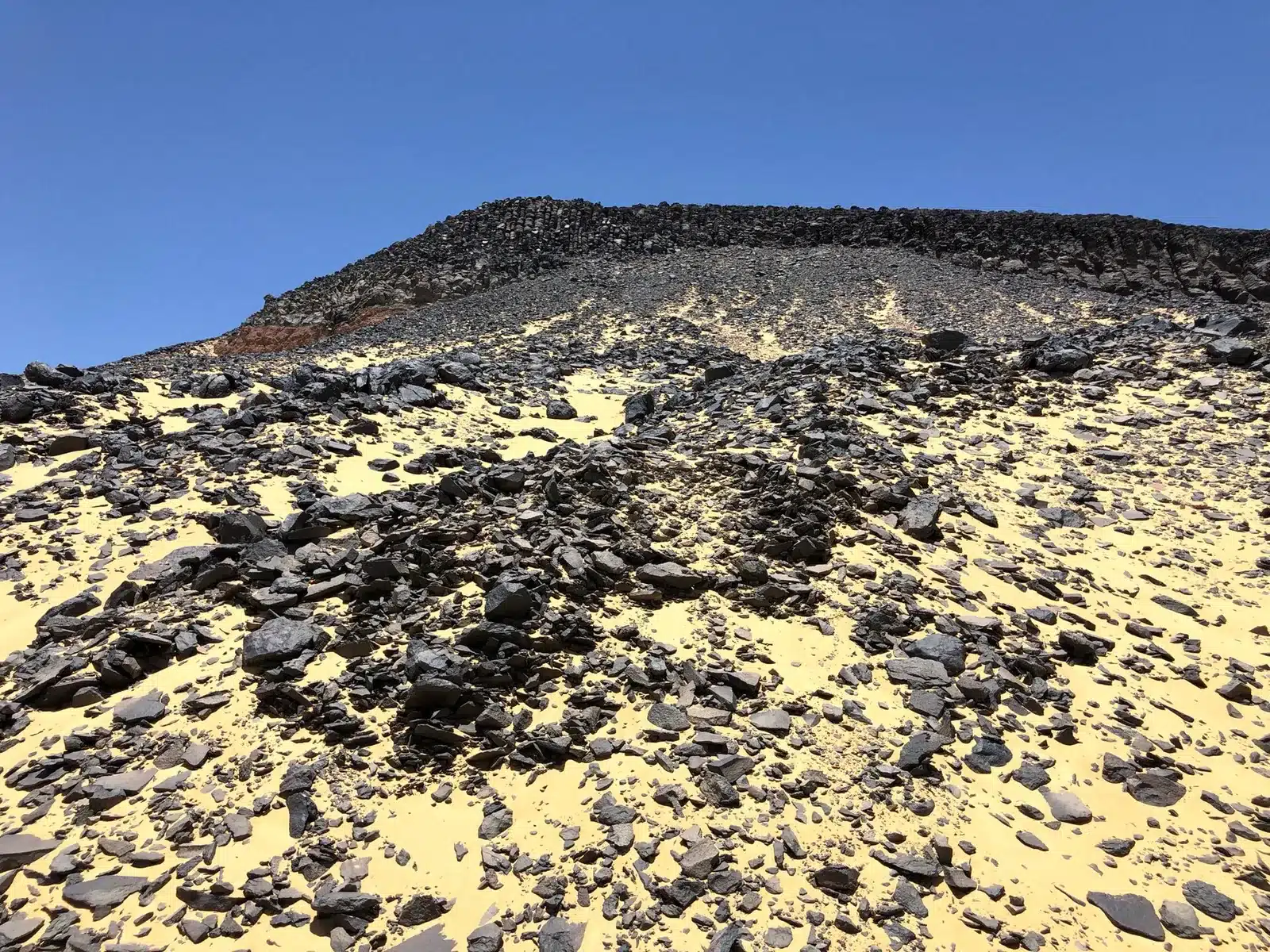
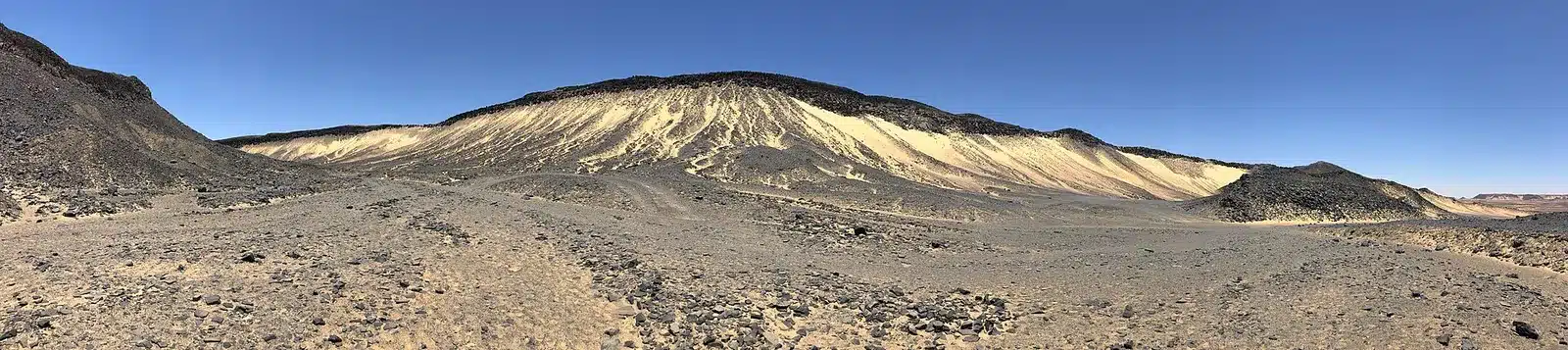
Black and White Desert Egypt tours combine two landscapes that look opposite but belong to the same Western Desert journey from Cairo. The Black Desert is a field of dark, iron-rich hills north of Farafra; the White Desert is a protected chalk landscape of pale formations farther south. Bahariya Oasis is the usual operational gateway from Cairo.
This guide compares the two deserts, explains the route in the correct order, shows what fits into two or three days and clarifies costs, camping, safety and season. It is designed to prevent the most common booking mistake: choosing a cheap “Black and White Desert” listing without checking whether it reaches the main White Desert formations or includes a proper overnight camp.
Best first trip
Choose two days and one camping night for the classic route. Choose three days if you want slower photography, Farafra Oasis or more time in Agabat Valley. Avoid a same-day Cairo return unless you accept a very transport-heavy itinerary.
Black Desert versus White Desert
| Feature | Black Desert | White Desert |
|---|---|---|
| Appearance | Dark hills and scattered black stones | White chalk fields and sculpted formations |
| Position | Closer to Bahariya | Farther south toward Farafra |
| Typical visit | Viewpoints, short walks and driving stops | Longer exploration, sunset and camping |
| Best light | Morning or late afternoon | Golden hour, sunset, night sky and sunrise |
| Main risk | Loose slopes and heat | Remote navigation, wind, cold nights and fragile formations |
The Black Desert is sometimes described as volcanic. The dark material includes iron-rich rocks and dolerite scattered over older hills; the entire region is not a fresh lava field. The White Desert is famous for chalk and limestone shaped by erosion. Understanding that contrast turns a series of photo stops into a geological journey.
Where does the tour start?
Most Cairo tours drive approximately four to five hours to Bahariya Oasis, eat lunch and change to a local 4×4. The desert circuit then runs south toward the Black Desert, El Heiz, Crystal Mountain, Agabat Valley and the White Desert. The return normally follows the same regional corridor with different stops timed for light and route efficiency.
Farafra is geographically closer to the White Desert and can also serve as a base, but it is much farther from Cairo. For a short Cairo trip, Bahariya remains the practical gateway. For a longer oasis circuit, the route continues through Farafra, Dakhla and Kharga.
The Black Desert experience
The Black Desert reveals itself as dark-capped hills, open sandy plains and isolated viewpoints. Some tours climb a short slope for a wider panorama. The stop should match the group’s fitness and the day’s heat; there is no need to scramble up unstable rock for the experience to count.
Ask which viewpoint is planned and whether the route includes Jebel Marsous or a general roadside stop. A listing that simply says “Black Desert” may allow only a quick photograph. A private guide can choose safer terrain and explain how the black material contrasts with the pale landscape farther south.
El Heiz, springs and lunch stops
El Heiz provides palms, water and a natural break between the black hills and the southern landscapes. Depending on the itinerary, travellers may stop for lunch or visit a spring. Treat spring conditions realistically: facilities can be simple, and bathing suitability should be confirmed locally.
This stop is operationally useful because it lets the driver and guide prepare for the longer off-road section. It should not consume so much time that Agabat or sunset is rushed. Good route design balances comfort with the light-dependent highlights.
Crystal Mountain
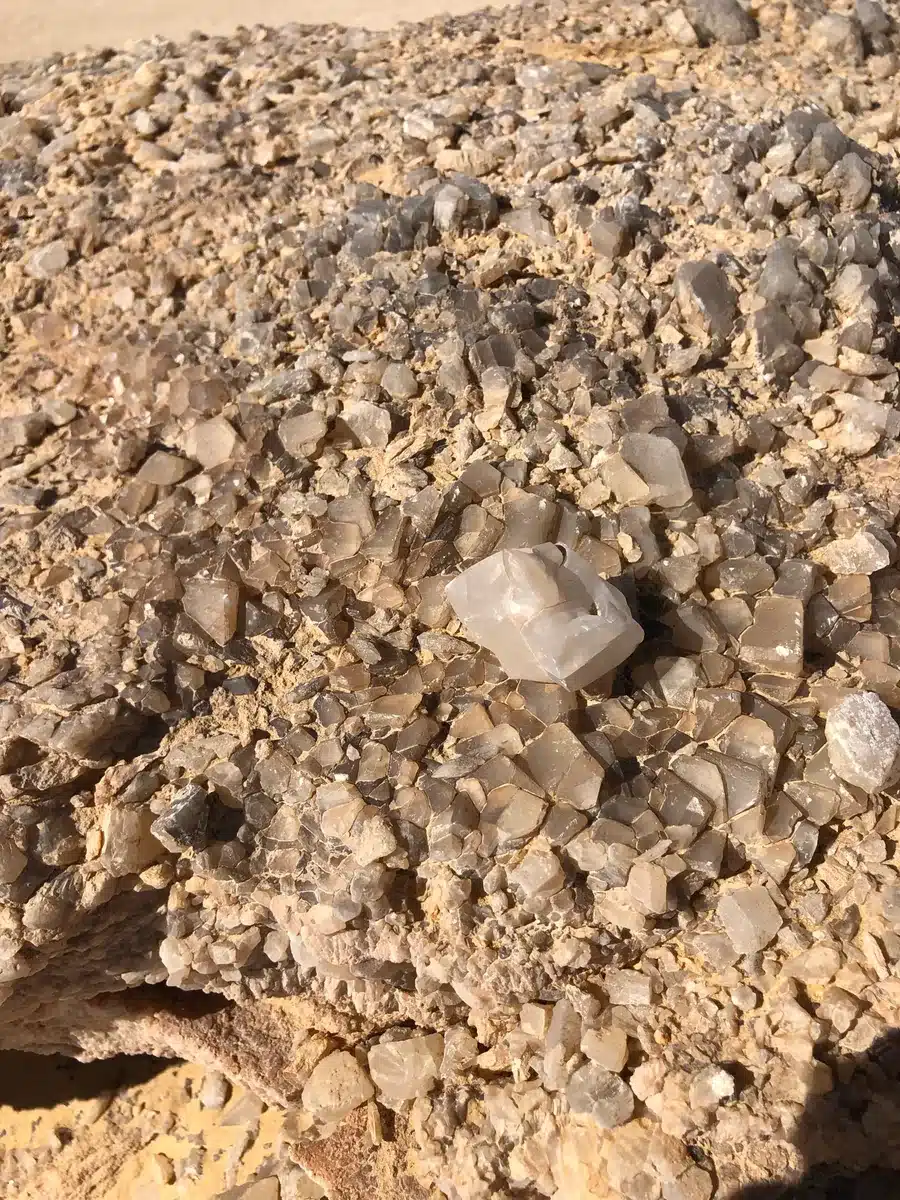
Crystal Mountain is a small geological ridge and arch containing sparkling crystal structures. It is not a tall mountain or a place to collect souvenirs. The most responsible visit is brief: observe the formation, photograph it without climbing fragile edges and leave every crystal where it belongs.
The site connects the colour story of the circuit. Dark hills give way to clearer mineral structures before the pale cliffs of Agabat and the chalk formations of the White Desert. Read our dedicated Crystal Mountain guide for its geology and route position.
Agabat Valley
Agabat Valley combines golden sand with large white cliffs and isolated towers. The scale is different from the White Desert’s smaller sculpted formations, so it deserves more than a drive-through. Time permitting, a short walk or quiet viewpoint reveals the layers of an ancient landscape.
Sandboarding or dune play may be offered in selected areas. Ask whether the equipment, slope and timing are suitable for your group. Avoid driving or walking over fragile crusts simply to reproduce a social-media angle. Our Agabat Valley guide explains the stop in detail.
The White Desert experience
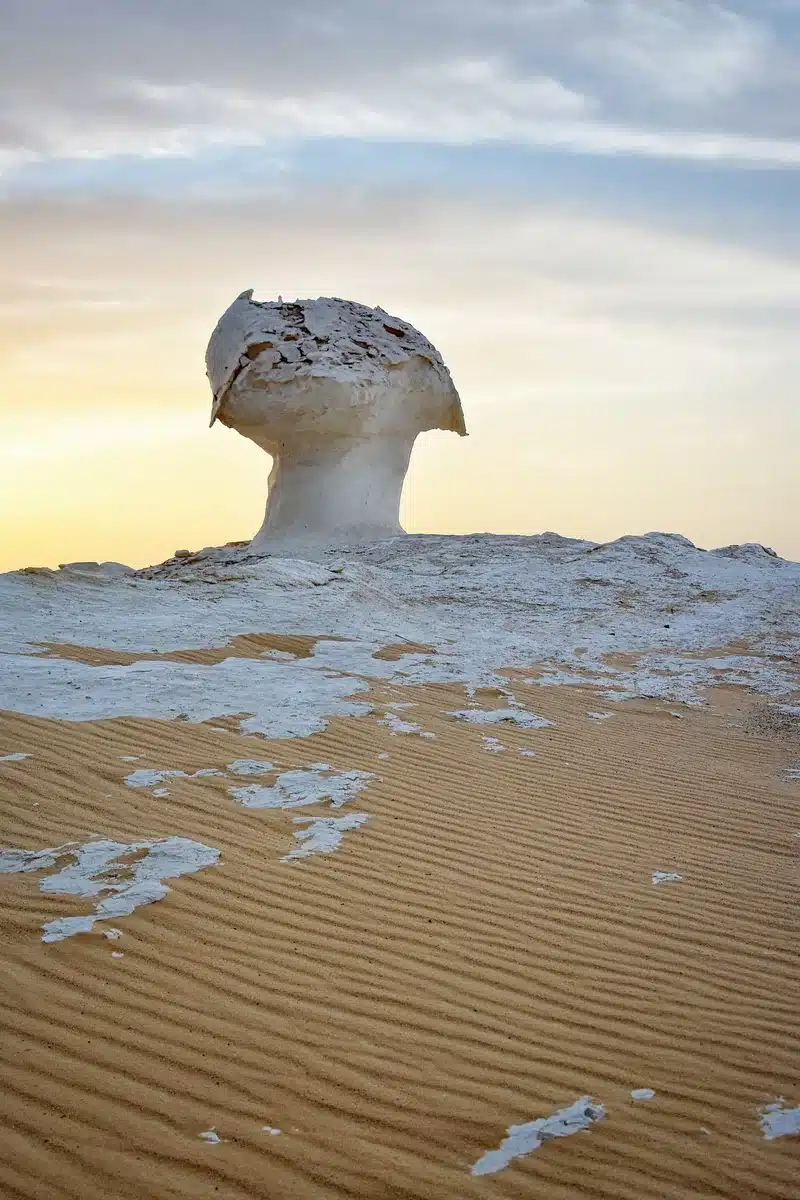
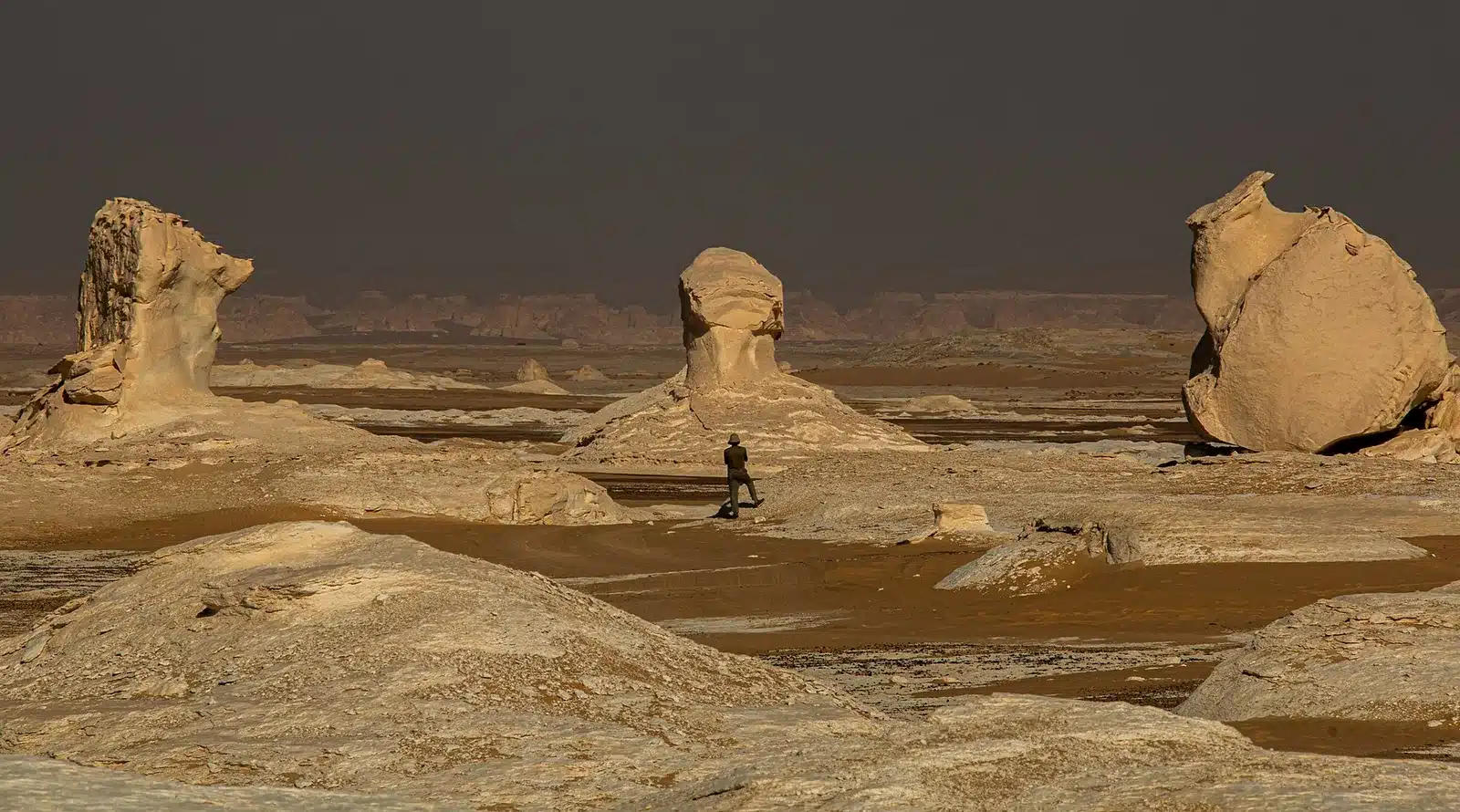
The White Desert is the emotional climax of the route. Wind-sculpted chalk forms mushrooms, animals, towers and broad pale fields. A local driver links the main formations using established tracks and chooses a camp area based on current rules, wind and group needs.
Sunset changes the chalk from bright white to gold and pink. After dark, the absence of city light reveals a strong night sky. Sunrise gives a quieter second view and is the main reason an overnight trip is more valuable than a rushed day excursion.
Two-day itinerary from Cairo
Day 1
Early Cairo pickup, road transfer to Bahariya, lunch, local 4×4, Black Desert viewpoint, El Heiz, Crystal Mountain and Agabat Valley. Continue toward the White Desert for sunset, dinner and camp.
Day 2
Sunrise, breakfast and exploration of major formations. Return through selected stops that were not covered on Day 1, change to the Cairo vehicle in Bahariya and arrive in the city in the evening.
This is already a full itinerary. A promise to add extensive Bahariya archaeology, Farafra old town and several long hikes usually means each stop becomes rushed.
Three-day itinerary
A third day can add a second camp, Farafra Oasis, a slower Agabat visit or more photography time. It is particularly useful for families, older travellers and guests who dislike consecutive very long driving days. Compare our 2-day versus 3-day guide before deciding.
Tour cost in 2026
Published market examples visible in August 2026 ranged from roughly US$110 for some two-day marketplace listings to over US$200 per person, with prices changing by group size and inclusions. Egypt Safari Travel’s live 2-day private safari starts from US$159, while the 3-day option starts from US$219.
Compare total value, not the first number. Confirm Cairo pickup zone, private or shared vehicle, local 4×4, camp equipment, meals, water, fees, entrance costs and the group size assumed by the displayed rate. Our White Desert price guide gives a detailed checklist.
Camping: what to expect
A desert camp is intentionally simple. A responsible setup includes sleeping equipment, warm blankets, dinner, breakfast, water, waste control and a private camp plan matched to the group. Toilet arrangements are basic unless a portable solution is specifically included.
Winter nights can be very cold, and wind may force a change of camp location. Tell the operator about children, mobility needs, food restrictions and any medical requirement before the trip. Do not wait until sunset in the desert to discover that a guest needs a different sleeping setup.
Best time to go
October to April is the main season. December and January have comfortable days but cold nights. March, April, October and November often balance daytime comfort and milder camping temperatures. Summer heat makes transfers and outdoor stops difficult.
Safety and permits
Use a licensed operator and experienced local 4×4 driver. Confirm current access, checkpoints and protected-area requirements shortly before departure. Carry layers, sun protection, personal medicine and offline contact information. See our safety guide for a practical pre-booking checklist.
Never remove crystals, fossils or chalk. Do not climb fragile formations. A good guide protects the landscape, packs out waste and avoids night driving unless operationally necessary.
Who should choose this tour?
The two-day circuit suits active adults, couples, small private groups and families with children who can manage long road hours and a basic camp. It is excellent for first-time desert travellers because the landscapes change quickly and the route delivers sunset, stars and sunrise within one night away from Cairo.
Choose a Bahariya hotel tour instead if you need a private bathroom, dislike camping or want springs and local agriculture. Choose three days if anyone has limited mobility, if photography is the main purpose or if children need shorter daily drives. Travellers arriving on an overnight flight should rest in Cairo before departure rather than beginning a 4×4 safari exhausted.
What to pack for the Black and White Deserts
- A warm layer, hat and socks for the camp night, even when Cairo feels mild.
- Closed shoes with grip for loose rock and sand.
- Sun hat, sunglasses and high-protection sunscreen.
- Personal medication, tissues, hand sanitiser and a small headlamp.
- A power bank and protected camera storage for dust.
- A reusable water bottle and a compact overnight bag.
Leave large suitcases with the road vehicle or hotel when possible. Confirm what sleeping bag, mattress, blanket and pillow the operator supplies. Bringing fewer items makes 4×4 loading easier and reduces the chance of luggage damage.
Photography without losing the experience
Use wide views in the Black Desert and closer compositions in the White Desert. Keep people or the 4×4 in selected frames to show scale, but spend part of sunset without moving constantly between formations. A tripod is useful at night only when it can be placed without damaging crust or blocking the camp area.
Ask the guide which formations are safe to approach. Drone use is subject to Egyptian rules and permissions; never assume a small consumer drone can be flown because the landscape looks empty. Build the itinerary around natural light, not illegal or disruptive equipment.
Before leaving each stop, check that lens caps, tissues and food packaging have not blown away. Desert wind can scatter small items in seconds. Keep the vehicle visually discreet in sensitive areas and follow the driver’s parking choice instead of asking to move closer to a formation. Responsible photography creates better access for future visitors.
Keep spare batteries warm during cold nights and protect cameras from fine sand when changing lenses. The best images come from patient observation, not from climbing the highest rock.
Get a route matched to your group
Send the date, number of adults and children, hotel area and whether you prefer two or three days. We will reply with the route, inclusions and exact private price.
Frequently asked questions
Are the Black Desert and White Desert close together?
They are part of the same regional circuit but separated by several route stops. A local 4×4 links them from Bahariya toward Farafra.
Can you visit both deserts in one day from Cairo?
It is possible only as a very long, rushed day. Two days with one camp night is the recommended first trip.
Why is the Black Desert black?
Dark iron-rich and doleritic material covers many hills and parts of the sandy surface, creating the strong colour contrast.
Do you sleep inside the White Desert?
Overnight itineraries camp in an approved area chosen according to current rules, route conditions and wind.
Is two or three days better?
Two days covers the classic circuit efficiently. Three days suits slower photography, families and travellers adding Farafra Oasis.
Sources and photo licences
Route and destination facts were checked against Experience Egypt: Natural Wonders, Experience Egypt: Desert Excursions and current live tour pages cited above. Images are credited under their Wikimedia Commons licences.