One Day. Two Icons. Zero Guesswork.
Yes—you can visit the Giza Pyramids and Grand Egyptian Museum in one day, and for many first-time visitors to Cairo, combining them is one of the smartest ways to use a full day.
But there is an important difference between technically fitting both attractions into the same date and experiencing them properly.
A rushed itinerary can leave you racing through the Giza Plateau, checking the Sphinx off a list, arriving at the Grand Egyptian Museum already exhausted, and discovering that one of the world's largest archaeological museums deserves far more time than you expected.
A well-planned day feels completely different.
You visit Giza early, before the hottest part of the afternoon. You give the pyramids enough time to feel like a destination rather than a photography stop. You leave room for the Sphinx and panoramic viewpoints. Then you move into the air-conditioned Grand Egyptian Museum for the afternoon, using a confirmed timed-entry slot instead of trying to improvise the day as you go.
That combination makes a one-day visit very workable.
The key is not trying to see everything.
It is deciding what deserves your time.
Quick Answer: Is One Day Enough for the Pyramids and GEM?
For most travelers, yes. A realistic full day looks roughly like this:
| Time | Plan |
|---|---|
| 7:15–7:30 AM | Leave Cairo or Giza hotel |
| 8:00 AM | Enter Giza Plateau |
| 8:00–11:00 AM | Pyramids, panoramic viewpoint and Sphinx |
| 11:15 AM–12:00 PM | Lunch and transition |
| Around 12:30–1:00 PM | Enter GEM according to the confirmed slot |
| 1:00–4:30/5:00 PM | GEM highlights and independent exploration |
| Late afternoon | Return to hotel |
This is not a promise that Cairo traffic will behave perfectly or that every traveler will move at exactly the same pace.
It is a realistic structure.
The official GEM site confirms that the museum uses timed entry, and the selected entry period controls when you enter rather than forcing you to leave after a fixed short visit.
So the answer is:
one day is enough if you organize the order properly and accept that GEM is too large to “finish.”
If your goal is to examine every pyramid interior and spend an entire day studying museum galleries, split the attractions over two days.
For the typical first visit, however, one well-organized full day works extremely well.
Want Someone to Organize the Timing for You?
If your Cairo dates are already known, Ahmed can help coordinate the Giza morning, GEM entry slot and private transport around your schedule.
Is One Day Really Enough?
The answer depends on what you mean by “see.”
If seeing the Giza Pyramids means spending twenty minutes taking photographs before leaving, you can obviously fit the museum afterward.
But that is not the type of day we recommend.
At the opposite extreme, somebody could spend most of a day at Giza alone.
You could enter the Great Pyramid.
Explore secondary pyramids.
Spend longer at the Sphinx.
Study individual tombs.
Photograph the plateau from multiple locations.
Likewise, you could easily spend an entire day inside GEM.
The museum's official ticket currently includes access to the Tutankhamun Galleries, Main Galleries, Grand Hall, Grand Stairs and Khufu's Boats Museum, alongside the museum's other visitor areas.
There is simply too much content to absorb every object properly in three hours.
But that's not the goal of a first combined day.
The goal is to give both attractions meaningful time.
For most visitors:
2.5–3 hours at Giza
plus
3–4 hours at GEM
creates a very satisfying day.
Recent travelers frequently describe GEM as requiring at least several hours, and some visitors say they would happily return for another entire day.
That is exactly how you should think about the museum.
You are not failing if you don't see every object.
You are choosing the highlights intelligently.
Why Giza and GEM Work So Well Together
There is a strong geographical reason for combining them.
The Grand Egyptian Museum is located in Giza, close to the pyramid complex rather than deep inside central Cairo. The museum itself describes its location as near the Pyramids of Giza at El Remayah Square.
That means you avoid one of Cairo itinerary planning's biggest mistakes:
zigzagging across the city all day.
Cairo traffic can make seemingly short journeys unpredictable, and recent travelers repeatedly recommend grouping sightseeing by area instead of bouncing between Giza and central Cairo attractions.
Giza + GEM works because the two attractions belong naturally in the same geographic day.
Compare that with trying to combine:
Giza
Islamic Cairo
Khan El-Khalili
Coptic Cairo
all before dinner.
That is when a Cairo itinerary becomes exhausting.
The smartest travel days are often the ones that look less ambitious on paper.
Which Should You Visit First?
For most visitors, we recommend:
Giza Pyramids First. GEM Second.
There are exceptions, but this order solves several problems at once.
The Giza Plateau currently opens at 8:00 AM.
If you arrive near opening time, you are outside during the cooler part of the sightseeing day.
You also see the pyramids while your energy is high.
Then, as the day becomes warmer, you move indoors to GEM.
The museum's galleries open at 9:00 AM, so there is no operational need to rush there first for a normal combined itinerary.
There is also something emotionally satisfying about this order.
You first encounter ancient Egypt at monumental scale.
The Great Pyramid is not behind glass.
It surrounds you.
Then, later, GEM gives you the objects, royal history, craftsmanship and archaeological context connected to the civilization that produced those monuments.
The day moves from landscape and architecture into objects and stories.
Why We Prefer the Pyramids in the Morning
Three reasons.
1. Heat
The plateau is primarily an outdoor experience.
Egypt can be warm even outside peak summer, and in hotter months an early start matters significantly.
Recent Cairo visitors commonly recommend reaching Giza early to reduce midday heat exposure.
2. Energy
Walking around Giza after four hours inside a major museum is not ideal for everyone.
Doing the active outdoor section first feels more natural.
3. Photography
Morning conditions can often be more pleasant for travelers who want photographs before the strongest midday light.
The exact sky and lighting obviously vary.
But operationally, early Giza simply works well.
How Much Time Do You Need at the Giza Pyramids?
For a first visit:
Around 2.5–3 hours
is a good target.
That allows time for:
- the Great Pyramid
- Khafre and Menkaure
- a panoramic viewpoint
- the Great Sphinx
- the Valley Temple
- photographs
- questions
- and moving between stops.
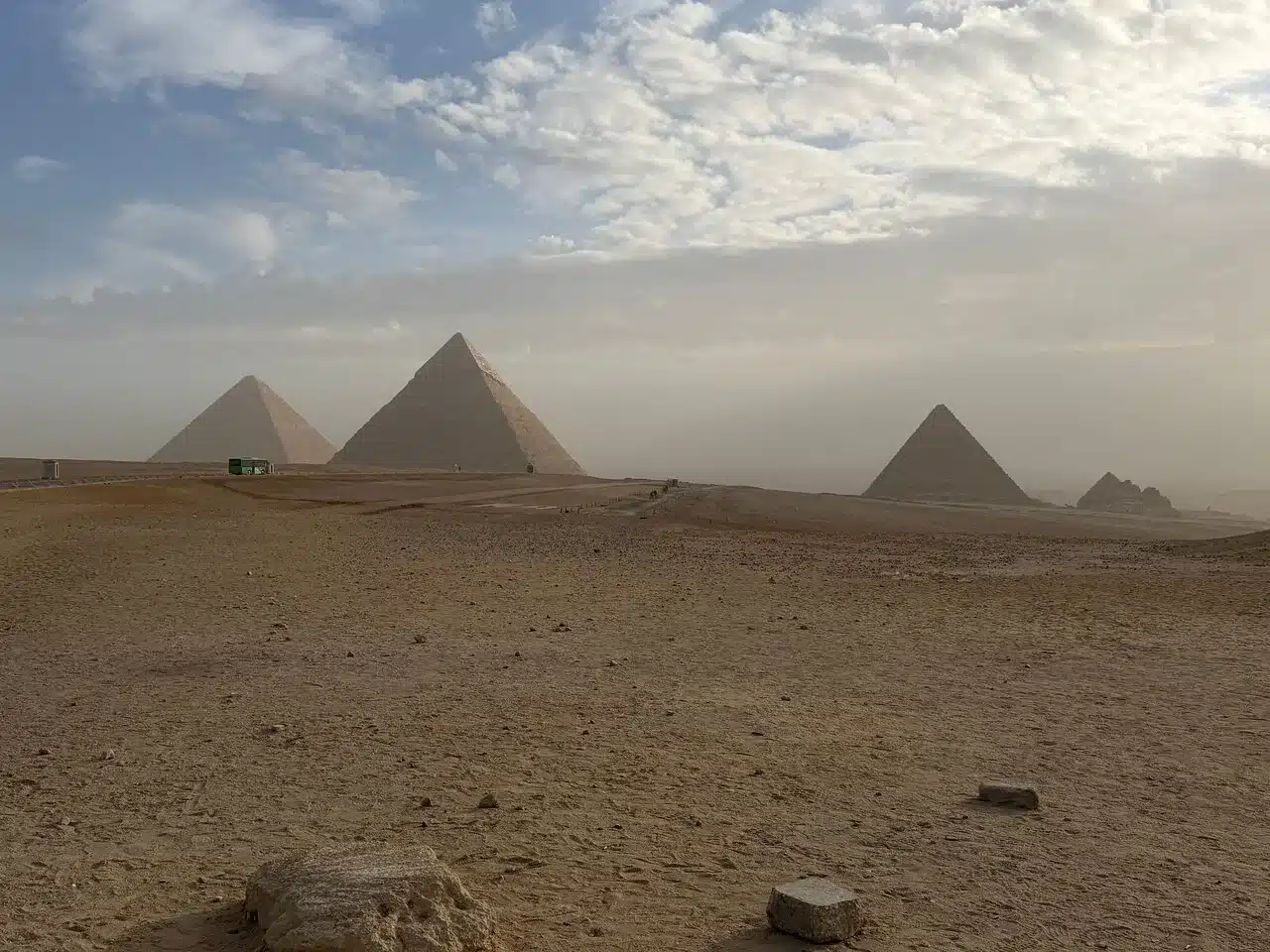
The Giza Plateau is much larger than it looks when you see one famous photograph.
The three main pyramids are spread across the site, and the Sphinx sits in another part of the complex.
Trying to walk every section without planning can consume time quickly.
This is one reason private vehicle access and a guide who knows how to sequence the stops can improve the day.
What You Can See at the Giza Plateau
The Great Pyramid of Khufu
The Great Pyramid is the centerpiece of the plateau and the last surviving Wonder of the Ancient World.
Most first-time visitors should spend some time viewing it externally even if they choose not to enter.
The scale is difficult to understand until you are standing beside the masonry.
Khafre's Pyramid
From certain angles, Khafre's pyramid can appear taller than the Great Pyramid because of the higher ground on which it stands.
The surviving section of casing stone near its summit makes it visually distinct.
Menkaure's Pyramid
Smaller than the other two main pyramids, Menkaure's monument completes the famous three-pyramid composition.
Panoramic Viewpoint
For many travelers, this becomes their favorite photography stop.
Instead of standing directly beside one pyramid, you step back and see the monuments together across the plateau.
This is also where many visitors choose an optional camel experience.
Great Sphinx
The Sphinx deserves more than a drive-by photograph.
Its placement within Khafre's complex helps make far more sense once somebody explains how the plateau fits together.
Valley Temple
Often overlooked in rushed group itineraries, the Valley Temple adds useful context to the Sphinx and Khafre's pyramid complex.
Should You Go Inside the Great Pyramid?
This is one of the most common questions.
Our answer:
only if the experience genuinely interests you.
The standard Giza Plateau admission does not include the interior of the Great Pyramid. The Ministry's current site information lists the plateau entry separately from pyramid-interior admission.
Going inside is not the experience some travelers imagine.
You are not entering rooms filled with treasure.
The experience is mostly about:
- being inside the pyramid
- moving through narrow passages
- and understanding the monument physically.
For archaeology enthusiasts, that can be unforgettable.
For somebody with claustrophobia, mobility limitations or no particular interest in pyramid interiors, external exploration may be more enjoyable.
If you want to enter, decide before the day rather than sacrificing museum time unexpectedly.
Is a Camel Ride Worth Adding?
It depends entirely on you.
For many first-time visitors, a short ride against the panoramic pyramid backdrop is a memorable photograph and experience.
Others have no interest in it.
The mistake is treating it like a compulsory part of visiting Giza.
It isn't.
A good itinerary should allow you to choose.
If you want it, arrange it.
If not, spend the time exploring and photographing the plateau.
The day is already full enough without adding activities merely because everyone else seems to do them.
A Realistic Giza + GEM One-Day Itinerary
Here is the structure we would use for most travelers.
7:15–7:30 AM — Hotel Departure
Leave your Cairo or Giza hotel early enough to reach the plateau around opening time.
Exact pickup depends on your hotel's location and traffic.
8:00 AM — Giza Plateau
Start with the Great Pyramid area.
Spend time with your Egyptologist understanding what you are seeing before moving through the plateau.
9:00–9:45 AM — Khafre, Menkaure & Panoramic Views
Continue by vehicle between the major sections rather than turning the morning into unnecessary walking.
Take your main panoramic photographs.
Optional camel experience if requested.
9:45–10:45 AM — Sphinx & Valley Temple
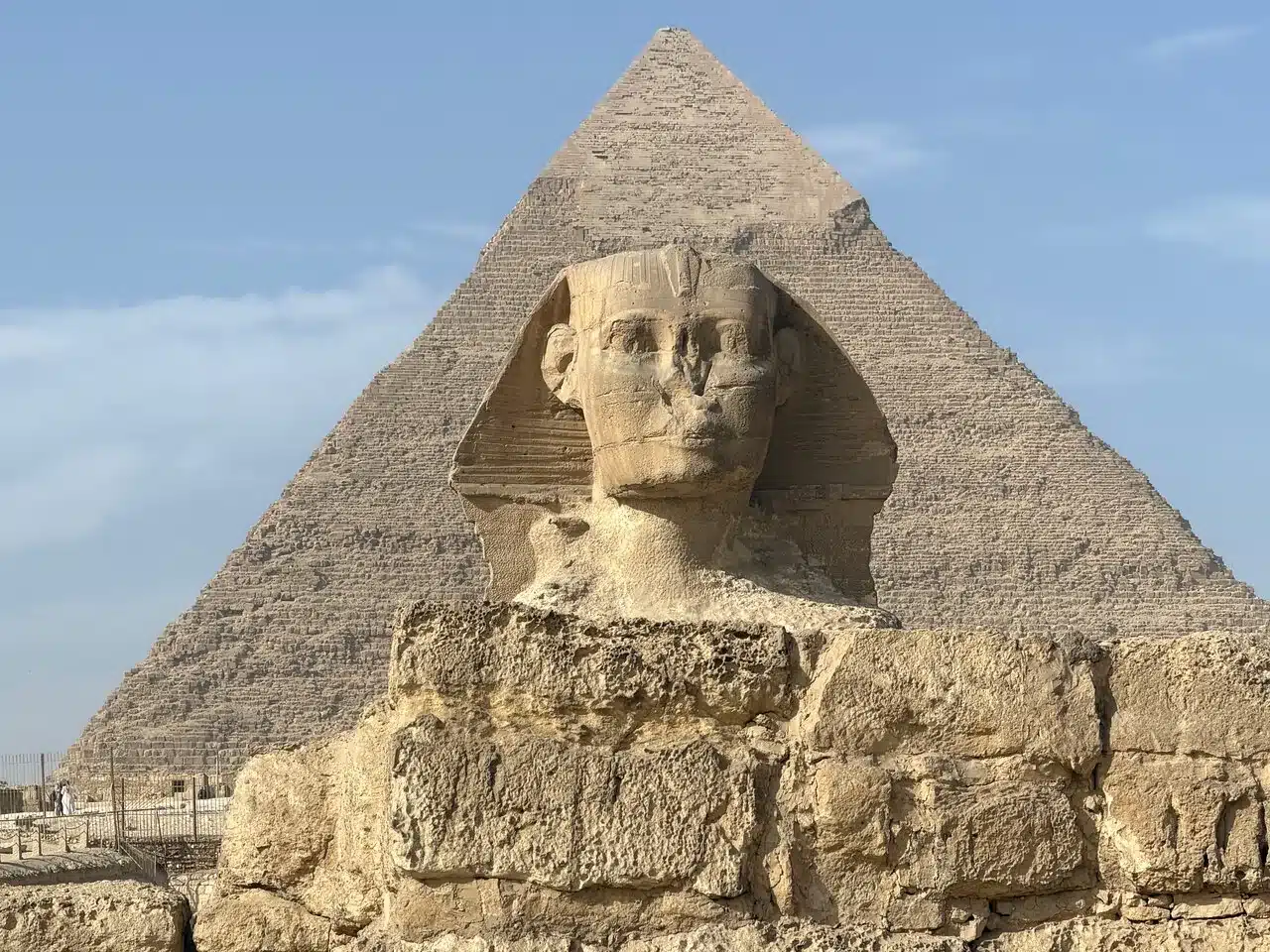
Finish the archaeological part of the Giza morning around the Sphinx complex.
11:00 AM–12:00 PM — Lunch
Have lunch before entering GEM.
This prevents the museum visit being interrupted because everyone suddenly becomes hungry halfway through Tutankhamun.
Around 12:30 PM — GEM Entry
Exact arrival must follow the confirmed timed ticket.
GEM currently requires advance online booking and a selected entry time.
12:30–4:00/4:30 PM — Grand Egyptian Museum
Begin with the major architectural spaces and guided highlights, then allow time for personal exploration.
Late Afternoon — Return to Hotel
Exact finish varies with:
- traffic
- museum interest
- walking pace
- and your confirmed entry time.
That is why a private full day should be treated as flexible within site operating hours rather than a minute-by-minute group schedule.
Rather Spend the Day Exploring Than Watching the Clock?
A private day removes the need to coordinate taxis, ticket timing and separate guides while you are already sightseeing.
What Can You See at the Grand Egyptian Museum?
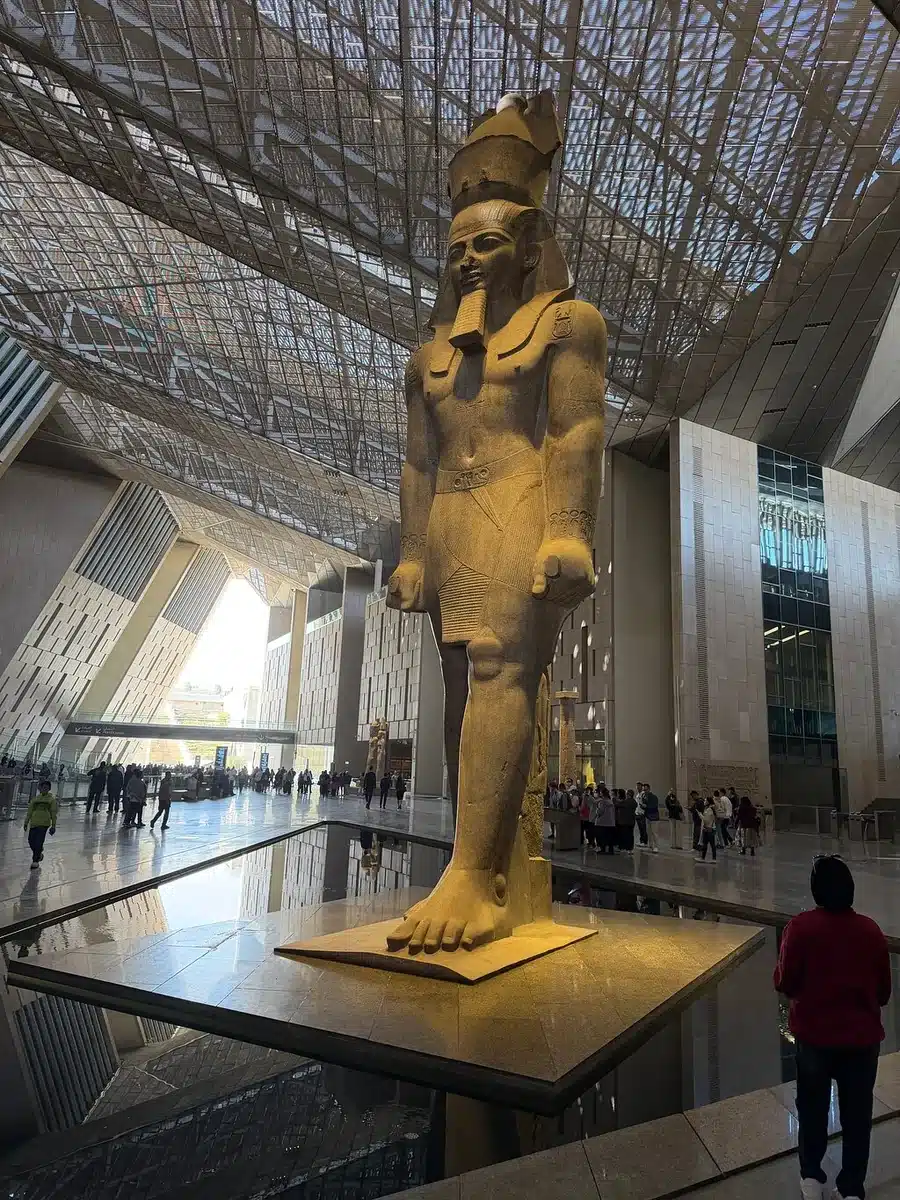
GEM is no longer the limited-access attraction some older online guides describe.
The official current ticket includes access to major parts of the museum, including the Tutankhamun Galleries, Main Galleries, Grand Hall, Grand Stairs and Khufu's Boats Museum.
That makes it one of Cairo's most important full-scale attractions rather than an add-on to the pyramids.
The Grand Hall
For many visitors, the first major moment is seeing the monumental statue of Ramesses II in the enormous entrance space.
The architecture immediately signals that this museum operates at a different scale from a conventional gallery building.
Grand Staircase
Large sculptures and monumental pieces accompany the staircase upward through the museum.
The space is part exhibition and part architectural experience.
Main Galleries
The Main Galleries provide the broader chronological and cultural context needed to make sense of ancient Egyptian history beyond the most famous names.
Visitors who arrive thinking only about pyramids and Tutankhamun often leave realizing how much broader Egyptian civilization was.
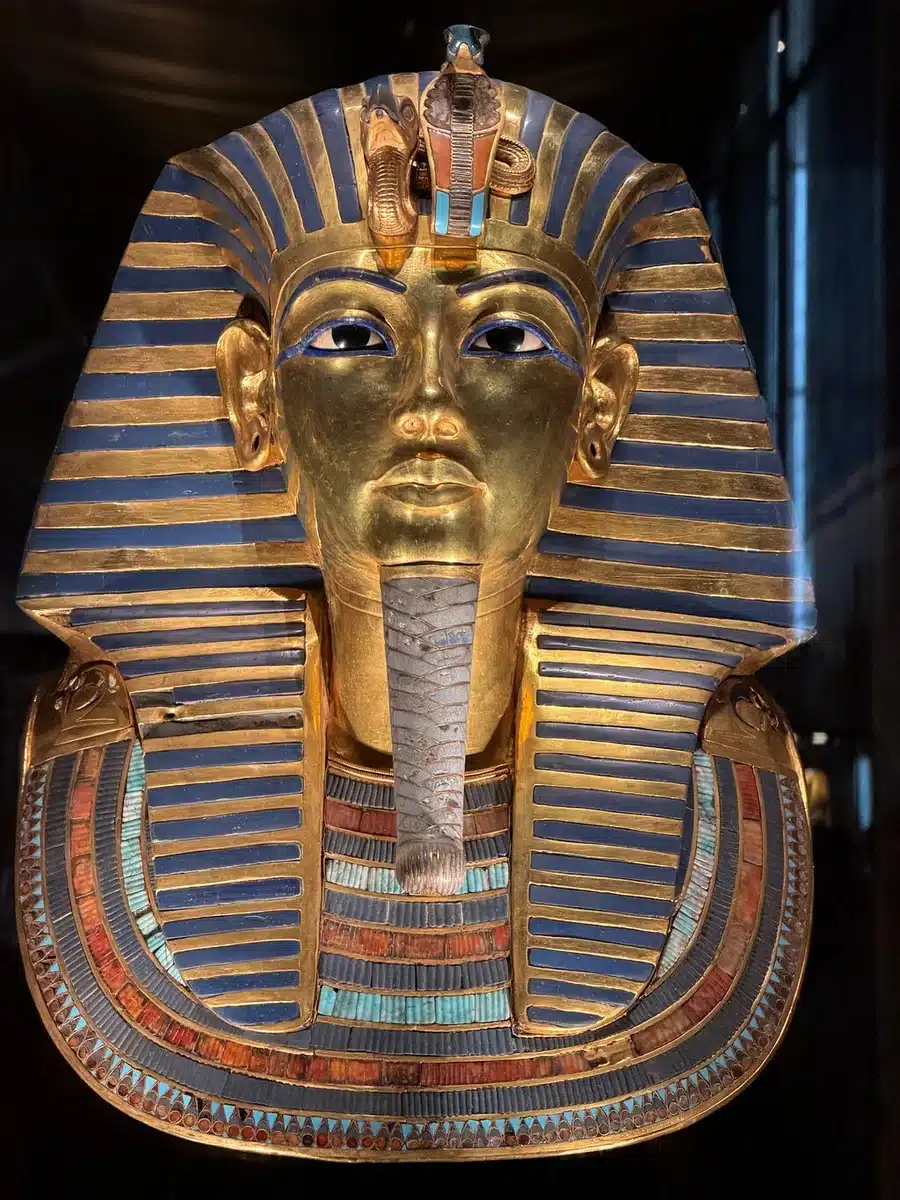
Tutankhamun Galleries
For many international travelers, this is the most anticipated part of GEM.
Rather than scattering the king's story across unrelated displays, the museum provides a much deeper opportunity to understand the burial, objects and historical context associated with Tutankhamun.
This section alone can consume far more time than visitors expect.
Khufu's Boats Museum
The museum experience also includes access to Khufu's Boats Museum under the current standard visitor ticket.
That creates an interesting link back to your morning at Giza.
You have already stood beside Khufu's pyramid.
Now the archaeological story continues indoors.
This is one reason combining the two locations in the same day can feel coherent rather than rushed.
Why You Should Not Try to See Everything at GEM
Because you probably cannot.
At least not meaningfully.
Walking past every object is not the same as seeing a museum.
Travelers often report that GEM can easily occupy four or more hours, while some recent visitors say they would gladly return for a second day.
For a combined itinerary, use a priority system.
Priority 1
Things you specifically came to see.
Priority 2
Major highlights your guide recommends.
Priority 3
Independent wandering through whichever galleries capture your attention.
This is far more enjoyable than rushing through the building just to say:
“I completed the museum.”
Museums are not video games.
There is no 100% completion badge.
How Long Should You Spend at GEM?
For this combined day:
3–4 hours
is the sweet spot for most visitors.
If you love archaeology intensely, you may want longer.
If your Cairo schedule allows multiple days, an entire separate museum day may be worthwhile.
But if you only have one or two sightseeing days in Giza/Cairo, 3–4 thoughtful hours after a strong Giza morning works very well.
How GEM Timed Entry Changes Your Planning
This is the part visitors should not ignore.
GEM currently requires tickets to be booked online in advance with a selected entry slot.
So you should not build your day like this:
“We'll go to the pyramids and whenever we're finished we'll just wander into GEM.”
The better approach:
Know your GEM slot.
Work backward.
Start Giza early.
Leave enough transition time.
Do not add unnecessary shopping or detours.
This is where planning changes the day from stressful to easy.
Is There a Combined Giza + GEM Ticket?
Treat them as two separate attractions with their own admissions.
The Ministry publishes Giza Plateau admission independently, while GEM operates its own ticket platform with selected entry times.
If you are visiting independently, make sure both parts of your day are actually organized.
If you book a package claiming to include tickets, confirm which tickets.
The words:
“Pyramids included”
might mean sightseeing is included but entrance admission is not.
Always read the inclusion list.
How Much Walking Is Involved?
More than many travelers expect.
But not all of it needs to be continuous.
At Giza, a private vehicle helps you move between different parts of the plateau.
At GEM, expect a substantial amount of indoor walking.
This becomes important for:
older visitors;
young children;
travelers with knee/back conditions;
and people visiting during hotter months.
Tell your guide about mobility requirements beforehand.
A private itinerary is valuable because the pacing can adapt.
What About Cairo Traffic?
Plan around it rather than trying to defeat it.
Cairo traffic is unpredictable enough that travelers frequently recommend grouping sightseeing geographically.
Giza + GEM is a strong combination because the attractions are both on the Giza side.
That is much smarter than planning:
Giza ? Downtown ? GEM ? Islamic Cairo
inside the same day.
Traffic doesn't care how perfect your spreadsheet looked at home.
Should You Have Lunch Between Giza and GEM?
For most people:
yes.
Lunch provides three benefits.
First, energy.
Second, a mental break between two information-heavy attractions.
Third, it prevents you reaching the Tutankhamun galleries and realizing your main thought is:
“When are we eating?”
Keep lunch relatively efficient.
This is not the day for a three-hour fine-dining experience unless that's your priority.
A clean local Egyptian lunch works perfectly.
Private Guide vs Visiting Independently
Can you do Giza and GEM alone?
Absolutely.
You can arrange transport.
Book the museum.
Buy admission.
Use maps.
Read signs.
Many independent travelers do exactly that.
So why use a private guide?
Not because visiting independently is impossible.
A good private guide solves different problems:
Context
At Giza especially, a pyramid becomes much more interesting when you understand why it sits where it does and how the plateau developed.
Sequence
You waste less time deciding where to go next.
Logistics
Transport, entrances and timing become one plan.
Questions
You can ask about the things that interest you instead of relying only on a fixed audio narrative.
Filtering
Inside GEM, thousands of objects compete for attention.
A guide helps identify what deserves your limited time.
Do You Need a Guide Inside GEM?
You don't need one.
GEM is a modern museum designed to function for independent visitors.
But guided highlights can be extremely useful when the museum is only one part of your day.
The strongest format is not necessarily four hours of uninterrupted lecture.
We prefer:
Guided Highlights + Personal Exploration
Your Egyptologist gives you context and directs you toward the important sections.
Then you get time to explore at your own pace.
This prevents the museum from feeling like a school lesson.
Families: Can Children Handle Both in One Day?
Yes, but don't plan an adult itinerary and simply add children to it.
Family success depends on:
- age
- interest level
- heat
- walking tolerance
- meal timing
- and how much parents try to squeeze in.
For families, we would usually recommend:
- early Giza
- regular water
- not insisting on every optional pyramid interior
- proper lunch
- then a selective GEM visit.
A child does not need to inspect every archaeological period for the day to be successful.
Let the major objects carry the experience.
Is This Day Suitable for Older Travelers?
Often yes.
But mobility needs should be communicated before the tour.
Key considerations:
- uneven surfaces around archaeological areas
- heat outdoors
- vehicle access
- walking distances inside GEM
- and optional pyramid interiors.
A private day allows more flexibility than a fixed coach itinerary because breaks can be introduced when needed.
What Is the Best Day of the Week?
There is no universal perfect day.
The key is ticket availability and your wider Cairo schedule.
However, the official GEM timetable currently provides longer evening gallery hours on Wednesday and Saturday, when galleries remain open until 9:00 PM instead of the usual 6:00 PM.
That creates useful flexibility if your museum slot is later.
It does not mean you should deliberately spend twelve hours sightseeing simply because the building stays open.
Use the extra hours as flexibility, not punishment.
What Should You Wear?
Think comfort before Instagram.
For Giza:
- lightweight clothing
- comfortable walking shoes
- hat
- sun protection.
Respectful travel clothing is appropriate.
For GEM:
- the environment is more controlled indoors, but comfortable footwear still matters because the museum is enormous.
- Bring an extra light layer if you tend to feel cold in air-conditioned buildings.
What Should You Bring?
Keep it simple.
Recommended:
- Passport/ID required for ticket categories where applicable
- Phone/camera
- Power bank
- Hat
- Sunglasses
- Sunscreen
- Comfortable shoes
- Small personal water supply in addition to provided water
Any medication you may need
Don't overpack
You don't need a trekking expedition bag for this day.
Large luggage only makes archaeological and museum security more complicated.
Common Planning Mistakes
Common Mistake #1: Starting Too Late
If you start Giza near midday, you consume the best outdoor hours and reduce flexibility before your museum slot.
Early beats heroic.
Common Mistake #2: Underestimating GEM
Do not schedule GEM as:
“We'll probably need 90 minutes.”
You probably won't.
Three hours disappears quickly.
Common Mistake #3: Trying to Add Saqqara Too
Can somebody physically do:
Giza + GEM + Saqqara
in one day?
With enough speed, maybe.
Should most first-time visitors?
We don't recommend it.
Saqqara and Dahshur deserve their own product/day.
Adding them here risks turning extraordinary places into parking stops.
Common Mistake #4: Booking the Wrong GEM Time
A museum ticket that conflicts with your Giza plan can control the whole day.
Choose the slot intentionally.
Common Mistake #5: Too Many Shopping Stops
Papyrus.
Perfume.
Carpets.
Souvenirs.
Some travelers enjoy these places.
Others absolutely do not.
The problem is not shopping.
The problem is losing sightseeing time to shopping you never asked for.
If you want shopping, include it.
If you don't, say no.
Our private itinerary is designed with no compulsory shopping stops.
Common Mistake #6: Treating the Great Pyramid Interior as Mandatory
It isn't.
Some travelers love it.
Some come out wondering why they spent time inside a narrow passage when they could have been enjoying the plateau.
Choose based on your interests.
Common Mistake #7: Planning by Distance Instead of Cairo Reality
Two places may appear close on a map.
Traffic, security procedures, walking and ticket entry still consume time.
Build buffer.
Should You Split Giza and GEM Into Two Days?
Sometimes.
Two separate days may be better if:
- archaeology is a major academic/personal interest
- you want to enter several pyramid interiors
- you want extensive photography
- you want a full GEM day
- mobility requires frequent rest
- you have children who tire quickly
- your Cairo stay is long enough that there is no pressure.
A dedicated GEM day is completely reasonable.
Recent visitors often describe the museum as substantial enough to justify returning.
Who Should Combine Them Into One Day?
This combination is ideal if:
- you have 2–4 days in Cairo
- it's your first visit
- you want the essential Giza experience
- you prefer efficient geographic planning
- you don't need to inspect every GEM gallery
- you have another day available for Saqqara/Islamic Cairo
- you want one strong archaeology day without crossing Cairo repeatedly.
For most first-time travelers, this describes the situation perfectly.
What Should You Do With Your Other Cairo Day?
If you've already completed Giza + GEM, don't repeat similar attractions unnecessarily.
A great second sightseeing day could focus on:
Saqqara + Dahshur + Memphis
or:
Islamic Cairo + Citadel + Khan El-Khalili
or:
Coptic Cairo + Downtown
This is one reason combining Giza and GEM works so well.
It frees your other Cairo days to show you a different side of the city.
DIY or Private Tour: Which Is Better?
Visit independently if:
- You enjoy organizing logistics.
- You are comfortable arranging transport.
- You prefer museums without guides.
- Budget is more important than convenience.
- Your schedule is flexible.
Choose private if:
- This is your first Cairo visit.
- You want an Egyptologist.
- You dislike negotiating logistics while traveling.
- You are traveling with children or older relatives.
- You have limited time.
- You want Giza and GEM to flow as one day rather than two separate bookings.
Neither is universally better.
The private option is about reducing friction.
Our Ideal One-Day Formula
If a friend asked us how to do this day properly, we'd say:
- Start early.
- Give Giza three real hours.
- Don't force optional activities.
- Eat before GEM.
- Book the museum slot in advance.
- Spend at least three hours inside.
- Don't add Saqqara.
- Don't waste the day shopping unless shopping is something you actually want.
That is the whole strategy.
Simple planning beats a longer attraction list.
Final Recommendation
Yes, you can comfortably visit the Giza Pyramids and Grand Egyptian Museum in one day.
In fact, for many first-time Cairo visitors, we think it is one of the strongest one-day combinations in Egypt.
The attractions sit naturally together geographically.
The pyramids give you the monumental outdoor experience.
GEM gives you the objects and historical context.
The best order for most travelers is:
Giza early ? lunch ? GEM afternoon.
Allow approximately:
2.5–3 hours at Giza
and:
3–4 hours at GEM.
Book the museum entry slot before building the rest of the day.
Do not try to see every object.
Do not add unnecessary cross-city attractions.
And don't confuse a long checklist with a good trip.
The goal is not to leave Cairo saying:
“We visited six places today.”
The goal is to leave saying:
“We finally understood why Giza is extraordinary—and then saw the civilization behind it.”
Got One Day in Giza? Make It Count.
If you want transport, an Egyptologist, standard Giza and GEM tickets and lunch organized as one private day, see the full itinerary—or send Ahmed your date and group size first.
Frequently Asked Questions
Can you visit the Giza Pyramids and Grand Egyptian Museum in one day?
Yes. For most visitors, around 2.5–3 hours at Giza followed by 3–4 hours at GEM creates a realistic and enjoyable full day.
Should I visit the Pyramids or GEM first?
We recommend the Pyramids first for most travelers. Giza currently opens at 8:00 AM, and visiting the outdoor plateau in the morning usually works better before moving indoors to GEM later.
What time does the Giza Plateau open?
The official Ministry page currently lists Giza Plateau hours as 8:00 AM–4:00 PM daily.
What time does GEM open?
The GEM complex currently opens at 8:30 AM and galleries at 9:00 AM. Galleries normally close at 6:00 PM, with extended hours until 9:00 PM on Wednesdays and Saturdays.
Do GEM tickets need to be booked in advance?
Yes. GEM currently requires online advance booking with a selected entry time slot.
How long do you need at the Giza Pyramids?
Around 2.5–3 hours is a good first-visit target if you're covering the major pyramids, panoramic viewpoint, Sphinx and Valley Temple.
How long do you need at the Grand Egyptian Museum?
For a combined Giza + GEM day, plan around 3–4 hours. Archaeology enthusiasts may want significantly longer.
Can I see all of GEM in three hours?
You can see major highlights, but you should not expect to study the entire museum meaningfully in three hours.
Is Tutankhamun included in the normal GEM ticket?
The museum's current official ticket lists access to the Tutankhamun Galleries as part of the visit.
Is Khufu's Boats Museum included?
Yes, it is currently listed among the areas included with the GEM visit.
Is Great Pyramid interior entry included in the Giza Plateau ticket?
No. The Ministry lists the standard plateau entry separately from Great Pyramid interior admission.
Should I enter the Great Pyramid?
Only if the experience interests you. It is optional and not necessary to appreciate the Giza Plateau.
Can I add a camel ride?
Yes, if desired. It should be treated as optional rather than a compulsory part of the day.
Can I also visit Saqqara on the same day?
It is technically possible to build very long itineraries, but for most first-time visitors we do not recommend combining Giza, GEM and Saqqara in the same day.
Should I have a guide at Giza?
A licensed Egyptologist can add substantial historical context and make movement around the site more efficient, but independent visits are possible.
Do I need a guide inside GEM?
No. GEM can be explored independently. A guide is most useful for highlighting the major objects and giving context when your museum time is limited.
Is Giza + GEM suitable for children?
Yes, particularly when the day is private and flexible. Keep the pace realistic and don't overload the schedule.
Is the tour suitable for older travelers?
Usually, but walking and heat should be considered. Share mobility needs before the day so pacing can be adapted.
Are shopping stops necessary?
No. A sightseeing itinerary does not require papyrus, perfume or souvenir stops unless you want them.
Can I visit GEM on Wednesday or Saturday evening?
Current official hours extend gallery opening until 9:00 PM on Wednesdays and Saturdays, offering more flexibility on those days.
What is the best one-day order?
For most travelers: Giza Pyramids ? Sphinx ? lunch ? Grand Egyptian Museum.
What should I do on my second Cairo sightseeing day?
Consider Saqqara and Dahshur, or focus on Islamic/Coptic Cairo rather than trying to add them to your Giza + GEM day.
Official Sources
Facts in this guide were checked against the Ministry of Tourism and Antiquities: Giza Plateau, the official GEM opening hours, the official GEM ticketing website, and the Ministry page for the Great Pyramid. Hours, access and ticket rules can change, so reconfirm close to your visit.