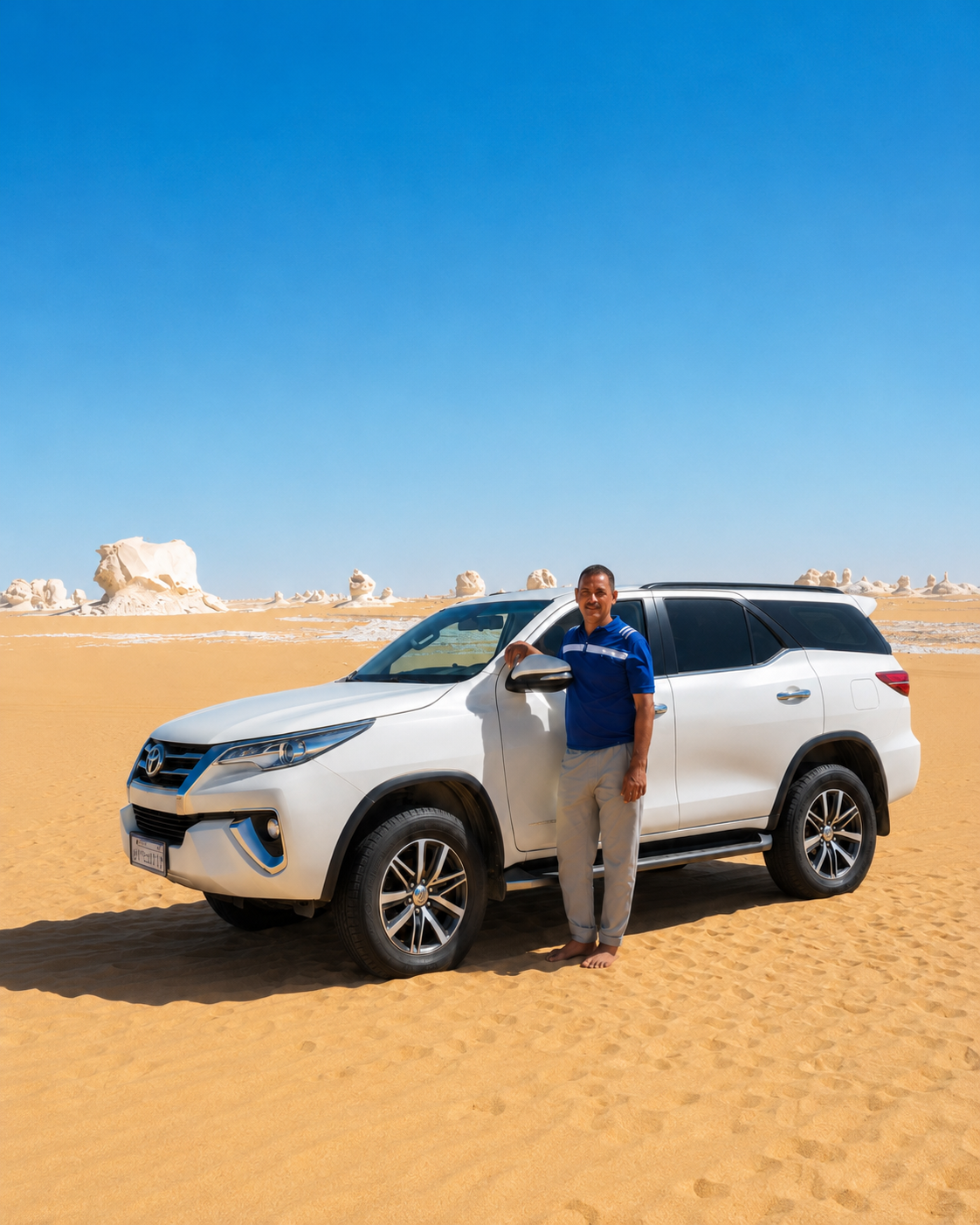
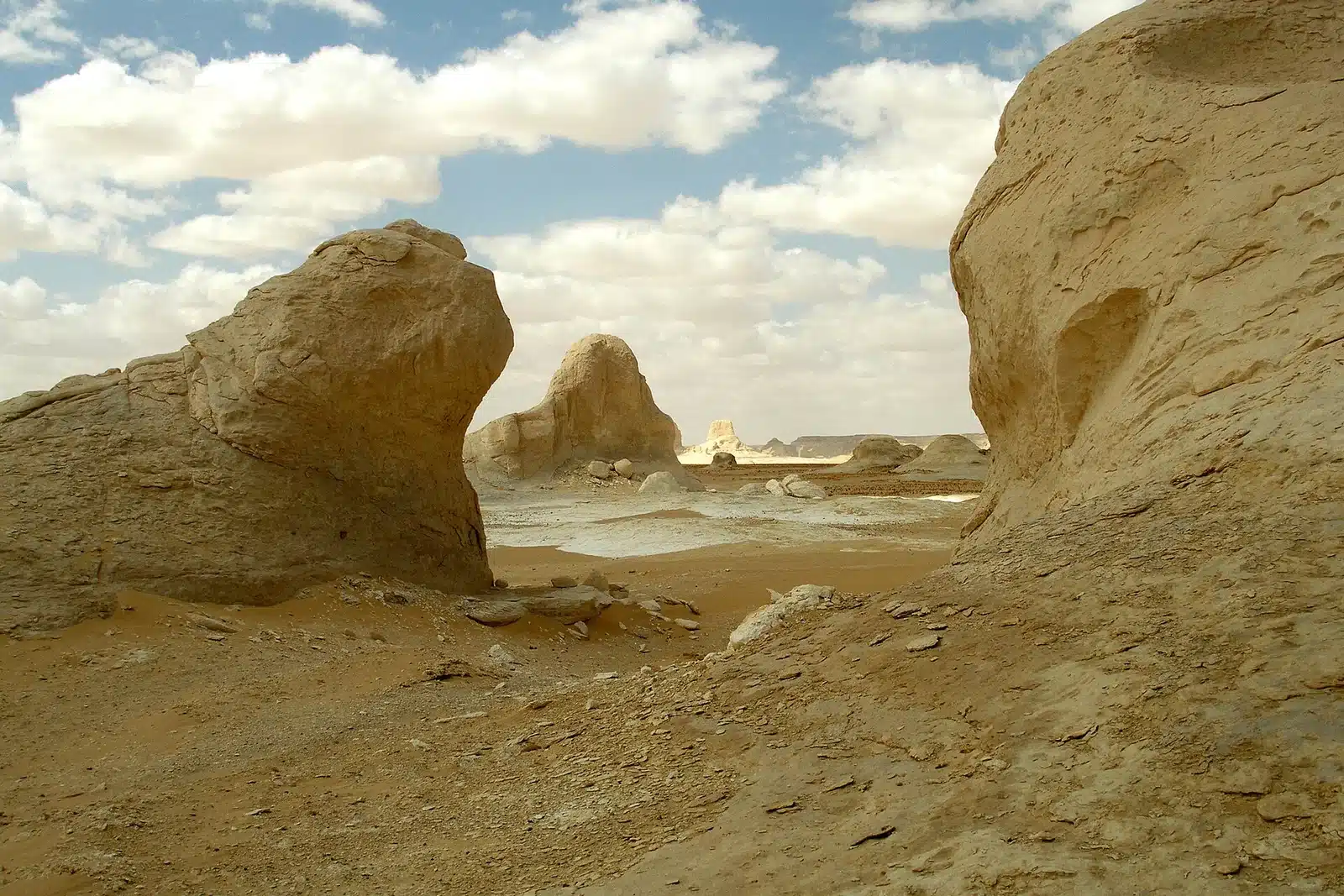
White Desert National Park Egypt is the protected chalk landscape that turns a Western Desert safari into something far more memorable than a simple drive across sand. Pale towers, rounded domes, mushroom-like rocks and open white plains stand between the Bahariya and Farafra oases. The formations look delicate because they are delicate: wind, sand and temperature changes continue to reshape them, while careless driving or climbing can damage in minutes what took thousands of years to form.
This guide explains where the protected area is, what “national park” means here, how the geology developed, which stops belong on a responsible route, how much time to allow and how to visit without harming the landscape. If you are planning the complete journey rather than researching the reserve alone, start with our White Desert Egypt safari guide and compare the two private trips linked below.
White Desert National Park Egypt: quick facts
- Official protected status: declared under Egyptian Prime Ministerial Decree No. 1220 of 2002.
- Protection type: Egypt’s current protected-area list describes the White Desert as a landscape protected area.
- Reported area: approximately 3,100 square kilometres; official documents use slightly different rounded figures.
- Governorate: New Valley Governorate in Egypt’s Western Desert.
- Nearest oasis: Farafra is the closest oasis town; most Cairo tours approach from Bahariya.
- Main landscape: chalk plains and erosional formations created from ancient marine sediment.
- Normal access: with a permitted local desert operator and a suitable 4×4 for the off-road sections.
- Best practical season: roughly October to April for milder days and cooler nights.
Official descriptions vary between “White Desert Reserve,” “Protectorate” and “National Park.” Travellers use all three names for the same protected landscape. The useful distinction is not the English label but the responsibility it creates: access, camping and vehicle movement must follow current local rules and the instructions of the protected-area authorities.
Where is White Desert National Park?
The protected landscape lies north-west of Farafra Oasis, deep in the Western Desert. Egypt’s State Information Service places it about 38 kilometres from Farafra. The asphalt road linking Bahariya and Farafra passes through the broader region, but the famous chalk fields are reached on desert tracks. A road map can therefore be misleading: seeing a nearby highway does not mean the formations are suitable for a self-drive detour.
From Cairo, the most common sequence is Cairo to Bahariya by road, a change to a local 4×4, then the Black Desert, the mineral formation described in our Crystal Mountain Egypt guide, Agabat Valley and finally the White Desert. Farafra is geographically closer to the reserve, but Bahariya has become the usual staging point for short trips from Cairo.
Is the Old White Desert the same as the national park?
Tour itineraries sometimes use “Old White Desert” for areas with dense, recognisable chalk sculptures and “New White Desert” for broader fields of pale formations. Those are practical tourism labels, not separate national parks. Both sit within the White Desert experience, and the exact route can change with permits, track conditions and conservation instructions.
Why is the White Desert protected?
The reserve protects more than photogenic rocks. It combines rare scenery, geological records, desert habitats, fossils and a tourism economy connected to oasis communities. The State Information Service notes desert trees, threatened wildlife and fossils dating back millions of years. Egypt’s environmental authority also uses zoning in its management planning, giving different places different levels of protection and permitted use.
That zoning matters for visitors. A photograph online does not prove that a vehicle can still enter the same place today. Some zones may permit controlled tourism, while stricter zones can limit vehicles or camping. A responsible guide checks the current route instead of promising access based on an old itinerary.
How the white chalk landscape formed
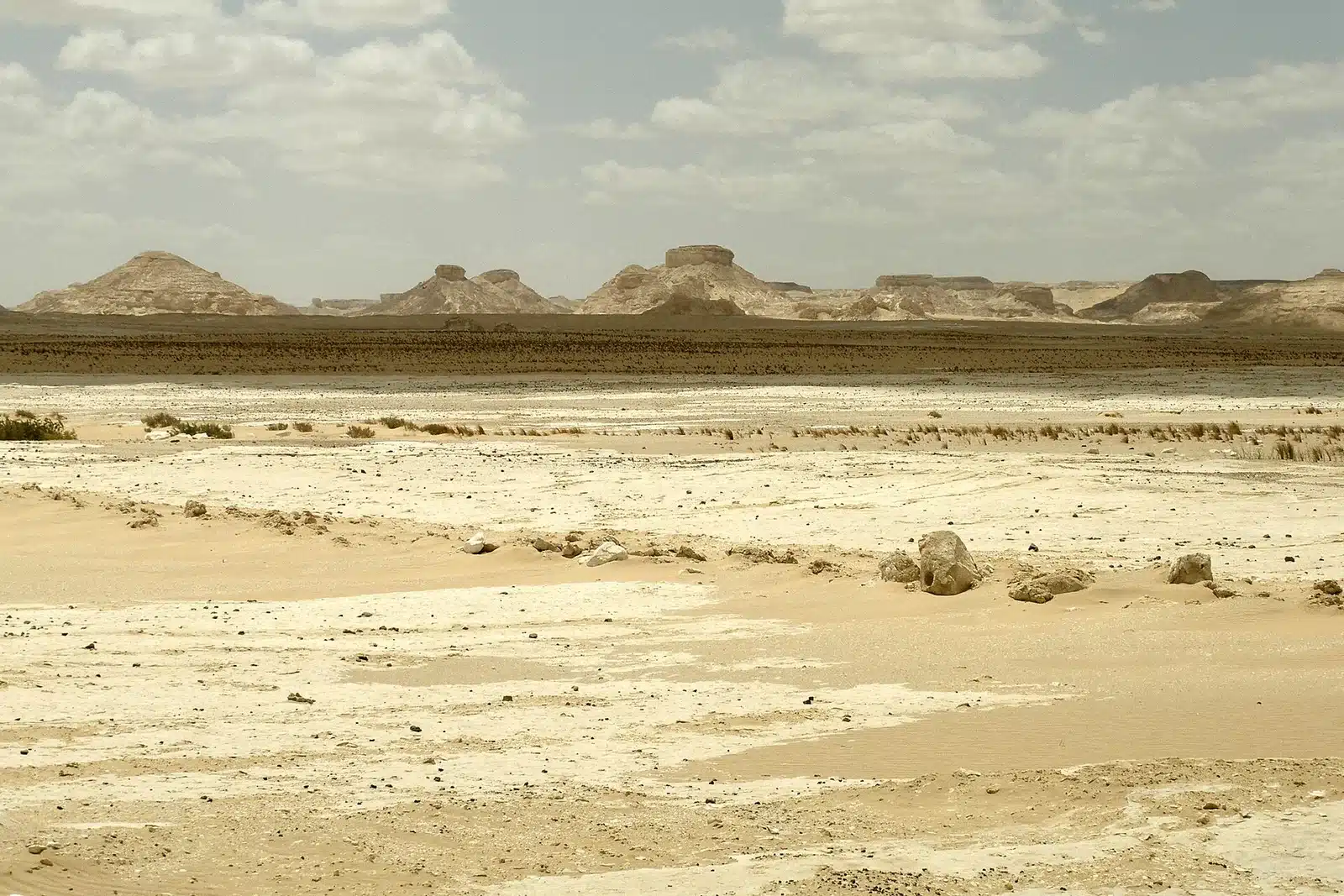
The White Desert’s colour comes mainly from chalk and limestone deposited when this part of Egypt lay beneath an ancient sea. Marine organisms contributed calcium-rich material to sediments on the seabed. Over geological time those layers compacted, rose and became exposed as the climate and land surface changed.
Wind-driven sand then worked like a slow abrasive. Softer layers eroded faster than harder ones, creating narrow bases, broad caps, windows, columns and rounded masses. Temperature changes also widen small weaknesses in the rock. The “mushrooms” are therefore not carved objects but the surviving shapes of uneven erosion.
Fossils in the limestone help explain the marine origin. They are part of the protected geological record, not souvenirs. Removing a fossil or chalk fragment strips context from the site and encourages further damage. Photograph details where they lie and leave them untouched.
What you actually see inside the protected area
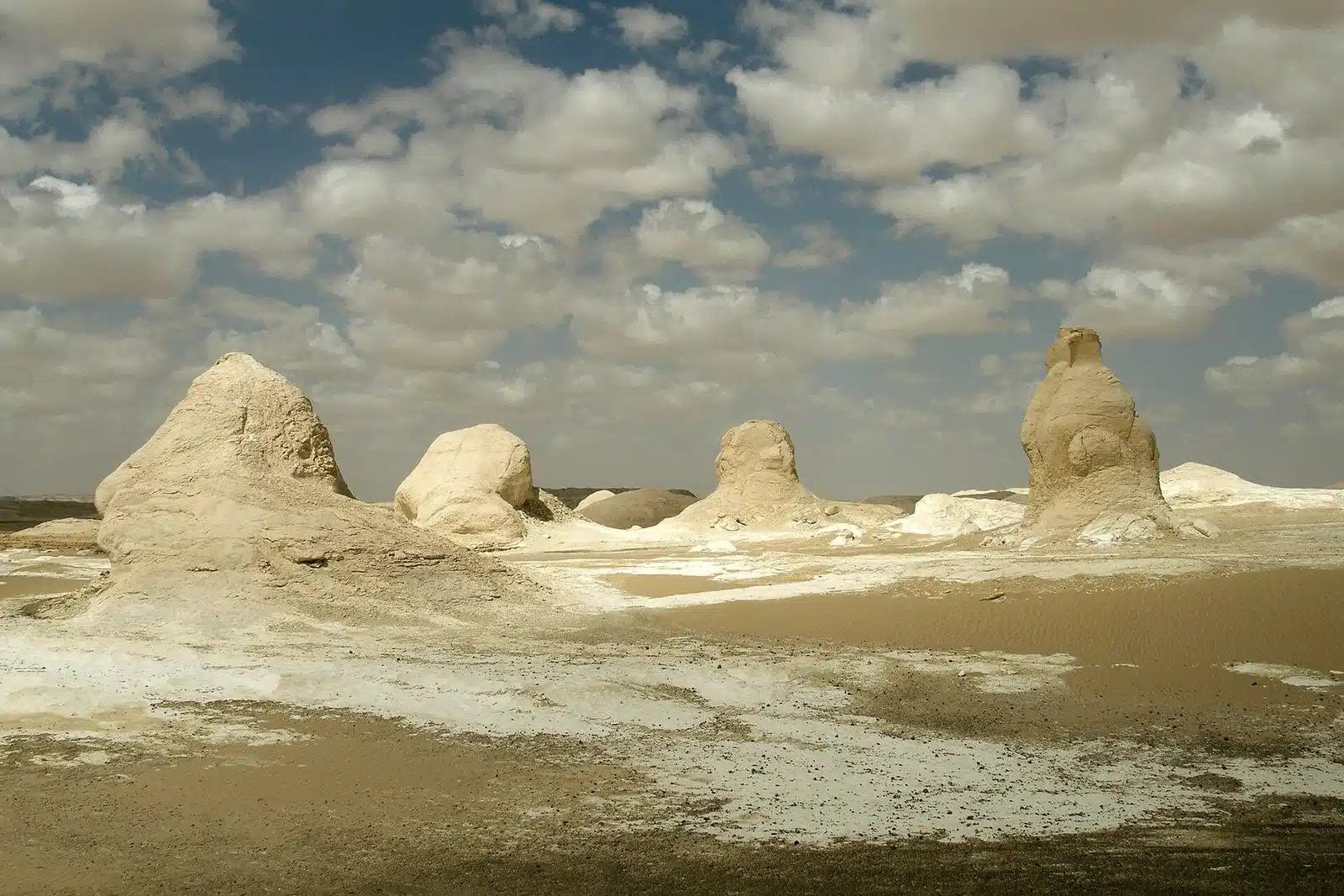
Chalk towers and mushroom formations
The iconic forms rise individually and in clusters. Their appearance changes through the day: flat midday light makes the field look almost colourless, while early and late light reveals cream, gold, grey and pink shadows. Famous shapes receive nicknames, but it is better to treat those names as orientation points rather than a checklist that encourages crowding around one fragile rock.
Wide white plains
Between the formations are broad pale surfaces that explain the “desert ice” nickname. After sunset they reflect moonlight, and on a clear night the contrast between the white ground and dark sky can be striking. Vehicle tracks are also especially visible here, which is why drivers should remain on approved routes.
Farafra depression and oasis edges
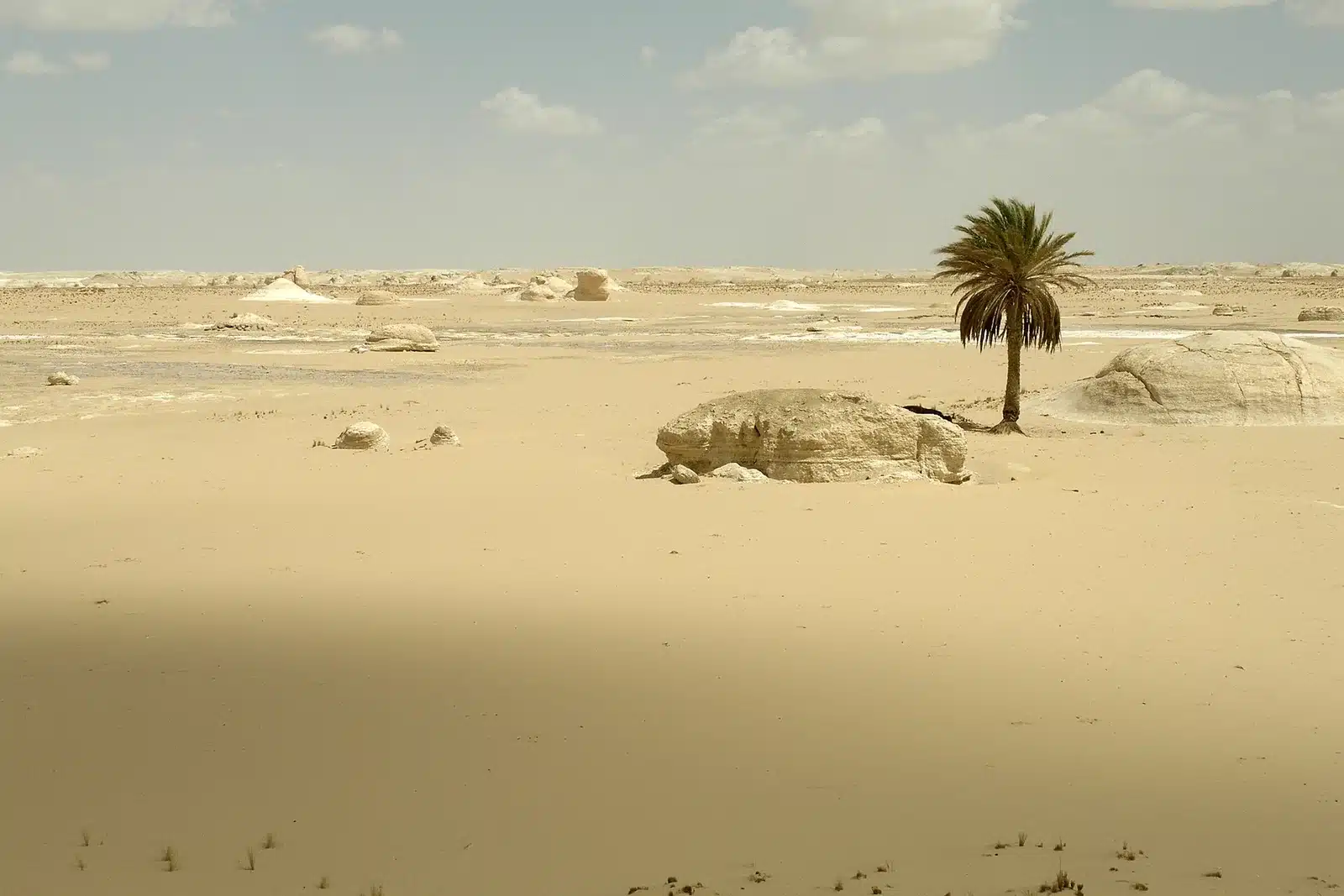
The transition from plateau to depression helps visitors understand that the White Desert is part of a larger oasis system. Palm vegetation and water-dependent life appear in places where geology allows groundwater to reach or approach the surface. These small green points are ecologically important, not convenient off-road targets.
Wildlife signs
You are more likely to notice tracks, birds or distant movement than large mammals close to a camp. Official Egyptian material identifies threatened desert wildlife within the protected area. Do not chase an animal for a photograph, leave food outside or treat a wild fox as a camp attraction. Feeding changes natural behaviour and can create conflict around future camps.
How to visit from Cairo
A proper White Desert trip is a two-stage journey. The long highway transfer reaches Bahariya Oasis. The desert section then uses a local 4×4 with a driver who understands tracks, protected-area requirements, fuel, water and communications. A private tour should name both stages instead of implying that one ordinary vehicle drives everywhere.
- Leave Cairo early: the road transfer takes much of the morning and can vary with traffic, stops and the collection point.
- Arrive in Bahariya: meet the desert team, check supplies and change vehicles when required.
- Enter the Western Desert circuit: typical stops include the Black Desert, a spring or lunch stop, Crystal Mountain and Agabat Valley.
- Reach the White Desert: explore approved formation areas on foot and by 4×4.
- Camp or continue: overnight trips set a permitted camp; longer routes allow slower exploration.
- Return through Bahariya: change back to the road vehicle for Cairo.
For the compact option, see the 2-day White Desert safari from Cairo. Travellers who want more daylight in the landscape should compare the 3-day White Desert safari. A specialist route that emphasises the southern scenery is the White Desert and Agabat Valley safari.
Two days or three days?
Two days is the practical minimum from Cairo. It includes one desert night and the main north–south circuit, but both days contain substantial driving. It suits travellers with limited time who accept a structured schedule.
Three days creates room for slower walks, a second sunset or sunrise, route changes and longer stops away from the best-known formations. It is the better choice for photography, families who dislike rushing and anyone who wants the protected landscape itself—not merely a night in a tent—to be the centre of the trip.
The right comparison is not simply “one night versus two.” Ask how many hours are spent inside the desert, where the second night is planned, whether Cairo transfers are private and which costs are included. A cheap three-day listing can still provide less meaningful park time than a well-designed private two-day route.
Camping inside White Desert National Park
Camping is one of the strongest experiences, but it must follow the current zoning and permission system. A legitimate camp is placed on a durable, approved surface rather than against a fragile formation. The crew should carry water, food, bedding, waste bags, fire equipment and reliable transport. Human waste and washing water require the same planning as visible rubbish.
Expect a simple mobile camp, not a permanent hotel. Ask whether the price includes a tent, mattress, sleeping bag or blankets, meals, drinking water and a private toilet arrangement. Nights can be cold even after a warm day, particularly from December through February. Read our dedicated camping and safari planning guide for a complete packing list.
Responsible rules that protect the park
- Use an authorised local operator who confirms current permits and access rules.
- Keep vehicles on established or officially approved tracks.
- Do not climb chalk formations; the surface can break under modest pressure.
- Never collect chalk, crystals, fossils, plants or wildlife remains.
- Do not scratch names, stack rocks or move fossils for a photograph.
- Pack out plastic, food waste, tissues, cigarette ends and organic leftovers.
- Avoid amplified music, drones without permission and bright lights aimed at wildlife.
- Use small campfires only where permitted and only with fuel brought by the crew.
- Keep distance from animals and never feed foxes.
These rules are not decorative “eco” language. Chalk is soft, desert recovery is slow and tyre marks can remain visible for years. A good operator will sometimes reject a requested stop because the track is closed or the surface is vulnerable. That is evidence of competence, not poor service.
Best time to visit
October through April is generally the most comfortable window. Daytime temperatures are milder, but winter nights can become genuinely cold. March and April can bring wind or dust; summer days are intensely hot and increase the consequences of vehicle or water problems.
Weather is only part of the decision. Moon phase changes night photography, holiday dates affect availability, and unusual rain can alter tracks. A responsible operator may adjust the route for wind, visibility, surface conditions or instructions from local authorities.
What to pack
- Passport and a digital backup of your identity page.
- Layered clothing, including a warm fleece or jacket for camp.
- Closed shoes with grip plus easy footwear for camp.
- Sun hat, sunglasses and high-protection sunscreen.
- Reusable water bottle and personal medicines.
- Headlamp with spare batteries.
- Power bank; do not expect charging in the desert.
- Small day bag and dust protection for electronics.
- Toilet paper and personal hygiene supplies packed for removal after use.
Do not overpack hard suitcases for the off-road section. A soft overnight bag is easier to secure in a 4×4 and inside a tent. Confirm sleeping equipment before departure rather than assuming a booking photo represents the actual season’s setup.
How to choose a responsible tour
Ask for a written itinerary, group size, vehicle arrangement, camp equipment and cancellation terms. The operator should state whether the price includes Cairo transfers, permits, entrance charges, 4×4, meals, water and accommodation. “All inclusive” is not useful unless each item is named.
For a private trip, ask who will share the highway vehicle, the 4×4 and the camp. A website may call a departure private while combining guests for the desert section. Egypt Safari Travel designs private routes around your party; use the contact page or the visible WhatsApp button to send your dates, group size, hotel location and preferred duration.
Frequently asked questions
Is White Desert National Park open every day?
Access depends on current permits, protected-area instructions, security procedures and track conditions, not only on conventional opening hours. Confirm the live situation with an authorised operator before leaving Cairo.
Can I visit without a tour?
The famous off-road areas should not be treated as an independent rental-car excursion. The route requires local navigation, a suitable vehicle, supplies and compliance with current permit and conservation rules.
How far is the White Desert from Cairo?
The journey is long enough that a same-day return would undermine the experience and increase fatigue. Short tours normally use Bahariya as the gateway and include at least one night. Drive time varies, so avoid plans built around a precise arrival minute.
Is White Desert National Park suitable for children?
It can be excellent for children who tolerate long transfers and basic camping. Parents should request a private vehicle, suitable child restraints, family-size sleeping arrangements and a slower three-day plan where possible.
Are there toilets and showers?
Permanent visitor facilities are limited in the off-road landscape. Ask the operator exactly what private toilet setup is carried and where washing is possible. A photo of a camp does not confirm the sanitation arrangement.
Can I fly a drone?
Do not assume that a drone is permitted. Egypt has strict rules covering drone import and use, and protected areas may impose additional restrictions. Obtain formal approval before travelling with one.
Why do official sources show different park areas?
Some official pages round the figure to about 3,000 square kilometres, while newer lists report approximately 3,133.5 square kilometres and older documents use 3,010. The protected status and Decree No. 1220 of 2002 are consistent; the variation reflects document dates and rounding.
Plan a private White Desert journey
Choose two days for a compact first visit or three days for better pacing and more time within the landscape. Send your travel dates, party size, Cairo pickup area and whether you prefer standard camping or extra comfort. We will build the route around current access rules and explain every included service before you confirm.
Useful official references: the Egyptian State Information Service description, the Egyptian Environmental Affairs Agency protected-area information and Experience Egypt’s desert excursion guidance. Regulations can change, so current local confirmation overrides any static webpage.