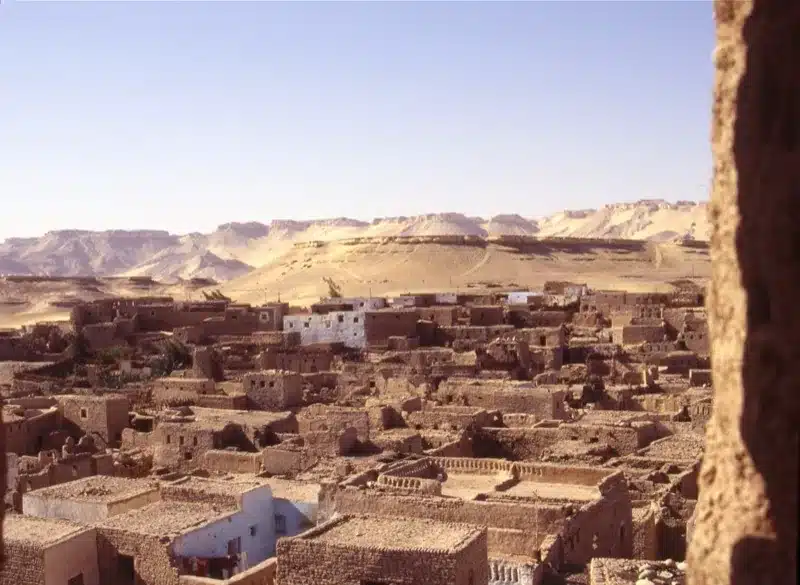
Kharga Oasis Egypt is the southern anchor of the Western Desert oasis circuit and the easiest of the deep-desert oases to combine with Luxor. It is not a quick White Desert stop. Kharga rewards travellers who want archaeology, caravan-route history, palm agriculture and a slower road journey through Egypt beyond the Nile Valley.
This guide explains what is genuinely worth seeing, how many days to allow, how Kharga connects with Dakhla and Luxor, what a private tour should include and when the long journey makes sense. It is written for independent-minded international visitors who want a realistic plan rather than a list of monuments without distances or logistics.
Kharga in one sentence
Choose Kharga when you have at least three days for Dakhla and Kharga together, or when you want to finish a longer oasis circuit in Luxor instead of driving all the way back to Cairo.
Where is Kharga Oasis?
Kharga lies in Egypt’s New Valley Governorate, west of the Nile and north-west of Luxor. UNESCO describes the Kharga depression as roughly 180 kilometres long and 15–30 kilometres wide, about 200 kilometres west of the Nile. It is the largest and southernmost oasis on the paved circuit that links Bahariya, Farafra, Dakhla and Kharga.
The geography explains the itinerary. Kharga is not a single compact village surrounded by five attractions. Archaeological sites are spread along a long north–south depression, so a private vehicle and a planned sequence matter. Travellers approaching from Dakhla enter from the north-west; those continuing to Luxor leave toward the Nile Valley. That makes Kharga a natural final oasis rather than an out-and-back excursion from Cairo.
Why Kharga matters beyond sightseeing
Kharga stood at the meeting point of major caravan routes. The north–south Darb al-Arba’in connected Middle Egypt with Sudan, while an east–west route connected Kharga and Dakhla. Water, cultivated land and a defensible desert position turned the oasis into a strategic stop for administrators, merchants, soldiers and pilgrims across many periods.
The result is an unusually layered landscape. Persian-period temples, Roman forts, early Christian chapels, Islamic settlements and modern New Valley life occupy the same depression. Kharga is therefore strongest as a story: how people moved, controlled water and protected travel across the Western Desert. A guide who can connect the sites makes a greater difference here than at a single famous monument.
Hibis Temple: the essential Kharga monument
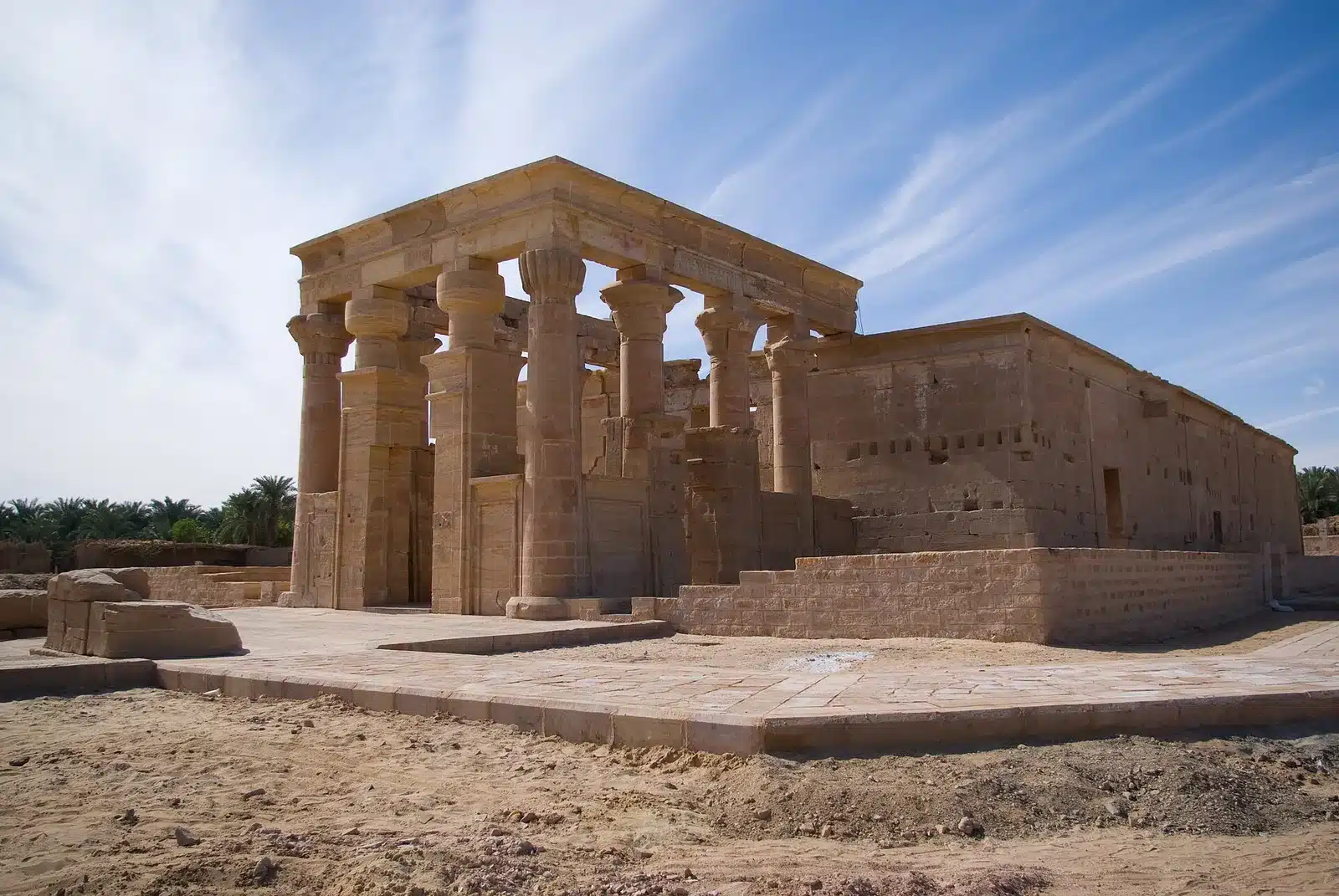
Hibis Temple is the largest and best-preserved temple in Kharga. Egypt’s official tourism portal notes that construction and decoration developed through successive Dynastic, Persian, Ptolemaic and Roman periods. Its importance is not only architectural. The temple shows how a remote oasis remained connected to the religious and political language of the Nile Valley.
Allow enough time to see the approach, gateways, reliefs and the relationship between the temple and the surrounding depression. A rushed photograph from outside misses the reason Hibis belongs near the start of a Kharga visit: it gives historical context for the smaller temples and settlements seen later.
Al-Bagawat Necropolis
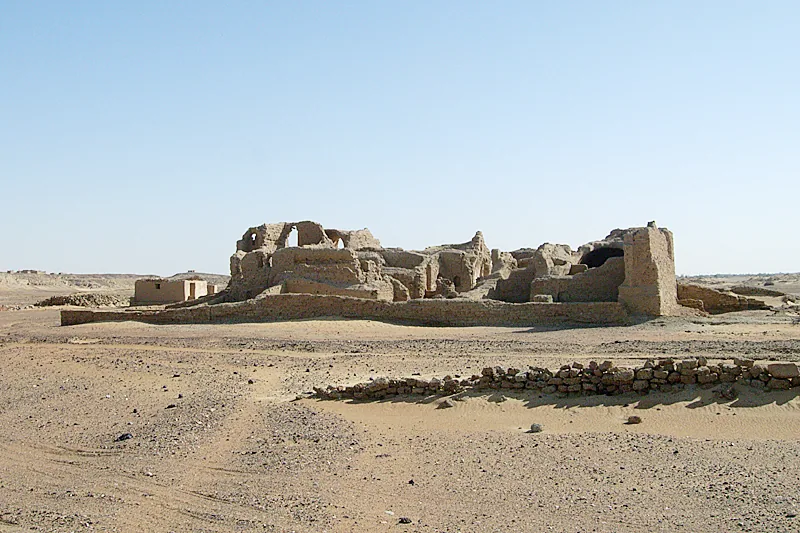
Al-Bagawat is one of Kharga’s most distinctive sites: a large early Christian cemetery of mud-brick chapels and tombs. Official Egyptian tourism material describes it as one of the oldest Christian burial grounds in the world and notes the mixture of pharaonic and Christian practices. Its domed structures create a completely different visual experience from a Nile Valley temple.
Visit with respect and patience. Some interiors preserve painted biblical scenes, but access can vary and fragile decoration should never be touched. The strongest photographs often come from the lanes between the chapels, where repeated domes sit against the desert escarpment. Hibis and Bagawat pair well because they show two very different chapters of Kharga’s religious history without a long transfer between them.
Qasr Dush and the southern Kharga route
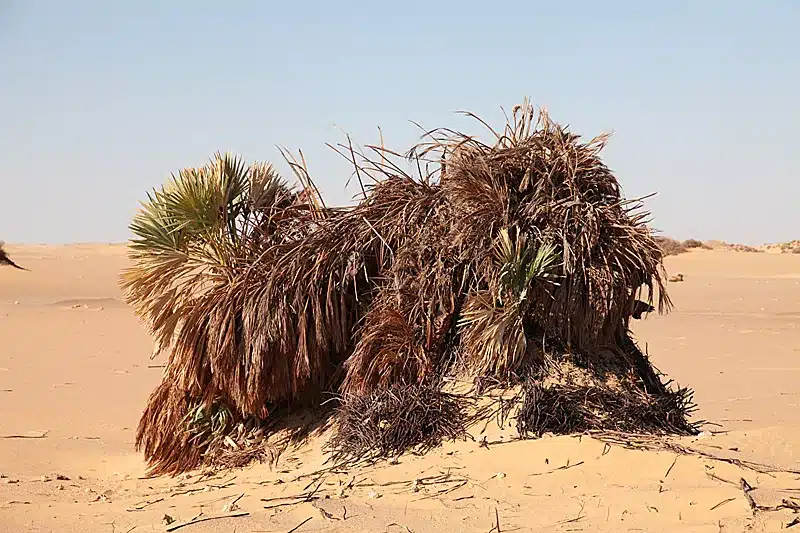
Qasr Dush is a major Roman-period site in the southern part of the oasis. The official tourism portal highlights its first-century structure and the sunset views over the surrounding land. Reaching it requires a deliberate southward drive, so it should not be added casually to a short city itinerary.
Dush works best in a full-day southern route, potentially combined with Baris and other points agreed with a local operator. The reward is spatial context: temple, settlement, palms and open desert appear together rather than as an isolated object in a museum. Ask whether current access, road conditions and opening arrangements have been confirmed before departure.
Other worthwhile Kharga stops
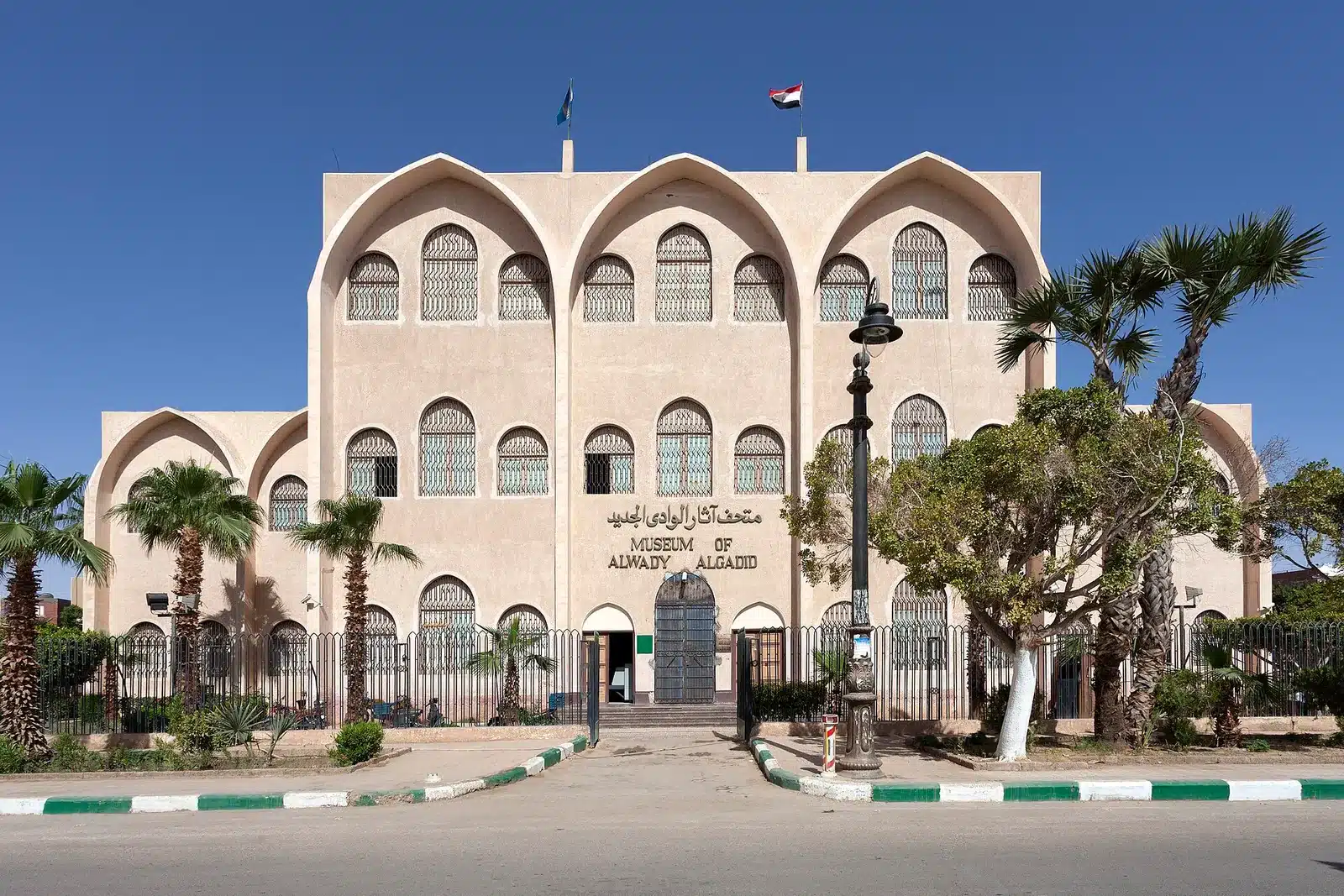
- New Valley Museum: useful for understanding objects from across Kharga and Dakhla, particularly when outdoor heat is strong.
- Al-Ghweita Temple: a Persian-period temple built over an earlier settlement, best included when the route and opening hours fit.
- Qasr al-Zayan: a Greek-period temple dedicated to Amun-Hibis and a logical companion to southern sites.
- Umm al-Dabadib and Labakha: remote Roman fortified landscapes that require more time, current access checks and suitable desert logistics.
- Hot springs and palm agriculture: important for seeing Kharga as a living oasis rather than only an archaeological zone.
How many days do you need in Kharga?
| Time | Realistic plan | Best for |
|---|---|---|
| 1 day | Hibis, Bagawat and selected city-area stops | Travellers arriving from Dakhla and leaving for Luxor |
| 2 days | Main northern sites plus a southern route toward Dush | Archaeology and photography |
| 3+ days | Remote forts, desert landscapes and slower local experiences | Special-interest journeys |
One night is the practical minimum when Kharga is part of the oasis circuit. Two nights give breathing room and reduce the pressure to combine northern and southern sites in one long day. A dedicated Kharga trip from Cairo is possible but inefficient; most visitors gain more by pairing it with Dakhla Oasis and ending in Luxor.
Kharga from Cairo, Dakhla or Luxor
From Cairo, the direct road journey is long enough that Kharga should be treated as a multi-day trip. From Dakhla, the route is part of the natural Western Desert circuit. From Luxor, official tourism guidance estimates approximately five hours by road, although exact time depends on pickup point, road conditions, stops and checkpoints.
Public transport may connect major towns, but it does not create a workable archaeological itinerary. Sites are dispersed, opening arrangements can change and a visitor still needs local transport. A private route is more expensive than a bus seat, yet it converts a transit day into a meaningful tour and allows the journey to continue in one direction.
A practical 7-day oasis circuit ending in Luxor
- Day 1: Cairo to Bahariya, oasis viewpoints and hotel.
- Day 2: Black Desert, El Heiz, Crystal Mountain, Agabat and White Desert camp.
- Day 3: White Desert sunrise and Farafra Oasis.
- Day 4: Farafra to Dakhla, village and spring stops.
- Day 5: Al-Qasr, Deir el-Hagar, Muzawwaqa and Dakhla overnight.
- Day 6: Dakhla to Kharga, Hibis and Bagawat.
- Day 7: Southern Kharga highlights, then continue to Luxor.
This is a framework, not a promise that every site will be open. A responsible operator checks current access and adjusts the sequence without pretending a closed or distant stop can be forced into the day. Read our Egypt desert tours from Cairo guide for shorter alternatives.
Best time to visit Kharga Oasis
October to April is the main comfort season for most international travellers. Winter days are pleasant for walking among exposed sites, while nights can be cold. March, April, October and November often offer a compromise between moderate days and less severe night temperatures. Summer can be extremely hot, especially at unshaded archaeological sites.
Do not plan only around an average temperature. Wind, dust, the condition of remote tracks and the opening status of sites matter. Carry water, sun protection, layered clothing and a small personal medical kit. The longer circuit also requires luggage that works for hotels and a desert camp rather than a single city suitcase.
Safety, permits and choosing an operator
Western Desert access and route permissions can change. Use a licensed operator that confirms the current itinerary shortly before departure, works with experienced local drivers and can explain which sections use paved roads and which require a 4×4. For multi-day remote camping, official tourism guidance recommends additional support for longer expeditions.
Ask for the vehicle type, number of passengers per vehicle, water plan, accommodation names, meal coverage, entrance-fee policy and a written cancellation policy. Avoid an itinerary that promises every oasis in too few days. Fatigue is a safety issue, and repeated late arrivals reduce both the experience and the operator’s margin for route changes.
What should a private Kharga tour include?
- Air-conditioned road transport and the correct 4×4 support for off-road sections.
- Licensed guide arrangements and current route checks.
- Named accommodation, breakfasts and specified lunches or dinners.
- Clear entrance-fee inclusions rather than “all sightseeing” with no detail.
- Water, rest stops and realistic daily driving limits.
- Pickup and final drop-off points, especially when finishing in Luxor.
Kharga tour cost and quote comparison
Kharga rarely has a meaningful one-click price because it is usually one stage of a longer private circuit. The total depends on where the route begins and ends, the number of hotel nights, vehicle days, group size, guide coverage and whether remote forts or camping are included. A Cairo–Kharga return quote also carries more road cost than a one-way Dakhla–Kharga–Luxor section.
Compare quotes line by line. One operator may show a low daily figure but exclude entrance tickets, the Luxor transfer or the Dakhla vehicle. Another may include full-board meals, a private vehicle and named hotels. Send the same dates, route and room requirements to every operator before judging price. If a quote cannot name the overnight towns, it is not detailed enough for a multi-day desert journey.
Photography and a comfortable daily pace
Kharga photographs best when the itinerary respects light and heat. Hibis works well in the morning; Bagawat gains depth from low side light; Qasr Dush is strongest when the southern landscape is not flattened by midday glare. A schedule built only around opening hours can still produce poor timing, so discuss photography priorities before departure.
Keep one flexible hour each day instead of filling every gap. Checkpoints, local opening arrangements and meal preparation can change the sequence. That buffer prevents a minor delay from turning sunset into a high-speed drive. It also gives the guide room to add a spring, palm grove or village stop that reflects the living oasis rather than another hurried monument.
Build a route around your available days
Send your dates, number of guests and whether you want Cairo–Luxor, Luxor–Cairo or a Dakhla–Kharga section. We will suggest a realistic private sequence and written inclusions.
Frequently asked questions
Is Kharga Oasis worth visiting?
Yes for travellers interested in temples, early Christian archaeology, caravan history and a complete Western Desert circuit. It is less suitable as a rushed day trip from Cairo.
Can you travel from Kharga to Luxor?
Yes. Kharga is commonly linked with Luxor by road, making it a practical final stop after Dakhla. Arrange the vehicle and current route details in advance.
What are the top Kharga attractions?
Hibis Temple and Al-Bagawat are the essential first stops. Qasr Dush, the New Valley Museum, Al-Ghweita and Qasr al-Zayan suit a longer visit.
How long should I stay?
Allow one night for the main sites and two nights for a less rushed plan that includes the southern oasis.
Do I need a guide?
A licensed guide and arranged transport are strongly recommended because the sites are dispersed and current access or route requirements may change.
Continue planning the Western Desert
Compare Farafra Oasis, the Black and White Deserts and our Bahariya tour from Cairo. For a shorter first desert experience, the live 2-day White Desert safari starts from Cairo and focuses on the classic landscape route.
Sources and photo licences
Planning facts were checked against Experience Egypt: Al-Kharga Oasis, Experience Egypt: Dakhla and Kharga and the UNESCO Kharga Oasis tentative-list record. Images are credited in their captions and are used under the stated Creative Commons licences via Wikimedia Commons.