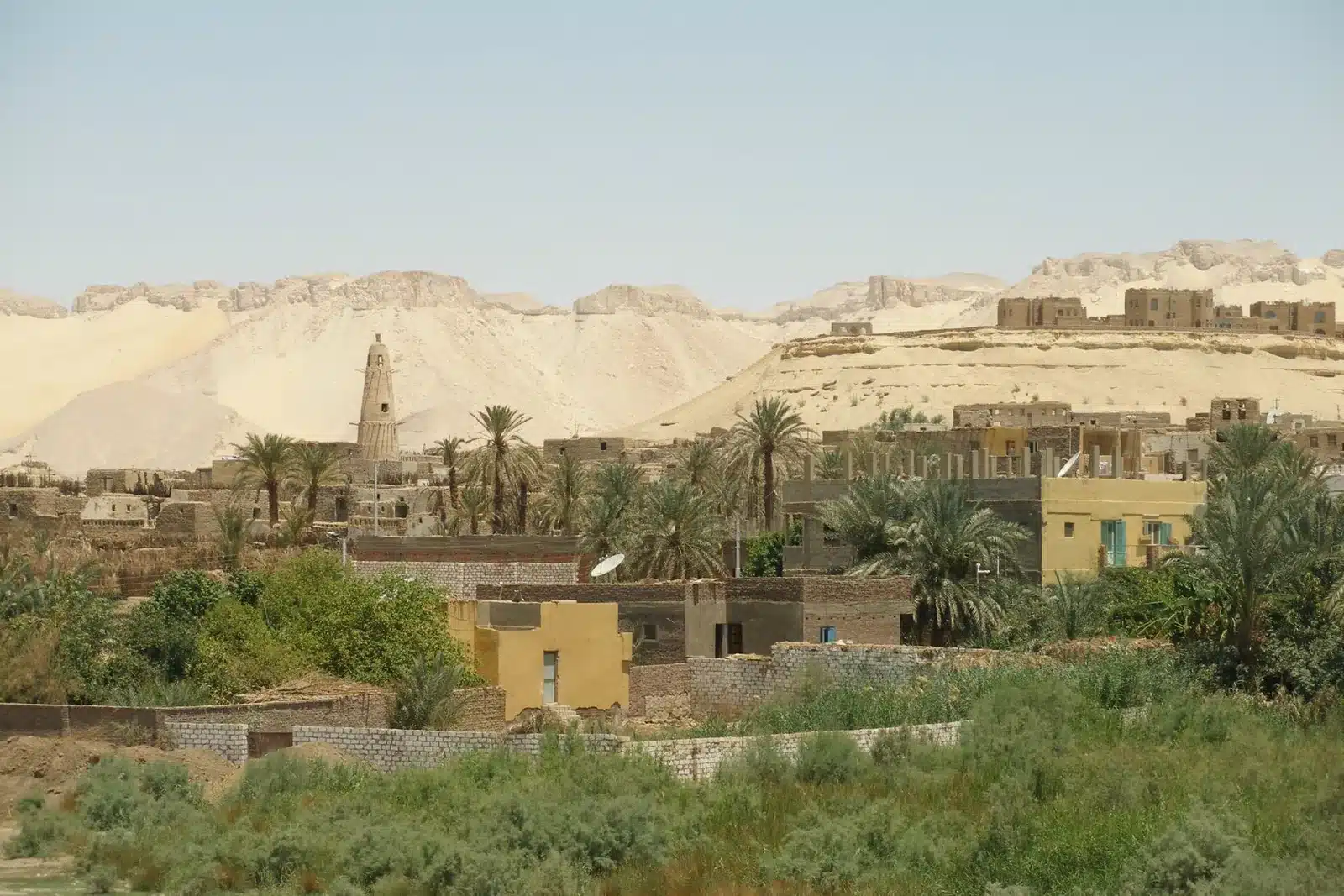
Dakhla Oasis Egypt is the green, historic middle stage of the Western Desert circuit. Its palm groves, mud-brick towns, Roman temples and Old Kingdom sites are spread across a broad depression rather than concentrated around one resort. Travellers who rush through on the way to Kharga miss the feature that makes Dakhla special: the relationship between living villages and several thousand years of oasis history.
This guide builds a realistic two-day plan around Al-Qasr, Deir el-Hagar, Muzawwaqa, Balat and Mut. It also explains how Dakhla fits between Farafra and Kharga, when to visit and what to ask before booking a private oasis circuit.
Quick planning answer
Allow two nights if Dakhla is one stage of the full oasis circuit. One rushed night can cover Al-Qasr and a temple, but two days let you include Balat or Muzawwaqa without turning the visit into a race.
Where is Dakhla Oasis?
Dakhla lies west of Kharga in Egypt’s New Valley Governorate. UNESCO describes a depression about 55 kilometres long and 10–20 kilometres wide, while Egypt’s official tourism portal presents it as a series of settlements spread along the highway. Mut is the modern administrative centre, Al-Qasr is the best-known historic settlement and Balat preserves much earlier archaeological layers.
The road pattern shapes the tour. Dakhla is normally approached from Farafra and continues east toward Kharga. It works poorly as a short return trip from Cairo but very well inside a six- to eight-day Cairo–Luxor circuit. The paved oasis road handles the long transfers; a local vehicle and guide connect the archaeological sites, villages, springs and desert viewpoints.
Al-Qasr: Dakhla’s medieval heart
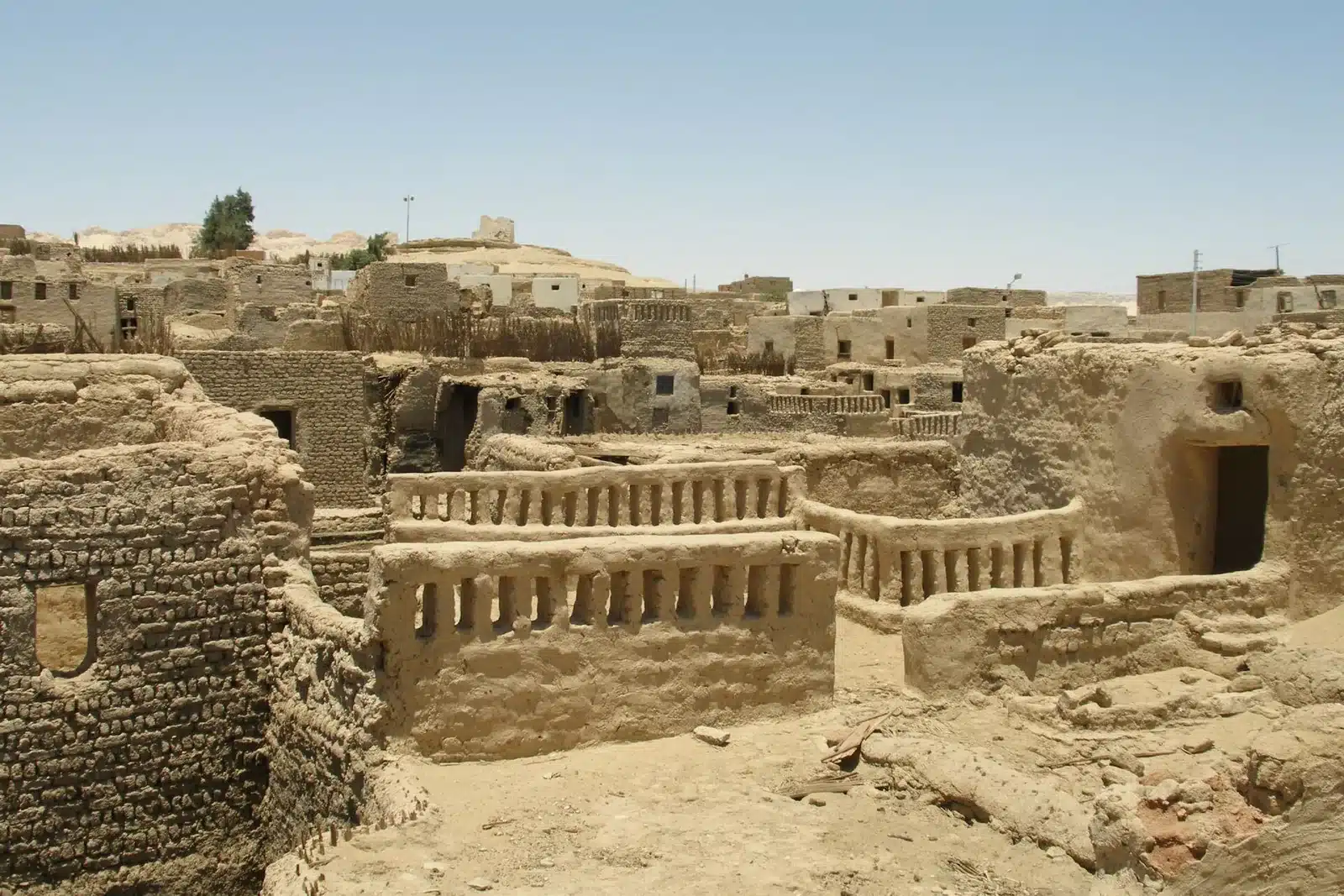
Al-Qasr was once the medieval capital of Dakhla. Its narrow lanes, mud-brick houses, carved wooden lintels and the 21-metre minaret of the Nasr al-Din Mosque form the oasis’s most atmospheric walk. This is not an abandoned film set. The town records how architecture adapted to shade, heat, privacy and limited local materials.
Visit slowly with a local guide. Details are easy to miss: reused stone blocks, covered passages, family doorways and changes in building technique. Early morning or late afternoon gives softer light and makes the walk more comfortable. Respect residents, ask before photographing people and avoid climbing fragile structures.
Deir el-Hagar Temple
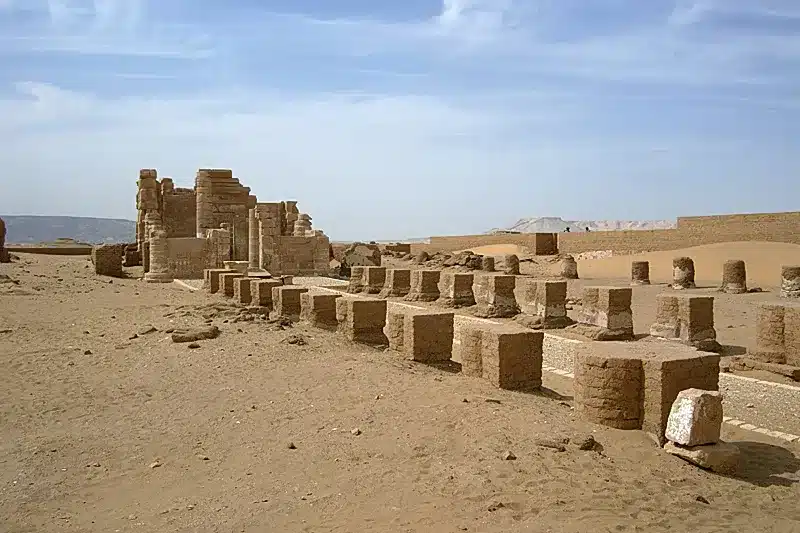
Deir el-Hagar is one of Dakhla’s essential monuments. Egypt’s official tourism portal describes the restored temple as impressively preserved and notes cartouches of four Roman rulers. The temple was dedicated to the Theban triad and stands in an open desert setting that helps visitors understand why an oasis sanctuary felt different from a Nile-side complex.
The gateway, hypostyle spaces and sanctuary reward explanation. Graffiti left by early travellers is also part of the site’s later history, though modern visitors should never add to it. Combine Deir el-Hagar with Al-Qasr because they are geographically and thematically complementary: one is a formal temple landscape and the other an evolved Islamic town.
Muzawwaqa Necropolis
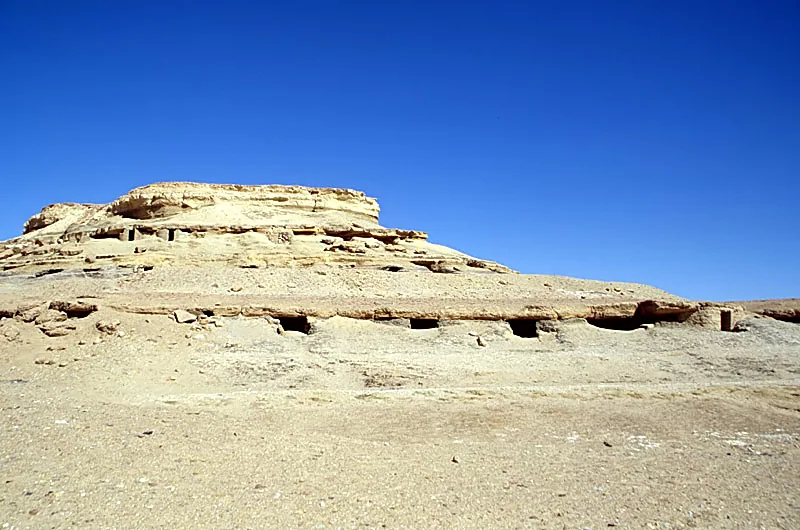
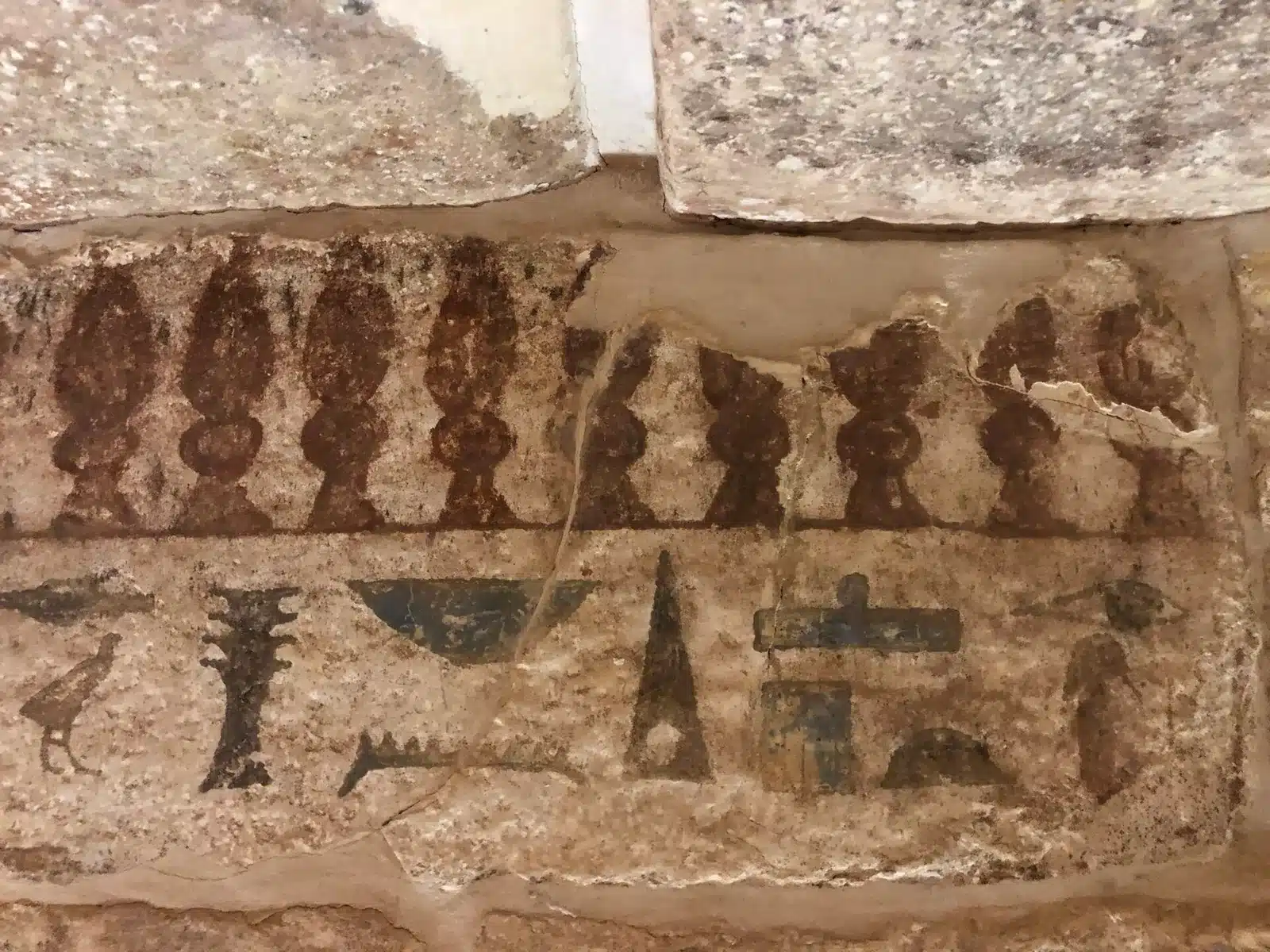
Muzawwaqa lies north of Mut and contains hundreds of Roman-period rock-cut tombs. Two painted tombs are particularly noted for their surviving decoration. Access to individual interiors can vary because conservation comes first, so confirm current opening arrangements rather than booking an itinerary around an assumed interior visit.
Even when access is limited, the hill and wider setting help explain the necropolis. A responsible guide distinguishes what is open today from what older guidebooks describe. This is especially important in Dakhla, where a persuasive online itinerary may list every tomb without checking whether the public can actually enter.
Balat, Ain Asil and Qila al-Dabba
Balat adds an older chapter. Official Egyptian tourism material identifies it as the former Old Kingdom capital of Dakhla and describes Ain Asil and the Qila al-Dabba necropolis as a well-preserved settlement and monumental Sixth Dynasty burial area. This is one reason Dakhla deserves more than a single afternoon: the oasis story begins long before its Roman temples and medieval town.
Balat is best included on a day that does not already contain several distant northern sites. Archaeology enthusiasts may prioritise it over a long spring stop; casual visitors might choose Al-Qasr and Deir el-Hagar first. A good private tour makes that choice explicit instead of pretending every guest needs the same checklist.
Villages, springs and daily oasis life
Dakhla is more than archaeological entrances. Date palms, fields, wells, irrigation channels and mud-brick villages reveal how water makes settlement possible in a hyper-arid desert. UNESCO notes that deep artesian wells support cultivation in Dakhla and Kharga, with dates, olives and other fruit among the principal crops.
A spring stop can be relaxing, but conditions vary. Ask whether the selected spring is suitable for bathing, whether changing facilities exist and whether the visit is private or shared with local users. Respect local customs, use modest swimwear where appropriate and do not assume every warm pool is a tourist spa.
How many days do you need in Dakhla?
| Stay | Suggested focus | Compromise |
|---|---|---|
| 1 night | Al-Qasr plus Deir el-Hagar | Little time for Balat or Muzawwaqa |
| 2 nights | Main monuments, a village walk, spring and sunset | Still a structured itinerary |
| 3 nights | Slower archaeology, local crafts and desert edges | Requires a longer overall trip |
For a first oasis circuit, two nights is the strongest balance. Arrive from Farafra, use the next day for the main sites and leave for Kharga after breakfast on the third day. This avoids arriving late, sleeping and leaving immediately—the pattern that makes many multi-oasis tours feel like transport rather than travel.
A realistic two-day Dakhla itinerary
Day 1: arrival, Mut and Al-Qasr
Arrive from Farafra around midday or early afternoon, depending on stops. Check in, eat lunch and visit Al-Qasr when the light and temperature become comfortable. Finish at a viewpoint or spring, then have dinner at the lodge. Do not add Muzawwaqa automatically if the transfer has already been long.
Day 2: temple and archaeology
Start with Deir el-Hagar, continue to Muzawwaqa if open, then choose Balat or a longer local-life route. The order depends on the lodge location and the next day’s direction. Confirm opening times the evening before, especially on public holidays or during conservation work.
Dakhla inside the Western Desert circuit
The classic sequence is Cairo, Bahariya, the Black and White Deserts, Farafra, Dakhla, Kharga and Luxor. Dakhla is the point where the journey changes from landscape-led safari to a denser mix of archaeology and inhabited oasis culture. That contrast keeps a longer circuit from becoming a week of similar desert photographs.
If you only have two or three days, do not force Dakhla into a Cairo return itinerary. Choose a Bahariya tour from Cairo or the 2-day White Desert safari. If you have six or more days, read our complete oasis-circuit guide.
Getting to Dakhla
Private road transport is the practical choice for a multi-stop tour. The transfer from Farafra is long but straightforward when broken with planned stops. Dakhla to Kharga is the next natural stage. Flights and public services should never be assumed to run on a tourist-friendly daily schedule; verify current operations close to travel.
A private driver does more than move luggage. The vehicle must account for water, site distances, rest stops and the final connection to Luxor or Cairo. Ask whether the same road vehicle continues throughout the circuit and where local 4×4 vehicles replace it for off-road sections.
Best time to visit Dakhla Oasis
October to April offers the most comfortable walking weather. December and January can bring cold nights, particularly in desert-edge lodges. March, April, October and November are popular for a milder balance. Summer heat makes exposed temples and long road transfers difficult.
Pack breathable day clothing, a warm layer, closed shoes, sun protection and a light scarf for dust. Accommodation can be simple and remote, so bring essential medication, a power bank and offline copies of confirmations. Mobile coverage should not be treated as guaranteed throughout the desert road.
Choosing accommodation
Dakhla’s most memorable stays are often small eco-lodges and desert-style hotels rather than international chains. Ask for the exact property, room category, private bathroom, air-conditioning or heating, hot-water arrangements and meal plan. “Eco-lodge” describes a style, not a universal comfort standard.
Location matters. A beautiful lodge far from Al-Qasr may add driving the next morning. A central Mut hotel may be practical but less atmospheric. Tell the operator whether your priority is character, comfort, archaeological access or a quiet desert setting so the recommendation matches you.
Safety and responsible travel
Use a licensed operator that confirms route conditions and any required permissions. Avoid leaving the paved oasis circuit for remote tracks without an experienced local team. Longer desert sections need water reserves, communications planning and a realistic backup plan.
Dakhla’s historic towns are fragile living environments. Do not climb mud-brick walls, remove pottery fragments or photograph residents without permission. Buying baskets, pottery or woven products directly from local makers creates more value than treating the villages only as a background.
Dakhla tour cost and what changes the price
Dakhla is normally priced inside a private multi-day circuit rather than as a fixed excursion. The largest cost is transport: reaching the oasis, continuing to Kharga or returning north, and keeping a suitable vehicle and driver with the group. Hotel standard, room occupancy, guide days, entrance fees and the number of included meals then change the per-person rate.
A couple travelling privately usually pays less per person than a solo guest because the road vehicle is shared. A family may need a larger vehicle or two rooms. Ask for named accommodation and a written route before comparing offers. “Five-day desert tour” is not enough information if one quote includes Dakhla sightseeing and another simply sleeps in Mut while passing through.
Photography, food and pacing
Al-Qasr is strongest early or late when narrow lanes hold texture and residents are beginning or ending the day. Deir el-Hagar and Muzawwaqa are exposed, so schedule them away from the harshest heat. Balat deserves time for explanation; adding it as a ten-minute stop weakens the reason for travelling so far.
Meals in Dakhla are often simple and local: bread, rice, vegetables, chicken, dates and seasonal products. Tell the operator about allergies before the circuit starts because remote alternatives are limited. Build a proper lunch break into the day rather than eating in the vehicle between sites. The slower rhythm is part of the oasis experience and helps guests arrive at the next stop alert.
Plan Dakhla without rushing it
Send your dates, start city, end city and group size. We will suggest whether Dakhla fits a six-, seven- or eight-day route and which sites deserve your limited time.
Frequently asked questions
Is Dakhla Oasis worth visiting?
Yes, especially on a longer Western Desert circuit. Its combination of Al-Qasr, Roman temples, Old Kingdom archaeology and living palm agriculture is different from Bahariya or the White Desert.
How many days do you need in Dakhla?
Two nights are ideal for a first visit. One night can cover Al-Qasr and Deir el-Hagar but leaves little room for Balat or Muzawwaqa.
What is Dakhla famous for?
Dakhla is known for Al-Qasr’s mud-brick old town, Deir el-Hagar Temple, Muzawwaqa Necropolis, Balat and its extensive green agricultural landscape.
Can I travel from Dakhla to Kharga?
Yes. The paved oasis road makes Dakhla–Kharga the natural next stage of a circuit that can finish in Luxor.
Is Dakhla a day trip from Cairo?
No realistic first visit should be treated as a day trip from Cairo. The distance and dispersed attractions require a multi-day itinerary.
Continue planning
Next compare Kharga Oasis, Farafra Oasis and the Black and White Deserts. For season and camp planning, use our best-time guide and White Desert safety guide.
Sources and photo licences
Destination facts were checked against Experience Egypt: Al-Dakhla Oasis, Experience Egypt: Dakhla and Kharga and UNESCO’s Western Desert oases record. Images are credited in the captions under their Wikimedia Commons licences.