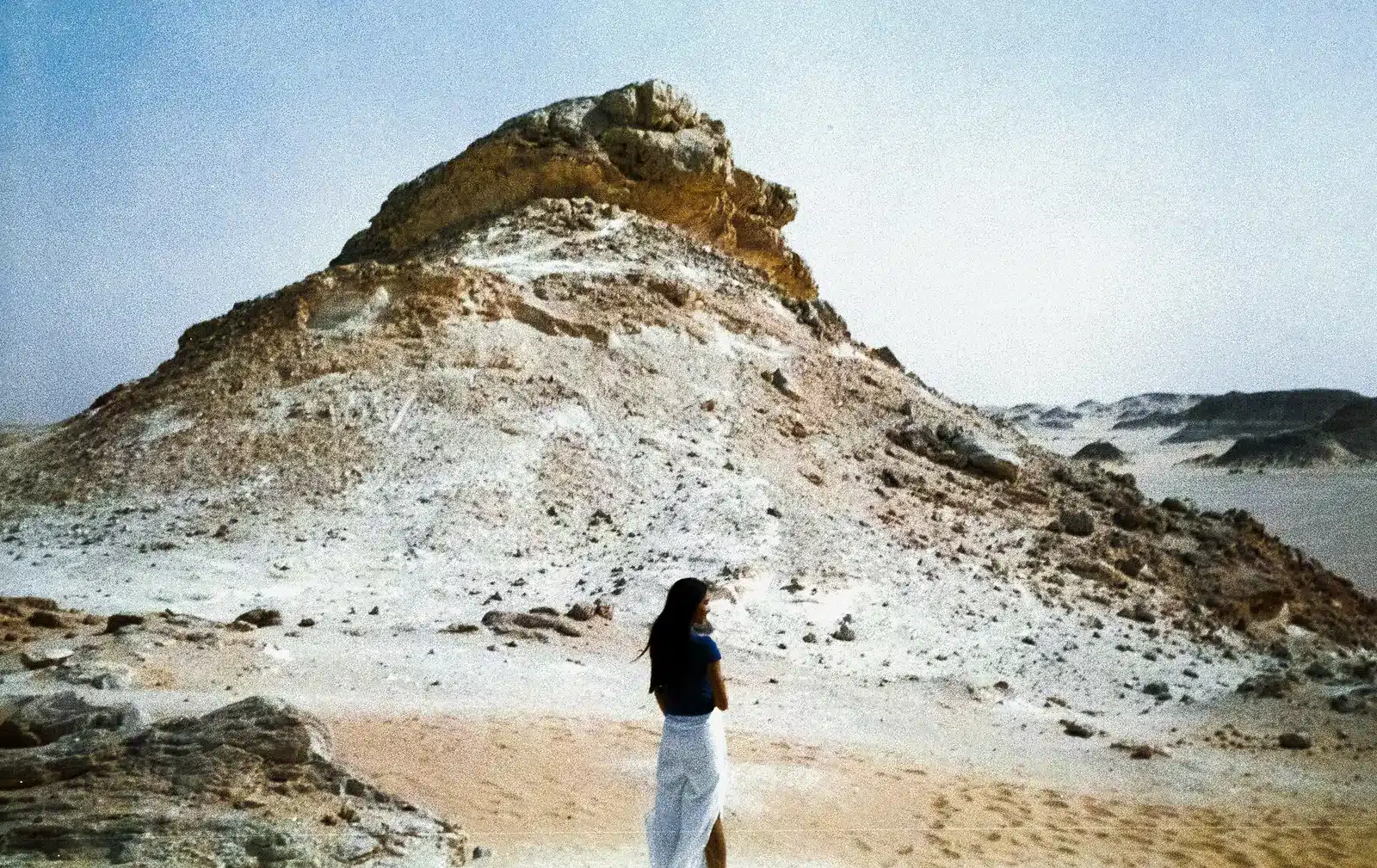
Farafra Oasis Egypt is the smallest and most isolated of the main Western Desert oases, but it sits beside some of the country’s most famous landscapes. The White Desert is about 40 kilometres away, while Crystal Mountain, Agabat Valley, the Black Desert and the Great Sand Sea shape the wider region. Many travellers pass through without seeing Farafra itself. That is the missed opportunity this guide fixes.
A strong Farafra visit combines the old oasis, Badr Museum, gardens and a spring with a licensed desert excursion. It should not confuse the oasis town with White Desert National Park, and it should not promise that a normal road vehicle can replace a local 4×4 on protected or off-road sections.
Is Farafra worth a separate stop?
Yes if you have three or more days for Bahariya and the White Desert, or if you are continuing to Dakhla. Add one night to see the oasis culture instead of using Farafra only as a fuel or lunch stop.
Where is Farafra Oasis?
Farafra lies on the Western Desert road between Bahariya and Dakhla. Egypt’s official tourism portal gives a road distance of about 545 kilometres from Cairo and roughly 180 kilometres from Bahariya. The oasis sits in a depression surrounded by the White and Black Deserts and the Great Sand Sea.
Those distances make itinerary direction important. From Cairo, most first-time visitors travel to Bahariya, enter the desert circuit by local 4×4 and either return north after camping or continue south to Farafra. Travellers on the complete oasis circuit then continue to Dakhla and Kharga before finishing in Luxor.
Farafra Oasis versus the White Desert
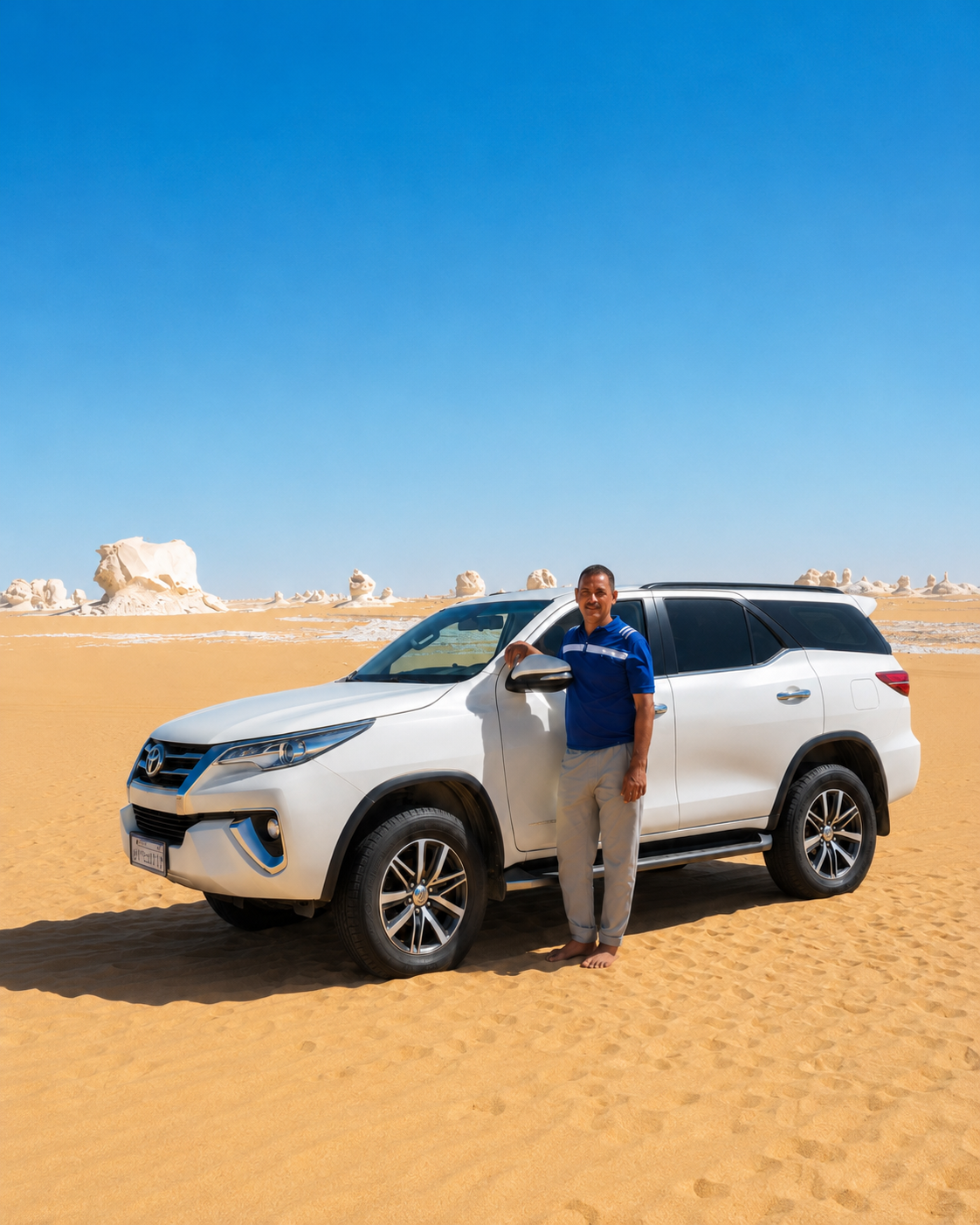
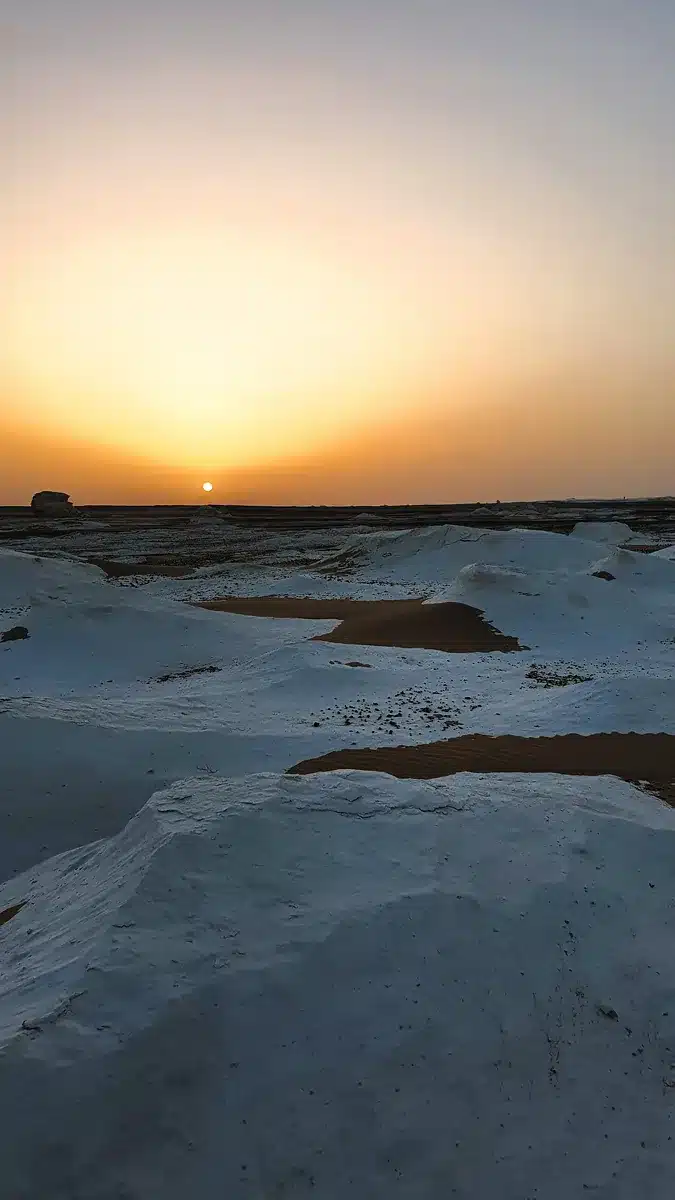
Farafra and the White Desert are related but not interchangeable. Farafra is an inhabited oasis with farms, springs, shops, traditional crafts and a small town. The White Desert is a protected chalk landscape reached through guided desert excursions. A hotel in Farafra can be a base, but it does not place you among the famous mushroom formations.
Choose an oasis night for a bed, shower and local-life experience. Choose a White Desert camp for sunset, stars and sunrise among the formations. A three-day route can combine both; a two-day trip from Cairo usually prioritises camping and passes through the wider Farafra region without a detailed oasis visit.
Qasr al-Farafra and the old oasis
Qasr al-Farafra is the historic core. Official tourism material describes the old town as the preserved medieval capital of the oasis, although parts of the mud-brick fortress have suffered from rare heavy rainfall and modern change. The value today lies in the remaining fabric, lanes and relationship with the surrounding palms rather than one perfect restored monument.
Walk with a local guide who can distinguish historic structures from later additions. Farafra is a living community, so ask before photographing residents or private courtyards. Early morning and late afternoon are best for both heat and light.
Badr Museum: Farafra’s creative voice
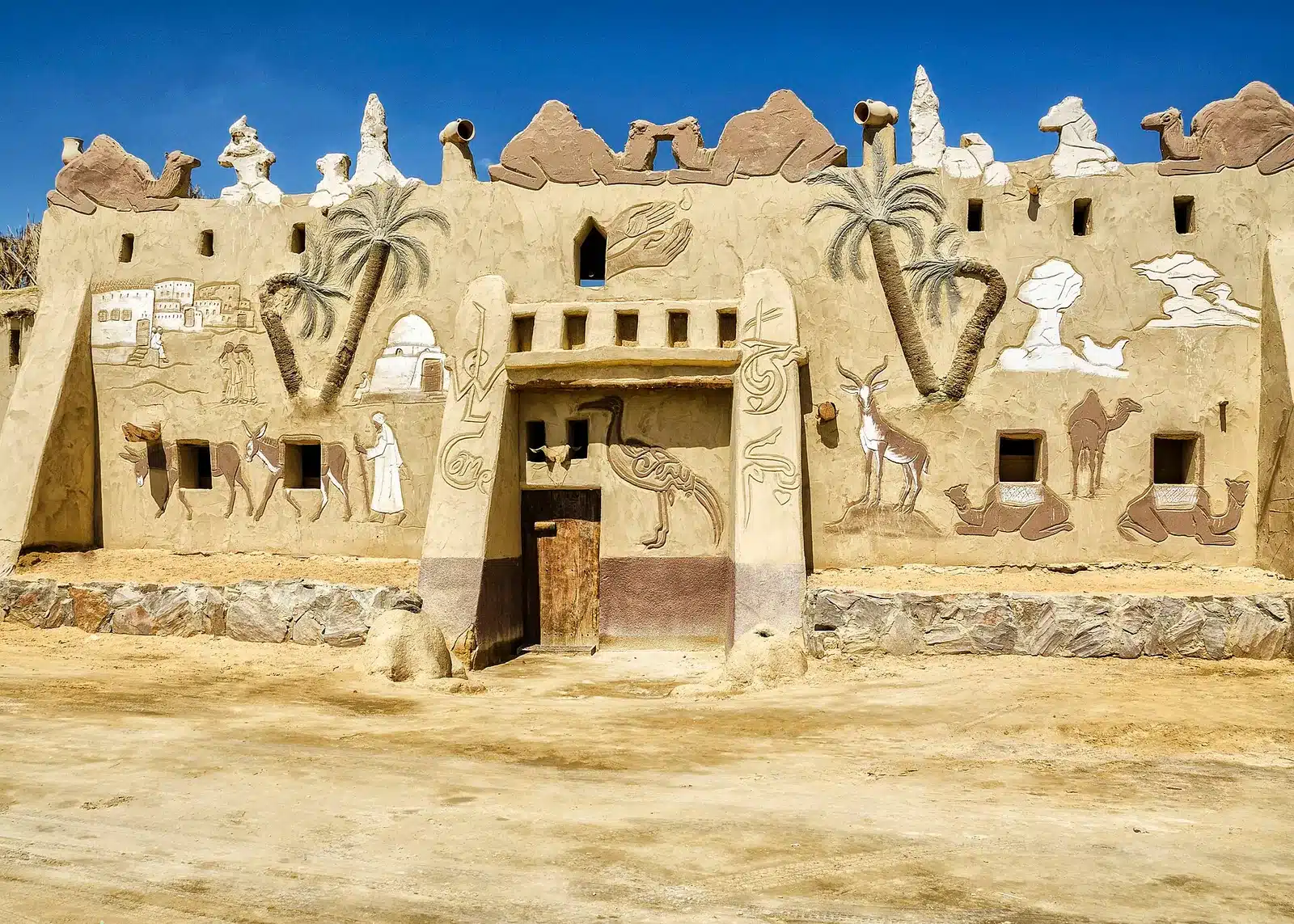
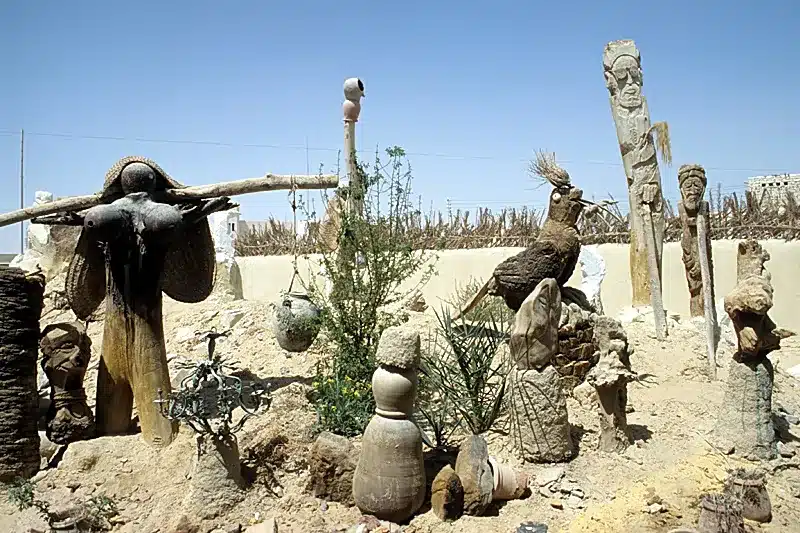
Badr Museum is the oasis’s most personal cultural stop. Local artist Badr Abdel Moghny used mud, stone and natural materials to portray Farafra life, desert animals and village memory. The museum makes an effective counterpoint to the enormous scale of the White Desert: after seeing landscapes shaped over geological time, you see how one artist interpreted daily oasis culture.
Opening arrangements can be informal, so confirm them through your guide or accommodation. Do not reduce the stop to a quick exterior photograph. Time inside the garden and sculpture spaces gives the visit meaning, particularly for families and travellers interested in local art.
Gardens, palms and local crafts
Farafra’s gardens contain dates, olives, citrus, apricots and other crops sustained by oasis water. A walk through the agricultural zone helps explain why the settlement exists and how different the green depression feels after a desert camp. It also produces a more complete story than a route containing only geological landmarks.
Traditional products include wool textiles, baskets and locally made objects. Buy directly when possible, ask permission before entering workshops and avoid treating displayed objects as props. Your operator can arrange a village or garden visit that respects working schedules.
Bir Sitta and Farafra’s springs
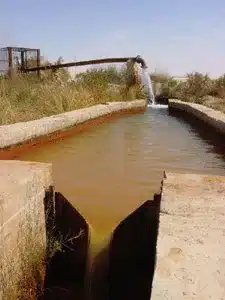
Bir Sitta is the best-known hot-spring stop near Farafra. Official tourism guidance recommends an evening or night soak under the stars. The reality is simple rather than luxurious: facilities may be basic, water temperature and cleanliness can vary, and local use should be respected.
Ask your guide whether bathing is appropriate on the day, what clothing is suitable and whether changing space exists. Do not enter water with open wounds, and keep expectations realistic. A spring is a relaxing end to a road day, not a medically certified spa treatment.
Desert excursions from Farafra
Farafra is close to the White Desert, Crystal Mountain and Agabat Valley. Official tourism material also identifies Twin Peaks, the lone Al-Santa acacia and the Great Sand Sea among wider excursion points. Not every stop belongs in the same two-day route. The correct selection depends on entry point, camp location, road status and whether you are returning to Bahariya or continuing south.
Use a licensed operator with an experienced local 4×4 driver. There are limited tour services inside Farafra itself, so activities are commonly arranged through accommodation or an operator in Cairo, Bahariya or Dakhla. Confirm permits and protected-area regulations before departure.
How many days do you need?
| Time | Best use | Main limitation |
|---|---|---|
| Half day | Badr Museum, old town and a garden | No meaningful desert excursion |
| 1 night | Oasis visit plus spring and early desert start | Limited flexibility |
| 2 nights | Farafra culture and a White Desert camp | Higher total trip length from Cairo |
| 3+ nights | Photography, hiking or onward Dakhla route | Requires a specialised itinerary |
For a Cairo return, three days and two nights create the strongest Farafra combination. For the full oasis circuit, one Farafra night between a White Desert camp and Dakhla is usually enough.
A practical 3-day Farafra and White Desert itinerary
Day 1: Cairo to Bahariya and desert entry
Leave Cairo early, reach Bahariya for lunch and change to a local 4×4. Continue through selected Black Desert and El Heiz stops, then camp in the White Desert or an approved nearby area.
Day 2: White Desert sunrise and Farafra
Explore major formations after sunrise, continue south, eat lunch and visit Badr Museum, Qasr al-Farafra and a garden. Finish with a spring and an oasis hotel or eco-lodge.
Day 3: return or continue
Return north through Crystal Mountain and Agabat with stops not covered on Day 1, or continue toward Dakhla for a longer circuit. The route should avoid repeating the same road just to increase the number of listed attractions.
Farafra tour cost
There is no single Farafra price. Cost depends on the Cairo transfer, private or shared 4×4, number of camp and hotel nights, group size, protected-area fees, meals and whether the trip returns to Cairo or continues to Luxor. A three-day private route costs more than a two-day White Desert camp because it adds distance, accommodation and staff time.
Request a written quote showing the Cairo vehicle, local 4×4, accommodation, camping equipment, meals, water, entrance or protected-area fees and final drop-off. A cheap listing can become expensive when a separate return transfer or hotel night is added later.
Best time to visit Farafra
October to April is the main travel season. Winter days are comfortable, while camp nights can be cold. March, April, October and November are strong for visitors who want milder nights. Summer heat reduces the value of daytime village walks and exposed desert stops.
Wind can change a camping plan even in the right month. Pack layers, closed footwear, a scarf for dust, sun protection and enough personal medication. Read our White Desert season guide before choosing dates.
Safety and responsible planning
Do not drive into the White Desert independently without current permissions, a suitable vehicle and a knowledgeable local team. Routes, checkpoints and protected-area requirements can change. A good operator explains what is confirmed and what may be adjusted locally.
Leave formations, fossils and stones in place. Keep camp waste contained, minimise single-use plastic and avoid driving over fragile surfaces. Farafra’s remoteness is part of its appeal; protecting it matters more than staging one photograph.
Where to stay and what accommodation is like
Farafra has fewer accommodation choices than Bahariya, and most are simple hotels or eco-lodges rather than international resorts. Ask for the exact property, room type, private bathroom, hot water, air-conditioning or heating and whether dinner is served on site. A charming desert lodge can be memorable, but “eco” does not guarantee a luxury standard.
Location affects the route. A property near the main town is convenient for Badr Museum, supplies and a spring. A more remote lodge may provide silence and stars but add vehicle time. If you are arriving after a White Desert camp, prioritise a reliable shower, a proper meal and an early night over an ambitious list of evening stops.
Food, supplies and who will enjoy Farafra
Farafra is a useful resupply point on the oasis circuit. Shops can provide water and basic snacks, while lodges serve simple Egyptian meals. Vegetarian food is usually possible with advance notice; complex allergies should be explained in writing before leaving Cairo because choices narrow as the route moves south.
Farafra suits travellers who value quiet places, local art and the transition between oasis and desert. It may disappoint someone expecting a polished resort or a dense list of famous monuments. The best guest enjoys one museum, one garden, one spring and a long conversation as much as another dramatic rock formation. That balance is exactly why adding Farafra can make a three-day journey feel more human.
Photographers should keep the oasis and desert stories separate. Use palms, doorways, craft details and portraits with permission in town; save the ultra-wide compositions for the White Desert. This prevents the article or trip album from presenting Farafra as an empty landscape and gives local culture equal weight.
A guide can also identify respectful places for sunset without entering farms or private land. Ask before setting a tripod in a lane and move aside when residents or working animals need to pass.
Add Farafra without wasting a day
Tell us whether you are returning to Cairo or continuing to Dakhla. We will place the oasis, desert stops and overnight stays in a route that avoids unnecessary backtracking.
Frequently asked questions
Is Farafra Oasis the same as the White Desert?
No. Farafra is an inhabited oasis; the White Desert is a protected landscape nearby.
How far is Farafra from Cairo?
Egypt’s official tourism portal gives about 545 kilometres by road. Most first-time tours break the journey in Bahariya and the desert.
What should I see in Farafra?
Badr Museum, Qasr al-Farafra, gardens and a spring are the core oasis stops, combined with a licensed desert excursion.
Can I visit Farafra in two days from Cairo?
It is physically possible but rushed. Three days better combines road travel, a White Desert camp and the oasis.
Can I continue from Farafra to Dakhla?
Yes. Farafra is the natural stage before Dakhla on the full Western Desert circuit.
Continue planning
Compare Black and White Desert routes, Dakhla Oasis, White Desert National Park and our live 3-day White Desert safari.
Sources and photo licences
Facts were checked against Experience Egypt: Al-Farafra Oasis, The Oasis and Desert Excursions. Images are credited under their Wikimedia Commons licences.