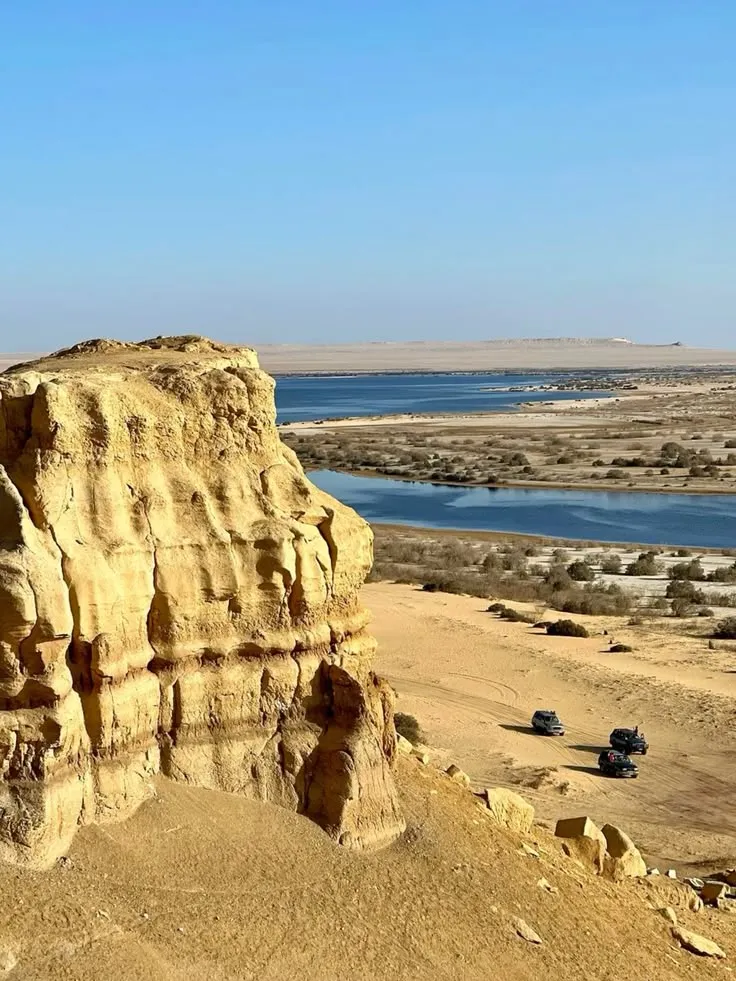
The taxi driver laughed when I told him I wanted to see whales in the desert. “Whales? In Fayoum? Ya doctor, there is no sea here.” Two hours later, standing in a valley of golden sand more than 150 kilometres from the nearest coast, I was looking at the fossilised skeleton of a 40-million-year-old whale, complete with tiny leg bones from the days when whales still walked. My guide, a wiry Fayoumi named Sayed who had grown up herding goats on these very dunes, grinned at my astonishment. “Everyone thinks Fayoum is just a lake near Cairo,” he said. “They have no idea what is hiding out here.”
That is the thing about Fayoum Egypt. It sits barely 100 kilometres southwest of Cairo, close enough for a day trip, yet it feels like a different planet. In three days I swam beneath a desert waterfall, slid down dunes on a wooden board, watched flamingos wade through a turquoise lake, and slept in a camp so quiet I could hear the sand shifting. If you want the Egypt that most tourists drive straight past, let me walk you through it.
Where is Fayoum, and why does it feel so different?
Fayoum Egyptsits in a natural depression in Egypt’s Western Desert, fed not by the Nile directly but by an ancient channel called Bahr Yussef that has watered this basin for thousands of years. Because the water arrives and never leaves, Fayoum became one of the oldest continuously farmed places on Earth, a green thumbprint pressed into the sand. The ancient Egyptians called it the land of the lake and built temples to a crocodile god here; today it is a patchwork of orange groves, waterwheels, pottery villages, and, just beyond the farmland, some of the strangest desert scenery in the country. It is close enough to Cairo to feel easy, and wild enough to feel like a real adventure.
Wadi El Rayan: waterfalls and lakes in the middle of the Sahara
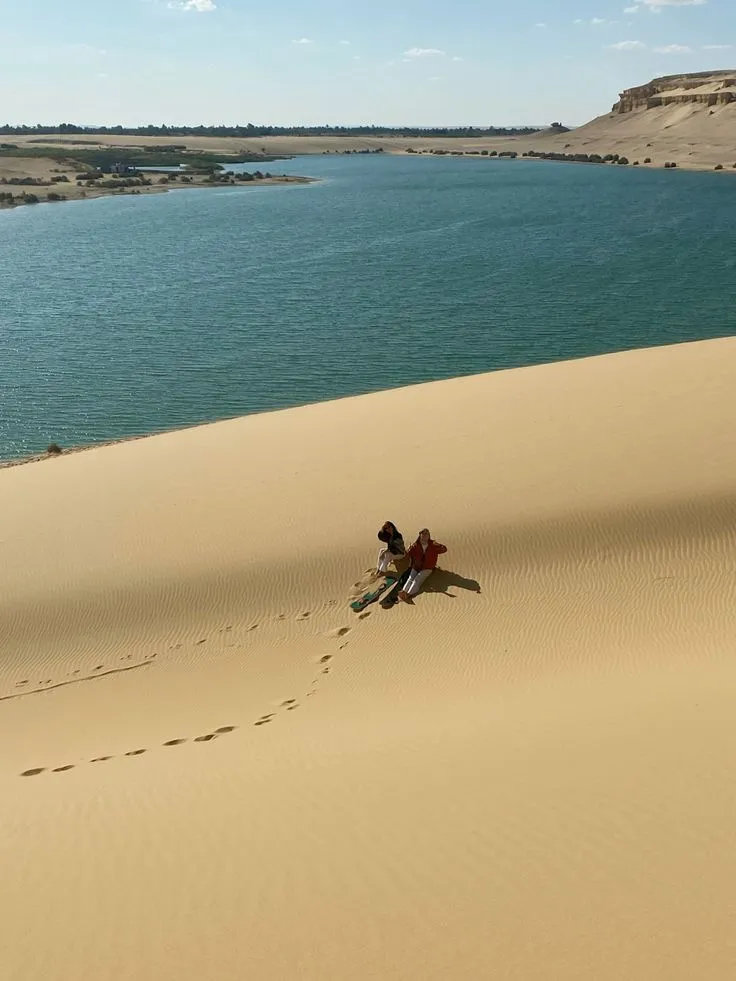
The first place Sayed took me was Wadi El Rayan, a protected area of two lakes joined by Egypt’s only waterfalls. They are not thundering giants, more a wide, gentle curtain of water spilling between the upper and lower lakes, but in a desert this dry, the sound of falling water is almost shocking. We sat on the rocks with our feet in the cool stream while fishermen drifted past in small boats. Behind us, tall dunes rolled right down to the water’s edge, and that is where the fun began.
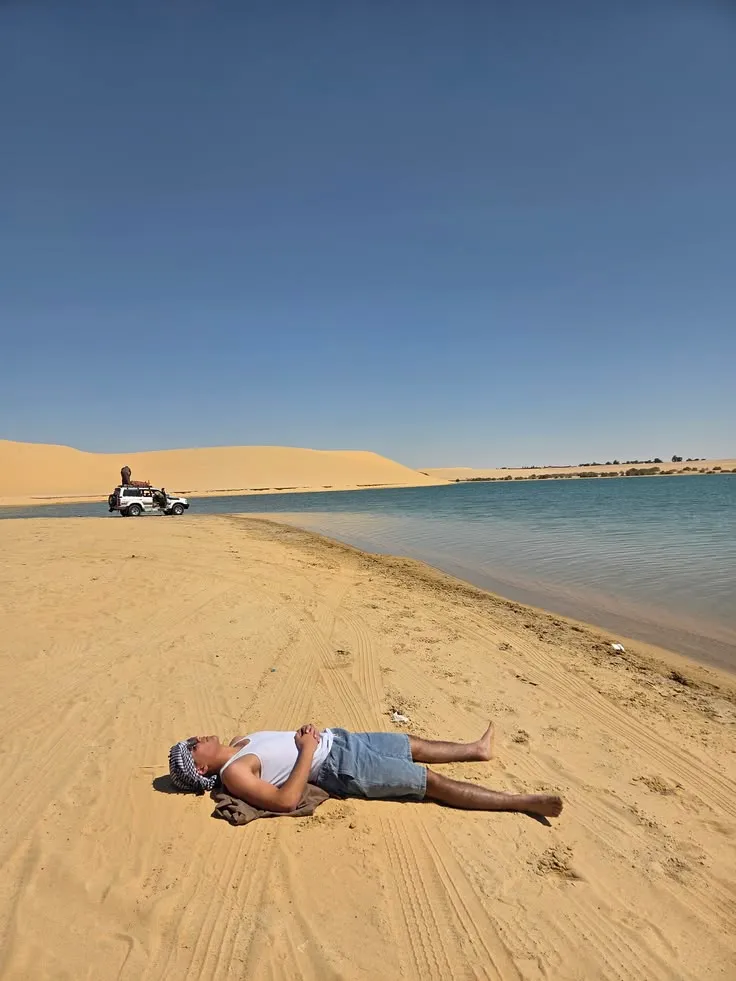
We deflated the tyres, climbed into the 4×4, and went bouncing over the dunes until the lakes shrank to blue slivers behind us. If you have never been sandboarding, picture snowboarding with warmer landings and a lot more laughing. Sayed made it look effortless; I mostly made it look like falling. Either way, standing on top of a dune with a lake glittering below is the kind of view that rearranges what you thought Egypt looked like.
Wadi El-Hitan: the Valley of the Whales
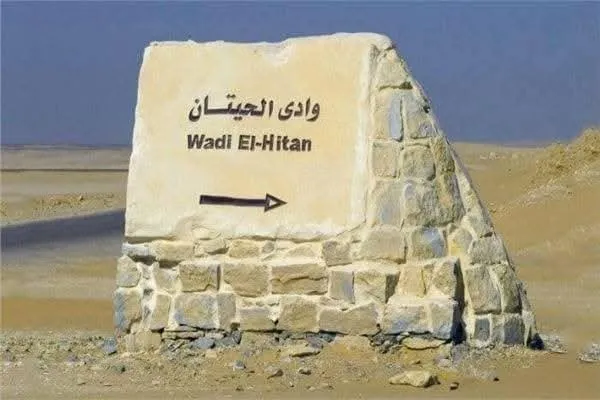
The next morning we drove deeper into the desert to the place that had made the taxi driver laugh: Wadi El-Hitan, the Valley of the Whales. This is a UNESCO World Heritage Site, and for good reason. Around 40 million years ago this whole basin was the floor of a warm sea called the Tethys, and when it dried out it left behind hundreds of near-perfect skeletons of ancient whales, sea cows, and sharks lying exactly where they fell. Walking the marked trail here feels like wandering through an open-air museum that nature curated itself.
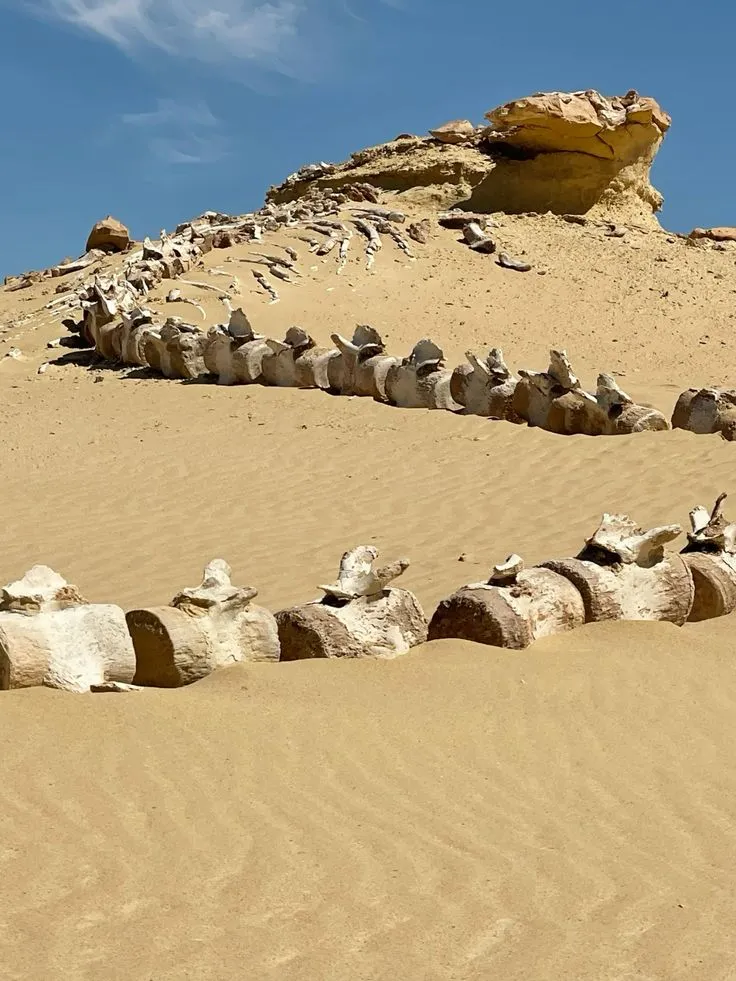
What makes these fossils world-famous is the legs. The whales of Wadi El-Hitan still had small hind limbs, capturing the exact moment in evolution when these creatures were leaving land for the sea. You do not need to be a scientist to feel the weight of standing beside a 20-metre skeleton in total silence, the wind carving the dunes around you. Sayed lowered his voice here without meaning to. “It makes you feel very small and very lucky,” he said, and he was right.
The crocodile temples and the oldest lake in Egypt
Fayoum is not only sand and fossils. Back toward the farmland lies Lake Qarun, one of the oldest lakes on the planet and a remnant of a far larger prehistoric sea. Its salty water draws thousands of migratory birds, and at dawn you can watch flamingos and herons picking their way along the shallows while local fishermen haul in their nets. Nearby stand the ruins of Karanis and the temples of the crocodile god Sobek, a reminder that people have been drawn to this water for well over four thousand years.
Closer to the towns, the village of Tunis has reinvented itself as a pottery haven, its studios turning out beautiful hand-painted ceramics you can buy straight from the artists. It is the perfect gentle counterpoint to a day of dune-bashing: mint tea, a slow lunch of fresh tilapia from the lake, and shelves of pottery glowing in the afternoon light.
What to eat and bring back from Fayoum
Fayoum Egypt’sfood is farm-and-lake simple and all the better for it. Try grilled tilapia straight from Lake Qarun, fresh oranges and figs from the groves, and honey and olives from the surrounding farms. For souvenirs, the hand-painted pottery of Tunis village is genuinely special, and you will often find the potter who made your piece happy to chat about it. Bring cash, because out here the card machines are rare and the best little stalls are cash only.
Practical tips for visiting Fayoum
- Bring plenty of water and sun protection; shade is scarce in Wadi El Rayan and Wadi El-Hitan.
- A hat, sunglasses, and closed shoes make the desert trails far more comfortable.
- Carry Egyptian pounds in cash for entrance fees, tips, and village pottery.
- Pack a swimsuit and a quick-dry towel if you want to cool off near the waterfalls.
- A 4×4 with a local driver is essential for the dunes; do not attempt them in a normal car.
When is the best time to visit Fayoum?
The most comfortable months to visit Fayoum Egypt run from October to April, when the desert is warm by day and cool at night, ideal for hiking the fossil trails and camping under the stars. Summer, from June to August, brings real heat, so plan desert activities for early morning or late afternoon and save the middle of the day for the shade of Tunis village or the breeze off Lake Qarun. Whenever you come, pack a light layer for the evening; desert nights cool down fast.
How to plan your Fayoum trip from Cairo
Because Fayoum Egypt’sbest sights are spread across open desert with no public transport, the easiest way to see them is with a guided safari that handles the driving, the park permits, and a local guide who actually knows where the fossils and springs are. The Fayoum Safari Day Trip from Cairo is perfect if you are short on time, covering Wadi El Rayan, the waterfalls, and the Magic Lake in a single day. If you would rather slow down and sleep under the stars, the Fayoum Overnight Safari from Cairo adds a desert camp and gives Wadi El-Hitan the time it deserves.
If Fayoum leaves you hungry for more desert, it pairs beautifully with two other trips from Cairo. Our guide to the White Desert of Egypt takes you to the chalk sculptures of the Sahara’s frozen sea, while the Siwa Oasis offers salt lakes and springs near the Libyan border. Together they make an unforgettable Western Desert circuit.

My honest advice is the one Sayed gave me as we drove back toward the city lights: do not rush Fayoum. Give it two days if you can, let the desert surprise you, and you will understand why some places refuse to fit the postcard version of Egypt. The whales in the sand are waiting.
Frequently asked questions about Fayoum
How far is Fayoum from Cairo?
Fayoum Egyptis about 100 kilometres southwest of Cairo, roughly a 90-minute to two-hour drive, which makes it one of the easiest desert escapes from the capital.
Is Fayoum worth visiting for a day trip?
Yes. A day trip comfortably covers Wadi El Rayan, the waterfalls, and the Magic Lake, though an overnight stay lets you add Wadi El-Hitan and a desert camp without rushing.
Can you really see whale fossils in Fayoum?
You can. Wadi El-Hitan, the Valley of the Whales, is a UNESCO World Heritage Site with hundreds of 40-million-year-old whale skeletons preserved in the desert.
Do you need a 4×4 to explore Fayoum?
For the lakes, waterfalls, and village pottery a normal car is fine, but the dunes and the fossil valley require a 4×4 with a local driver, which is why a guided safari is the simplest option.
Ready to plan your safari? Compare all Fayoum safari tours or view the Fayoum Safari Day Trip from Cairo.